

• HOME
  • NEWS
  • EXPLORE
    • CAREER
      • Companies
      • Jobs
    • EVENTS
    • iGEM
      • News
      • Team
    • PHOTOS
    • VIDEO
    • WIKI
  • BLOG
  • COMMUNITY
    • FACEBOOK
    • INSTAGRAM
    • TWITTER
Thursday, September 10, 2026
BIOENGINEER.ORG
No Result
View All Result
  • Login
  • HOME
  • NEWS
  • EXPLORE
    • CAREER
      • Companies
      • Jobs
        • Lecturer
        • PhD Studentship
        • Postdoc
        • Research Assistant
    • EVENTS
    • iGEM
      • News
      • Team
    • PHOTOS
    • VIDEO
    • WIKI
  • BLOG
  • COMMUNITY
    • FACEBOOK
    • INSTAGRAM
    • TWITTER
  • HOME
  • NEWS
  • EXPLORE
    • CAREER
      • Companies
      • Jobs
        • Lecturer
        • PhD Studentship
        • Postdoc
        • Research Assistant
    • EVENTS
    • iGEM
      • News
      • Team
    • PHOTOS
    • VIDEO
    • WIKI
  • BLOG
  • COMMUNITY
    • FACEBOOK
    • INSTAGRAM
    • TWITTER
No Result
View All Result
Bioengineer.org
No Result
View All Result
Home NEWS Science News Chemistry

Highly chemoselective access to alkyl-sulfur compounds via N2 extrusion of alkyl hydrazines

Bioengineer by Bioengineer
July 27, 2026
in Chemistry
Reading Time: 1 min read
0
Highly chemoselective access to alkyl-sulfur compounds via N2 extrusion of alkyl hydrazines
Share on FacebookShare on TwitterShare on LinkedinShare on RedditShare on Telegram

blank

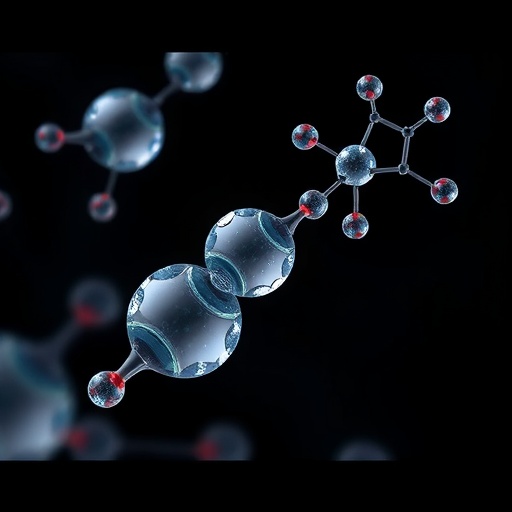
Sulfur(VI)-containing functional groups, such as sulfonamides, sulfinates and sulfonyl fluorides, are ubiquitous in pharmaceuticals, where they confer unique physicochemical properties that enhance metabolic stability, solubility and bioactivity across diverse therapeutic areas. Despite their prevalence, synthetic access to alkyl-sulfur(VI) derivatives remains fragmented, often requiring multi-step sequences from scarce precursors or harsh conditions that limit functional-group tolerance and scalability. Here we report a unified platform that enables divergent synthesis of alkyl-sulfur(VI) compounds from abundant, unactivated feedstocks including ketones, alcohols, amines and other structurally complex molecules. Central to this method is the use of alkyl hydrazines (or their sulfonylated derivatives) as practical radical precursors. Upon simple thermal activation, these hydrazines undergo efficient homolysis to generate alkyl radicals under mild and operationally simple conditions, without the need for photocatalysts, expensive metals or reagents and elaborate setups. Over 70 sulfur-containing molecules are synthesized, including direct functionalization of complex natural products without resorting to protecting group chemistry.

Wang, S., Cagan, D.A., Tsien, J. et al. Highly chemoselective access to alkyl-sulfur compounds via N2 extrusion of alkyl hydrazines.
Nat. Chem. (2026). https://doi.org/10.1038/s41557-026-02212-8

https://doi.org/10.1038/s41557-026-02212-8

Tags: alkyl-sulfur(VI) compound synthesischemoselective sulfur functionalizationdivergence synthesis of sulfur compoundsenvironmentally friendly sulfur compound synthesisfunctionalization of natural productsmild radical generation methodsN2 extrusion of alkyl hydrazinesprotecting group-free sulfur functionalizationradical-mediated alkyl-sulfur bond formationscalable synthesis of alkyl-sulfur derivativessulfur(VI)-containing pharmaceuticalsuse of unactivated feedstocks in sulfur chemistry

Share12Tweet7Share2ShareShareShare1

Related Posts

Iron(VII) oxide created in water as new treatment oxidant

Iron(VII) oxide created in water as new treatment oxidant

September 10, 2026
Modern forward osmosis: advances in membrane engineering and draw solutes

Modern forward osmosis: advances in membrane engineering and draw solutes

September 10, 2026

Nickel Doping in Copper MOF Boosts CO2 Conversion to C2+ Products

September 10, 2026

Machine learning optimizes Dendrobium officinale fermentation for enhanced antioxidant activity

September 10, 2026

POPULAR NEWS

  • Dual RNA-seq Reveals Parasite Virulence Genes and Crab Immune Responses

    29 shares
    Share 12 Tweet 7
  • DNA-PKcs and PPP1CC phosphorylation of cGAS balances repair and immunity

    29 shares
    Share 12 Tweet 7
  • New models of Williams syndrome offer translational insights and future directions

    29 shares
    Share 12 Tweet 7
  • AI reads color-changing pH labels to detect squid spoilage

    29 shares
    Share 12 Tweet 7

About

We bring you the latest biotechnology news from best research centers and universities around the world. Check our website.

Follow us

Recent News

Dual RNA-seq Reveals Parasite Virulence Genes and Crab Immune Responses

DNA-PKcs and PPP1CC phosphorylation of cGAS balances repair and immunity

New models of Williams syndrome offer translational insights and future directions

Subscribe to Blog via Email

Enter your email address to subscribe to this blog and receive notifications of new posts by email.

Join 85 other subscribers
  • Contact Us

Bioengineer.org © Copyright 2023 All Rights Reserved.

Welcome Back!

Login to your account below

Forgotten Password?

Retrieve your password

Please enter your username or email address to reset your password.

Log In
No Result
View All Result
  • Homepages
    • Home Page 1
    • Home Page 2
  • News
  • National
  • Business
  • Health
  • Lifestyle
  • Science

Bioengineer.org © Copyright 2023 All Rights Reserved.