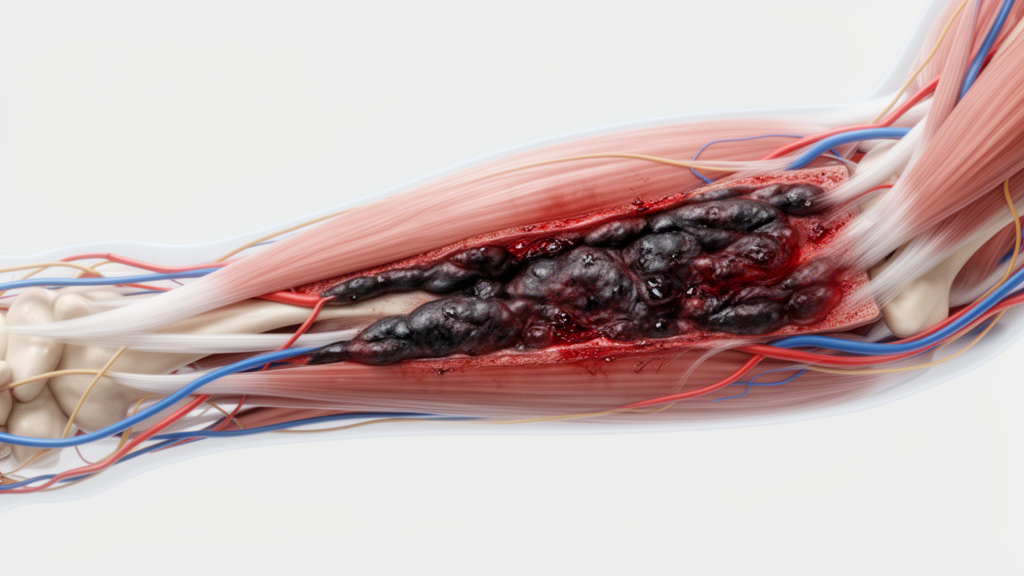
A 24-year-old worker who sustained an electrical shock to his left upper extremity developed severe rhabdomyolysis alongside transient metabolic acidosis while maintaining normal serum creatinine levels and achieving favorable short-term functional recovery, according to a clinical case report published in the International Journal of Emergency Medicine. The incident occurred in a work-related setting when the patient, who had no relevant past medical history, touched a high-voltage cable with his left hand despite wearing rubber gloves and a safety harness. Clinicians noted that high-voltage electrical injuries remain uncommon but carry substantial risk to both limb viability and life because internal structural destruction can significantly outpace externally visible cutaneous burns.
Upon hospital arrival, initial physical examinations revealed a localized burn pattern characterized by a circumferential second-degree thermal burn of the left shoulder and a third-degree burn on the volar surface of the left hand that involved tissue loss. These external injuries were accompanied by severe painful edema extending across the arm, along with forced flexion of the wrist and fingers coupled with impaired extension, pointing to acute motor compromise and profound underlying soft-tissue and muscular destruction. Emergency laboratory testing conducted at presentation showed marked muscle breakdown with a baseline creatine kinase level of 9,705 units per liter, in addition to leukocytosis, hypokalemia, mild acidemia, and hypoxemia.
Serial diagnostic testing during the initial 24 hours of hospitalization documented a progressive and marked worsening of rhabdomyolysis. Subsequent urgent blood evaluations revealed that the patient’s creatine kinase concentrations surged rapidly to 13,247 units per liter and later peaked at 25,959 units per liter. Parallel analyses identified concurrent elevations in serum aspartate aminotransferase and lactate dehydrogenase, confirming extensive skeletal muscle cytolysis. Additionally, a venous blood gas sample demonstrated severe hyperlactatemia reaching 10.48 millimoles per liter accompanied by lactic metabolic acidosis, illustrating significant systemic physiological stress from the electrical exposure.
Despite the steep escalation of muscle enzyme markers and the transient presence of severe lactic acidosis, the patient demonstrated preserved early renal function. Laboratory tracking confirmed that serum creatinine measurements remained consistently within the normal physiological range throughout the entirety of his inpatient care. Concurrent cardiac evaluations utilizing electrocardiography documented standard sinus rhythm without signs of acute ischemia or sustained arrhythmic disturbances, ruling out major electrical conduction disruption to the myocardium despite the high-voltage transit through the upper body.
The patient was managed through prompt multidisciplinary intervention, starting with urgent operative care alongside supportive medical protocols. Treatment included the administration of intravenous fluids, perioperative cefazolin antibiotic therapy, and standard tetanus prophylaxis to prevent infectious complications.
The clinical course concluded favorably after an inpatient hospital stay that exceeded two weeks, culminating in his discharge home. Follow-up clinical evaluations completed between one and three months post-injury indicated that the patient achieved complete or near-complete functional recovery of the affected extremity, with clinicians reporting no relevant long-term physical complications. The authors emphasized that serial laboratory monitoring proved essential to identify severe internal muscle injury that contrasted with localized cutaneous burns, while noting that the findings represent an individual case report describing short-term outcomes.
Subject of Research: Clinical course of high-voltage electrical upper limb injury with severe rhabdomyolysis
Article Title: High-voltage electrical injury of the upper limb with severe rhabdomyolysis, preserved early renal function, and favorable short-term recovery: a case report
Article References: Omizzolo, L., & Mira, J. B. (2026). High-voltage electrical injury of the upper limb with severe rhabdomyolysis, preserved early renal function, and favorable short-term recovery: a case report. International Journal of Emergency Medicine. https://doi.org/10.1186/s12245-026-01341-8
Image Credits: AI Generated
DOI: 10.1186/s12245-026-01341-8
Keywords: high-voltage electrical injury, rhabdomyolysis, creatine kinase, renal function, case report, upper limb trauma, electrical burn, hyperlactatemia, metabolic acidosis, hand burn, skin grafting, emergency medicine, intensive care monitoring, occupational trauma, functional recovery, aspartate aminotransferase, lactate dehydrogenase, clinical toxicology
News Source: Ophelia Keating. (November 20, 2026). High-Voltage Electrical Arm Injury Triggered Severe Rhabdomyolysis While Sparing Renal Function. Scienmag.