• HOME
  • NEWS
  • EXPLORE
    • CAREER
      • Companies
      • Jobs
    • EVENTS
    • iGEM
      • News
      • Team
    • PHOTOS
    • VIDEO
    • WIKI
  • BLOG
  • COMMUNITY
    • FACEBOOK
    • INSTAGRAM
    • TWITTER
Friday, August 21, 2026
BIOENGINEER.ORG
No Result
View All Result
  • Login
  • HOME
  • NEWS
  • EXPLORE
    • CAREER
      • Companies
      • Jobs
        • Lecturer
        • PhD Studentship
        • Postdoc
        • Research Assistant
    • EVENTS
    • iGEM
      • News
      • Team
    • PHOTOS
    • VIDEO
    • WIKI
  • BLOG
  • COMMUNITY
    • FACEBOOK
    • INSTAGRAM
    • TWITTER
  • HOME
  • NEWS
  • EXPLORE
    • CAREER
      • Companies
      • Jobs
        • Lecturer
        • PhD Studentship
        • Postdoc
        • Research Assistant
    • EVENTS
    • iGEM
      • News
      • Team
    • PHOTOS
    • VIDEO
    • WIKI
  • BLOG
  • COMMUNITY
    • FACEBOOK
    • INSTAGRAM
    • TWITTER
No Result
View All Result
Bioengineer.org
No Result
View All Result
Home NEWS Science News Biology

High-powered fuel cell boosts electric-powered submersibles, drones

Bioengineer by Bioengineer
February 25, 2019
in Biology
Reading Time: 2 mins read
0
IMAGE
Share on FacebookShare on TwitterShare on LinkedinShare on RedditShare on Telegram

IMAGE

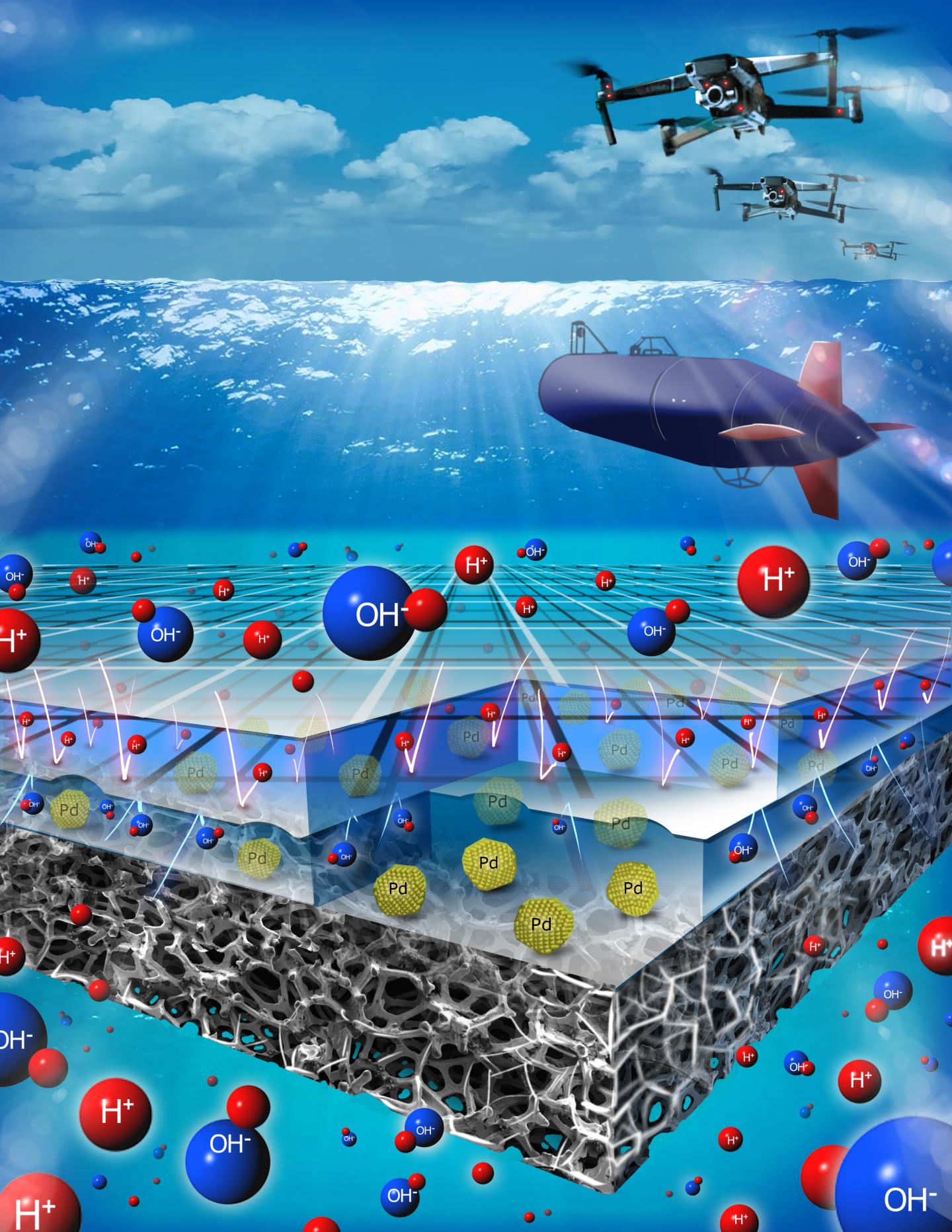
Credit: McKelvey School of Engineering

The transportation industry is one of the largest consumers of energy in the U.S. economy with increasing demand to make it cleaner and more efficient. While more people are using electric cars, designing electric-powered planes, ships and submarines is much harder due to power and energy requirements.

A team of engineers in the McKelvey School of Engineering at Washington University in St. Louis has developed a high-power fuel cell that advances technology in this area. Led by Vijay Ramani, the Roma B. and Raymond H. Wittcoff Distinguished University Professor, the team has developed a direct borohydride fuel cell that operates at double the voltage of today’s commercial fuel cells.

This advancement using a unique pH-gradient-enabled microscale bipolar interface (PMBI), reported in Nature Energy Feb. 25, could power a variety of transportation modes — including unmanned underwater vehicles, drones and eventually electric aircraft — at significantly lower cost.

“The pH-gradient-enabled microscale bipolar interface is at the heart of this technology,” said Ramani, also professor of energy, environmental & chemical engineering. “It allows us to run this fuel cell with liquid reactants and products in submersibles, in which neutral buoyancy is critical, while also letting us apply it in higher-power applications such as drone flight.”

The fuel cell developed at Washington University uses an acidic electrolyte at one electrode and an alkaline electrolyte at the other electrode. Typically, the acid and alkali will quickly react when brought in contact with each other. Ramani said the key breakthrough is the PMBI, which is thinner than a strand of human hair. Using membrane technology developed at the McKelvey Engineering School, the PMBI can keep the acid and alkali from mixing, forming a sharp pH gradient and enabling the successful operation of this system.

“Previous attempts to achieve this kind of acid-alkali separation were not able to synthesize and fully characterize the pH gradient across the PMBI,” said Shrihari Sankarasubramanian, a research scientist on Ramani’s team. “Using a novel electrode design in conjunction with electroanalytical techniques, we were able to unequivocally show that the acid and alkali remain separated.”

Lead author Zhongyang Wang, a doctoral candidate in Ramani’s lab, added: “Once the PBMI synthesized using our novel membranes was proven to work effectively, we optimized the fuel cell device and identified the best operating conditions to achieve a high-performance fuel cell. It has been a tremendously challenging and rewarding pathway to developing the new ion-exchange membranes that has enabled the PMBI.”

“This is a very promising technology, and we are now ready to move on to scaling it up for applications in both submersibles and drones,” Ramani said.

###

Other participants in this work include Cheng He, a doctoral candidate, and Javier Parrondo, a former research scientist in Ramani’s lab. The team is working with the university’s Office of Technology Management to explore commercialization opportunities.

Media Contact
Talia Ogliore
[email protected]

Original Source

https://source.wustl.edu/2019/02/high-powered-fuel-cell-may-boost-electric-powered-drones-aircraft/

Tags: Biomedical/Environmental/Chemical EngineeringElectrical Engineering/ElectronicsEnergy/Fuel (non-petroleum)Technology/Engineering/Computer Science
Share12Tweet8Share2ShareShareShare2

Related Posts

Scientists trace the origins and domestication of modern cultivated chrysanthemums

Scientists trace the origins and domestication of modern cultivated chrysanthemums

August 21, 2026
New Tool Reveals Hidden Patterns in Complex Biological Data

New Tool Reveals Hidden Patterns in Complex Biological Data

August 21, 2026

Tropical Mountain Forest Canopies and Understories Reveal Contrasting Biodiversity Patterns Along Elevation

August 21, 2026

Heart backup blood vessels grow from capillaries—not arteries

August 21, 2026
Please login to join discussion

POPULAR NEWS

  • Insilico’s Alex Aliper to Attend Two Hong Kong Summits on AI Healthcare

    29 shares
    Share 12 Tweet 7
  • Scientists trace the origins and domestication of modern cultivated chrysanthemums

    29 shares
    Share 12 Tweet 7
  • Nationwide Study Examines Comorbidity Burden Predicting Three-Year Neurodevelopment in Extremely Preterm Infants

    29 shares
    Share 12 Tweet 7
  • Systematic review finds DICER1 mutations in children and adolescents with thyroid cancer

    29 shares
    Share 12 Tweet 7

About

We bring you the latest biotechnology news from best research centers and universities around the world. Check our website.

Follow us

Recent News

Insilico’s Alex Aliper to Attend Two Hong Kong Summits on AI Healthcare

Scientists trace the origins and domestication of modern cultivated chrysanthemums

Nationwide Study Examines Comorbidity Burden Predicting Three-Year Neurodevelopment in Extremely Preterm Infants

Subscribe to Blog via Email

Enter your email address to subscribe to this blog and receive notifications of new posts by email.

Join 85 other subscribers
  • Contact Us

Bioengineer.org © Copyright 2023 All Rights Reserved.

Welcome Back!

Login to your account below

Forgotten Password?

Retrieve your password

Please enter your username or email address to reset your password.

Log In
No Result
View All Result
  • Homepages
    • Home Page 1
    • Home Page 2
  • News
  • National
  • Business
  • Health
  • Lifestyle
  • Science

Bioengineer.org © Copyright 2023 All Rights Reserved.