In a breakthrough development poised to transform the landscape of industrial catalysis, a team of researchers has unveiled an innovative approach to fabricating high-loading zeolite catalysts using advanced 3D printing technology. This novel method addresses long-standing challenges in catalyst production, particularly those related to achieving high active material content while maintaining robust structural integrity. The implications are vast, potentially enhancing efficiencies in sectors ranging from petrochemical processing to environmental remediation.
Zeolites, crystalline aluminosilicate minerals known for their porous structures and exceptional catalytic properties, are essential components in many chemical processes. Their unique frameworks facilitate selective reactions by providing active sites and molecular sieving capabilities, critical for refining hydrocarbons or synthesizing fine chemicals. However, traditional zeolite catalyst supports often suffer from limitations in mechanical strength and mass transport, hindering performance under demanding operating conditions.
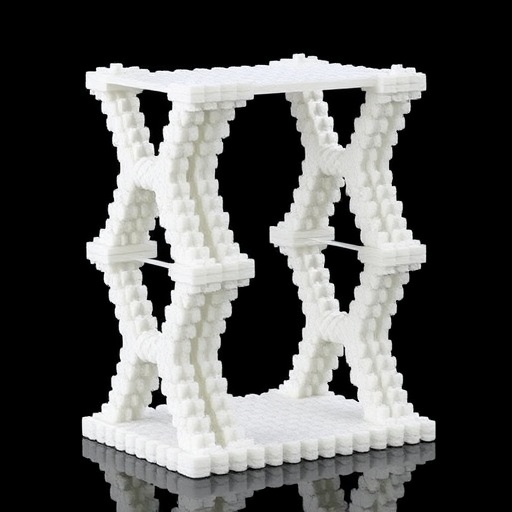
The research team tackled these issues head-on by leveraging 3D printing techniques to fabricate open-cell zeolite architectures with remarkably high loadings of active material. This approach not only improves the catalyst’s surface area accessible to reactants but also enhances mechanical stability—a dual enhancement rarely achieved through conventional preparation methods. The open-cell design fosters superior diffusion pathways, allowing reactant molecules to access active sites more efficiently, thereby optimizing catalytic turnover rates.
Central to this innovation is the precision control afforded by the 3D printing process. By employing additive manufacturing, the researchers could tailor pore size, geometry, and overall catalyst morphology at micron-level resolution. This degree of customization enables a fine balance between maximizing catalytic surface exposure and maintaining framework robustness, effectively overcoming the trade-offs endemic to typical catalyst formulations.
Furthermore, the study demonstrates that these 3D-printed zeolite catalysts retain their structural integrity under thermal and mechanical stresses characteristic of industrial reactors. This durability is crucial, as catalyst degradation often leads to decreased activity, increased downtime, and higher operational costs. Enhanced resilience directly translates into longer catalyst lifetimes and improved process reliability, marking a significant advance for catalyst engineering.
The researchers utilized a binder system compatible with zeolite powders to ensure cohesive material formation during the printing process without significantly compromising catalytic activity. This binder integration maintained the chemical environment necessary for catalytic function while imparting mechanical strength, a sophisticated balance that required considerable materials science insight. By optimizing formulation parameters, the research team achieved high loadings of active zeolite phases embedded within the printable matrix.
Significantly, the study also explores the scalability potential of this 3D printing approach. Industrial catalyst production demands not only technical feasibility but also economic viability and production throughput. The researchers outline strategies for scaling up the printing process, including adaptations in printing speed, batch sizes, and post-processing treatments. These insights suggest that the method could see widespread adoption in catalyst manufacturing within a few years.
In addition to practical manufacturing benefits, this methodology opens doors to novel catalyst designs that were previously unattainable. The precise structural control allows engineers to create catalysts tuned for specific reactions, optimizing parameters such as pore connectivity or diffusion resistance. This capability heralds a new era in catalysis, where bespoke catalyst architectures are crafted to meet the exacting requirements of emerging chemical processes.
The open-cell nature of these printed catalysts also imparts advantages for heat and mass transfer, critical factors in reaction engineering. Efficient removal of reaction heat reduces the risk of hotspot formation, which can deactivate catalytic sites or alter selectivity. Similarly, improved mass transport mitigates diffusion limitations, ensuring that reactants and products continuously interact with the active material throughout the catalyst bed.
This research underscores the symbiotic relationship between additive manufacturing and materials science in addressing complex industrial challenges. By integrating multidisciplinary expertise spanning chemistry, engineering, and manufacturing, the team crafted a solution that redefines the potential of zeolite catalysts. The study signals a paradigm shift toward more sustainable, efficient, and customizable catalytic processes.
Moreover, the environmental implications are profound. Improved catalyst efficiency can lower energy consumption and reduce byproduct formation in chemical manufacturing, contributing to greener industrial operations. Enhanced durability means less frequent replacement and disposal of catalysts, aligning with circular economy principles and reducing environmental burden.
The successful demonstration of these materials under operational conditions is a testament to the practical impact of the technology. Beyond laboratory tests, the catalysts showed promising performance in pilot-scale reactors, indicating readiness for industrial integration. This step from concept to application is crucial for bridging the gap between academia and industry.
Looking forward, the research team envisions further refinements, including the incorporation of multiple active phases within the 3D-printed matrix to enable multifunctional catalysis. Such developments could upgrade process intensification efforts, combining reaction steps and streamlining production lines. In tandem, real-time monitoring of catalyst health and performance embedded within the 3D-printed structures could revolutionize process control.
The study’s interdisciplinary nature also hints at future collaborations across sectors and disciplines. As additive manufacturing technologies evolve, their confluence with catalysis promises innovations not only in chemical engineering but also in energy storage, environmental science, and pharmaceuticals. Customizable catalyst architectures may become foundational components in next-generation industrial technologies.
In conclusion, the pioneering high-loading, 3D-printed open-cell zeolite catalysts detailed by Tang, Wasti, Copenhaver, and colleagues represent a significant leap forward in both material science and catalytic technology. By marrying sophisticated additive manufacturing with zeolite chemistry, they have overcome entrenched obstacles, delivering catalysts that are simultaneously dense in active sites and structurally resilient. This advancement is poised to ignite new possibilities in chemical manufacturing efficiency, sustainability, and innovation on a global scale.
Subject of Research: High-loading 3D-Printed Open-Cell Zeolite Catalysts with Enhanced Structural Integrity
Article Title: High-loading 3D-printed open-cell zeolite catalysts with enhanced structural integrity
Article References:
Tang, Y., Wasti, S., Copenhaver, K. et al. High-loading 3D-printed open-cell zeolite catalysts with enhanced structural integrity. npj Adv. Manuf. 3, 22 (2026). https://doi.org/10.1038/s44334-026-00083-y
Image Credits: AI Generated
DOI: https://doi.org/10.1038/s44334-026-00083-y
Tags: 3d printed catalyst fabricationadvanced 3d printing in catalysiscatalyst mass transport optimizationcatalytic efficiency improvementsenvironmental remediation catalystshigh surface area catalystshigh-loading zeolite catalystsindustrial catalysis innovationopen-cell zeolite architecturepetrochemical processing catalystsporous zeolite structureszeolite catalyst mechanical strength