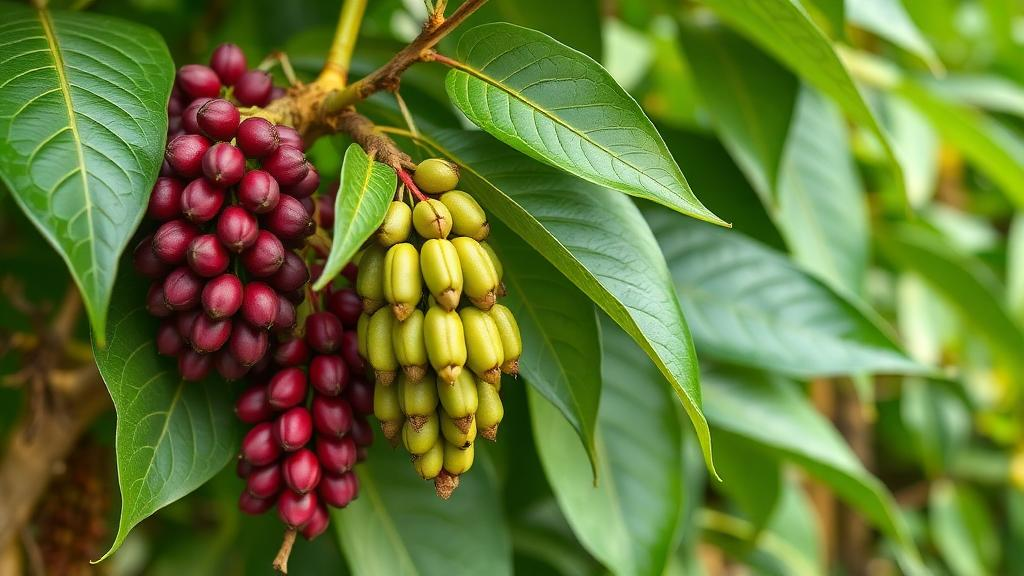
Deep in the hill states of North-East India, farmers have been growing varieties of yardlong bean for generations without ever knowing that some of their humble crops might rank among the most nutritionally remarkable legumes in the region. A new study published in BMC Plant Biology has now put those traditional landraces under the analytical microscope, and the results suggest that these locally adapted beans could become a cornerstone of future biofortification programs. Researchers from Central Agricultural University, Imphal, and its affiliated colleges surveyed thirty distinct landraces of yardlong bean, known scientifically as Vigna unguiculata subsp. sesquipedalis, collected from different states across North-East India. Their goal was ambitious: to determine whether the natural genetic variation within these traditional varieties could be harnessed to identify lines that combine dense nutrition with low levels of the anti-nutritional compounds that often limit the digestibility and health value of legumes.
Vegetable legumes occupy a special place in human nutrition because they deliver substantial quantities of protein, micronutrients, and health-promoting phytochemicals while carrying fewer anti-nutritional inhibitions than many grain legumes. Yardlong bean, a member of the legume family prized for its long, tender pods, is a nutrient-enriched crop across the North Eastern region of India. Yet the crop has often fallen short of its potential in nutritional studies because its landraces differ widely in how they partition assimilates and in the secondary metabolites they produce. That variability, far from being a drawback, is precisely what made the new investigation possible. The research team reasoned that if genetically influenced biochemical variation exists among local landraces, then careful profiling could reveal elite lines hiding in plain sight among varieties that farmers have preserved for decades.
To move beyond simple one-trait comparisons, the investigators combined comprehensive biochemical profiling with correlation analysis and principal component analysis, a statistical technique that condenses many measured variables into a small number of axes describing the major patterns of variation. This combination allowed the team to resolve coordinated metabolic modules, meaning groups of biochemical traits that tend to rise and fall together across genotypes. Such an approach is powerful because it reveals not just which landrace scores highest on a single measure, but which ones carry the most favorable overall combinations of nutritional, phytochemical, and anti-nutritional characteristics. The methodology also included genotype-by-trait biplots and a Z-score heatmap, tools that visualize how each accession performs relative to the group average across every measured parameter.
The headline finding is that the thirty accessions possess significant biochemical diversity across nutritional, phytochemical, and antinutritional characteristics. Two landraces, designated CHFYB-7 and CHFYB-2, stood out as exceptional nutritional and antioxidant genotypes, excelling in total soluble protein, carbohydrates, phenols, flavonoids, and antioxidant activity. Phenols and flavonoids are classes of secondary metabolites with well-documented roles in neutralizing reactive oxygen species, the unstable molecules that contribute to cellular damage, aging, and chronic disease. Antioxidant activity in plant foods is therefore a key indicator of potential health benefits, and the fact that these two landraces combine high antioxidant capacity with high protein and carbohydrate content makes them particularly valuable targets for breeding programs aimed at improving both nutrition and digestibility.
Vitamins told their own story of specialization among the landraces. CHFYB-5 recorded the highest content of vitamin A, the fat-soluble vitamin essential for vision, immune function, and epithelial health, while CHFYB-15 proved to be the vitamin C champion, an important trait given the water-soluble vitamin’s role in collagen synthesis and immune defense. Notably, CHFYB-15 also displayed low trypsin inhibitor activity. Trypsin inhibitors are anti-nutritional compounds that interfere with protein digestion by blocking a key digestive enzyme, so a landrace that pairs high vitamin C with low trypsin inhibition offers a rare double advantage: more micronutrients and better protein availability from the same serving of pods. This combination illustrates why the study’s multi-trait approach matters, since a landrace that looks ordinary on one measure can prove outstanding when its full biochemical profile is considered.
The statistical machinery of the study reinforced these individual findings and gave them structure. Positive correlations emerged between various nutritional characteristics, suggesting that selection for one beneficial trait is likely to pull others along with it, while some traits showed negative correlations that breeders will need to navigate carefully. Principal component analysis and genotype-by-trait biplots identified a genotype labeled G2 as carrying a positive and healthy combination of multiple biochemical characteristics. When the researchers ranked all thirty landraces on their overall nutritional quality, a clear hierarchy emerged: CHFYB-7 led the list, followed by CHFYB-11, CHFYB-15, CHFYB-2, and CHFYB-25. At the other end of the spectrum, the accession G28 received the lowest ranking, underscoring the wide functional gap that exists even within a single crop species grown in a single region.
Clustering analysis added another layer of insight by sorting the genotypes into two major groups. Cluster I contained seven landraces exhibiting relatively healthier biochemical compositions, a compact elite group that could serve as immediate parents in crossing programs. Cluster II gathered the remaining twenty-three landraces, which displayed greater biochemical diversity. That diversity is not a liability but a resource: it means the wider gene pool harbors a broad range of trait combinations, some of which may prove useful for traits not measured in this study or for adapting the crop to changing climatic conditions. The Z-score heatmap independently supported this two-cluster structure and highlighted the biochemical differences among genotypes, giving the researchers confidence that the grouping reflects genuine metabolic divergence rather than statistical noise.
The implications reach well beyond the fields of Arunachal Pradesh, Manipur, and neighboring states. Biofortification, the practice of breeding crops with enhanced nutritional profiles, has become a central strategy in the global fight against hidden hunger, the micronutrient deficiencies that affect billions of people who consume enough calories but not enough vitamins and minerals. Landraces such as CHFYB-7 and CHFYB-2, with their superior protein, phenol, flavonoid, and antioxidant profiles, represent ready-made ideotypes, meaning ideal plant models, that can help achieve both nutritional quality and digestibility through conventional breeding. Because these are locally adapted varieties, they likely carry resilience traits suited to the region’s challenging hill agriculture, an added bonus for breeding programs that must balance nutrition with agronomic performance.
The study also carries a conservation message. Traditional landraces around the world are being displaced by uniform modern varieties, and with each lost landrace goes a unique combination of genes shaped by generations of natural and farmer selection. The fact that researchers needed prior permission from village headmen and individual material owners to collect the thirty accessions used in this study is a reminder that these genetic resources are living cultural heritage, maintained by communities with deep knowledge of their crops. Documenting the biochemical value of these beans, as the new analysis has done, strengthens the case for preserving both the seeds and the farming systems that sustain them.
For now, the practical takeaway is a ranked shortlist of landraces that breeders and nutrition scientists can act on immediately. The overall ordering of CHFYB-7, CHFYB-11, CHFYB-15, CHFYB-2, and CHFYB-25 gives the research community a clear starting point for developing improved yardlong bean varieties that deliver more protein, more vitamins, more protective phytochemicals, and fewer digestive inhibitors. The work, conducted under the guidelines of the Directorate of Research at Central Agricultural University in Manipur and forming part of a doctoral research project without external funding, demonstrates how modern analytical chemistry and multivariate statistics can transform traditional crop diversity into a blueprint for healthier food. In the unassuming pods of a climbing bean grown across the hills of North-East India, science has found a library of nutritional possibility, and the task ahead is to read it fully and put it to work.
Subject of Research: Phytochemical and nutritional profiling of yardlong bean landraces from North-East India
Article Title: Phytochemical profiling and antioxidative potential of yardlong bean landraces of North-East India
Article References: Chamuah, S., Singh, S., Nimbolkar, P. K., Deo, C., Singh, A. K., Bhargav, V., Yatung, T., Maragal, S., Devchandra, N., Shukla, R., Jamoh, O., Maurya, S., Gonmei, G., Bhutia, N. D., & Phonia, L. (2026). Phytochemical profiling and antioxidative potential of yardlong bean landraces of North-East India. BMC Plant Biology. https://doi.org/10.1186/s12870-026-09875-y
Image Credits: AI Generated
DOI: 10.1186/s12870-026-09875-y
Keywords: yardlong bean, landraces, phytochemicals, antioxidants, biofortification, North-East India, Vigna unguiculata, anti-nutritional factors, principal component analysis, vitamin C, flavonoids, plant biochemistry
Alan Morgan. (October 4, 2026). Hidden Superbeans: North-East India Landraces Pack Powerful Antioxidants. Scienmag.