• HOME
  • NEWS
  • EXPLORE
    • CAREER
      • Companies
      • Jobs
    • EVENTS
    • iGEM
      • News
      • Team
    • PHOTOS
    • VIDEO
    • WIKI
  • BLOG
  • COMMUNITY
    • FACEBOOK
    • INSTAGRAM
    • TWITTER
Saturday, April 18, 2026
BIOENGINEER.ORG
No Result
View All Result
  • Login
  • HOME
  • NEWS
  • EXPLORE
    • CAREER
      • Companies
      • Jobs
        • Lecturer
        • PhD Studentship
        • Postdoc
        • Research Assistant
    • EVENTS
    • iGEM
      • News
      • Team
    • PHOTOS
    • VIDEO
    • WIKI
  • BLOG
  • COMMUNITY
    • FACEBOOK
    • INSTAGRAM
    • TWITTER
  • HOME
  • NEWS
  • EXPLORE
    • CAREER
      • Companies
      • Jobs
        • Lecturer
        • PhD Studentship
        • Postdoc
        • Research Assistant
    • EVENTS
    • iGEM
      • News
      • Team
    • PHOTOS
    • VIDEO
    • WIKI
  • BLOG
  • COMMUNITY
    • FACEBOOK
    • INSTAGRAM
    • TWITTER
No Result
View All Result
Bioengineer.org
No Result
View All Result
Home NEWS Science News Biology

Hidden costs of disease to greater Yellowstone elk

Bioengineer by Bioengineer
October 29, 2018
in Biology
Reading Time: 2 mins read
0
Share on FacebookShare on TwitterShare on LinkedinShare on RedditShare on Telegram
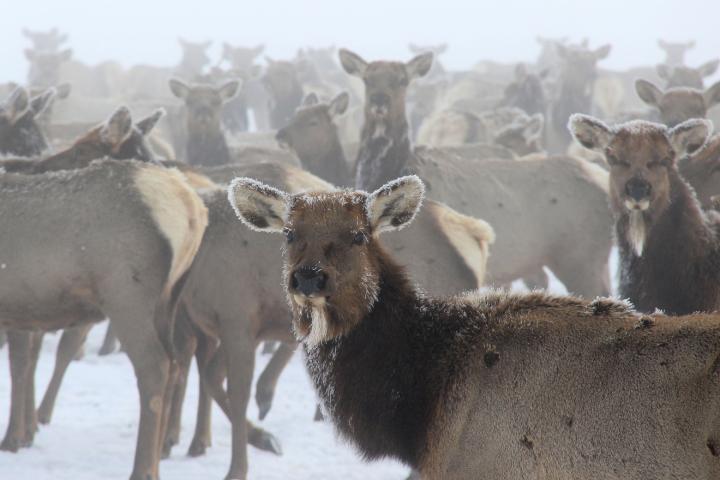
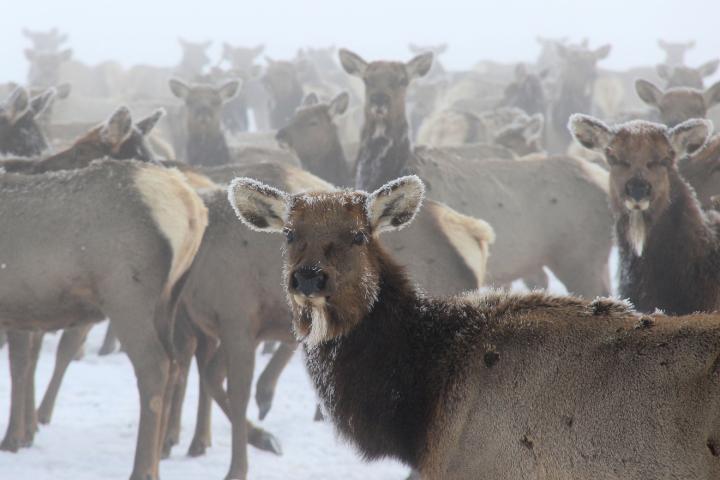
IMAGE

Credit: Mark Gocke/Wyoming Game and Fish Department

For decades researchers have known that a bacterial disease in elk, bison and cattle in the Greater Yellowstone Ecosystem causes periodic abortions in these animals and chronic illness in humans drinking infected cow's milk. The disease, called brucellosis, poses a financial concern for dairy producers and cattle ranchers, but its effects on the wild elk population have generally been considered minor.

In recent years, however, elk pregnancy rates have become the subject of controversy. Various researchers claim that stress caused by fear of wolves and nutritional deficiencies caused by drought can explain low pregnancy rates in specific elk herds, but until now the effects of brucellosis on elk pregnancy have not been scrutinized.

Utah State University researchers Gavin Cotterill and Johan du Toit report that by mid-winter, elk that test positive for brucellosis are less likely to be pregnant than healthy elk, independent from the abortions caused by that disease later in the year. Cotterill and du Toit, along with colleagues from the Wyoming Game and Fish Department, US Geological Survey Northern Rocky Mountain Science Center, and University of California Berkeley, discuss their findings in Ecology and Evolution published 28 October 2018. [DOI #10.1002/ece3.4521].

"Mid-winter elk pregnancy rates are often seen as an indicator of an elk herd's health and viability," says Cotterill, a PhD candidate at USU and lead author of the paper. "If we're interested in figuring out the effect that predators or climate are having on elk we need to also account for disease."

The researchers analyzed pregnancy and disease data collected over the last 20 years at Wyoming's supplemental winter feed-grounds for elk and ran additional pregnancy tests on stored blood samples.

"We found that the disease causes a substantial decline in the probability of pregnancy among young adult elk and the effect is weaker in older animals, but it's still unclear what the mechanism is that's causing this to happen," said du Toit.

The results are not a cause for alarm but are a signal that this disease, which came to the area in infected cattle, has previously hidden consequences for the wild elk population. Quantifying this effect is important, particularly as brucellosis is spreading through the elk population, so that the effects of other factors influencing elk reproduction may be estimated more accurately.

"Elk numbers in most of the region are high, and we don't expect that to change because of brucellosis," said Cotterill. "It's one more factor that researchers and managers need to keep in mind moving forward."

###

Media Contact

Gavin Cotterill
[email protected]
360-265-1248

https://qcnr.usu.edu/

Related Journal Article

http://dx.doi.org/10.1002/ece3.4521
Share12Tweet8Share2ShareShareShare2

Related Posts

On-Demand Growth of Liver Tissue Directly Within the Body

On-Demand Growth of Liver Tissue Directly Within the Body

April 17, 2026
Conserved DNA Architect Links Chloroplasts to Cell Cycle

Conserved DNA Architect Links Chloroplasts to Cell Cycle

April 17, 2026

UTS Study Reveals Toxic Metal Exposure from E-Cigarette Devices

April 17, 2026

Can Exercise Help You Beat Stress Hormones? New Insights from a Clinical Trial

April 17, 2026
Please login to join discussion

POPULAR NEWS

  • Scientists Investigate Possible Connection Between COVID-19 and Increased Lung Cancer Risk

    62 shares
    Share 25 Tweet 16
  • NSF funds machine-learning research at UNO and UNL to study energy requirements of walking in older adults

    100 shares
    Share 40 Tweet 25
  • Boosting Breast Cancer Risk Prediction with Genetics

    47 shares
    Share 19 Tweet 12
  • Popular Anti-Aging Compound Linked to Damage in Corpus Callosum, Study Finds

    46 shares
    Share 18 Tweet 12

About

BIOENGINEER.ORG

We bring you the latest biotechnology news from best research centers and universities around the world. Check our website.

Follow us

Recent News

Infectious Foci: Hidden Trigger in IgA Vasculitis

Pfizer Vaccine Safe, Effective in Juvenile Inflammatory Disease

Healthcare and Family Views on Dementia Meds Deprescribing

Subscribe to Blog via Email

Enter your email address to subscribe to this blog and receive notifications of new posts by email.

Join 79 other subscribers
  • Contact Us

Bioengineer.org © Copyright 2023 All Rights Reserved.

Welcome Back!

Login to your account below

Forgotten Password?

Retrieve your password

Please enter your username or email address to reset your password.

Log In
No Result
View All Result
  • Homepages
    • Home Page 1
    • Home Page 2
  • News
  • National
  • Business
  • Health
  • Lifestyle
  • Science

Bioengineer.org © Copyright 2023 All Rights Reserved.