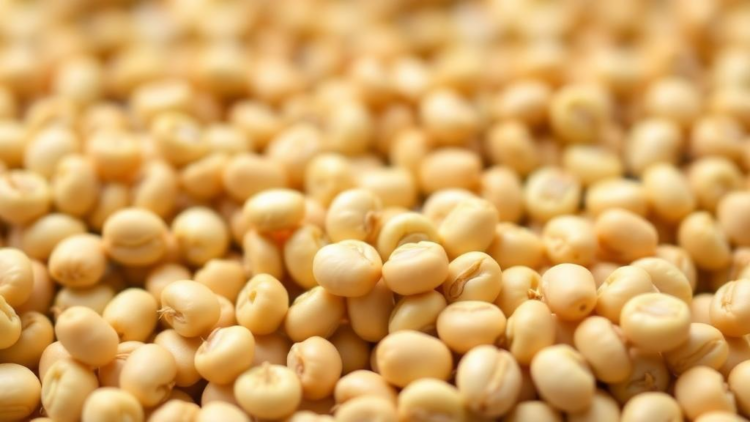
Every sack of imported soybean carries two invisible histories: the chemical treatments it survived in the field and the genetic modifications written into its DNA. For decades, food safety authorities have tracked these two stories separately. Pesticide laboratories measure residues against maximum residue limits, while genetic testing programs verify whether shipments comply with authorization and labeling rules for genetically modified organisms. A new study from Japanese researchers now argues that reading both histories together can reveal far more than either one alone, because the herbicides found in a shipment may point directly to the specific genetically modified events present in the beans.
The research, published in the Journal of Agriculture and Food Research, was led by Keisuke Soga and colleagues at Japan’s National Institute of Health Sciences and collaborating institutions. The team took soybean samples that had previously been analyzed for herbicide residues and subjected the very same material to a battery of event-specific real-time PCR tests. Their goal was exploratory but ambitious: to see whether the residue profile of glyphosate, glufosinate, and their metabolites could be matched to particular herbicide-tolerance traits in commercially distributed soybeans imported from the United States and Brazil.
The logic behind the approach rests on the biochemistry of herbicide tolerance. Glyphosate kills plants by inhibiting 5-enolpyruvylshikimate-3-phosphate synthase, or EPSPS, an enzyme essential for synthesizing aromatic amino acids through the shikimate pathway. Glyphosate-tolerant soybeans evade this attack by carrying a modified epsps gene, such as the cp4 epsps gene borrowed from the soil bacterium Agrobacterium tumefaciens strain CP4, which produces an enzyme the herbicide cannot bind. Glufosinate works differently: it blocks glutamine synthetase, causing toxic ammonia to accumulate and shutting down photosynthesis. Soybeans tolerate glufosinate by carrying the pat or bar gene, which encodes phosphinothricin N-acetyltransferase, an enzyme that acetylates the herbicide into N-acetyl-glufosinate, an inactive compound that no longer threatens the plant.
These mechanisms create a chemical fingerprint. A soybean carrying a modified epsps gene can survive glyphosate spraying and may retain detectable glyphosate residues, but it cannot convert glufosinate into its acetylated form. Conversely, a soybean carrying pat can metabolize glufosinate into N-acetyl-glufosinate, so the presence of that metabolite hints at a pat-containing event. The Japanese team reasoned that detecting glyphosate or the acetylated glufosinate metabolite in a shipment should statistically correlate with the presence of the corresponding transgenes, and that the strength of the correlation might even reveal which specific events dominate cultivation in the exporting country.
The sample set consisted of fifteen soybean lots: one edible soybean sample grown in Japan, eight feed samples from the United States, three non-GM samples from the United States imported under identity-preserved handling, and three feed samples from Brazil. Identity-preserved systems segregate non-GM soybeans from GM ones through documentation and traceability, though they cannot guarantee the complete absence of unintended commingling. The researchers ground 100 grams of each sample in a cryogenic mill, extracted genomic DNA, and screened for eleven GM events using primers and probes drawn from the European Union’s GMOMETHODS database and Japanese official detection methods, with the soybean lectin gene serving as an endogenous reference.
The qualitative results were striking. In the non-GM samples, GM events were essentially undetectable, with only a faint signal for event DAS-44406 in one sample. In the American feed samples, the team detected RRS, MON89788, FG72, A2704-12, A5547-127, and DAS-44406, while Brazilian feed samples were dominated by RRS, MON89788, and DAS-81419. The edible Japanese sample contained none of the tested events. Crucially, the events found in the herbicide-positive samples matched the residue chemistry: glyphosate-containing lots carried high levels of epsps-harboring events, and lots containing N-acetyl-glufosinate carried high levels of pat-harboring events.
Quantification sharpened the picture considerably. In American feed samples where glyphosate was detected, MON89788 ranged from 8.7 to 50.7 percent commingling, and DAS-44406, a stacked event carrying 2mepsps, pat, and aad-12 transgenes, reached an extraordinary 41.3 to 71.6 percent. In Brazilian feed samples, MON89788 dominated at 62.6 to 102.6 percent, with the value above 100 percent attributed to inherent measurement uncertainty in event-specific quantitative PCR rather than an impossible true percentage. Meanwhile, the American feed sample in which neither glufosinate nor its metabolite was detected showed low commingling for the pat-containing events, at 0.4 percent for DAS-44406 and 1.1 percent for A5547-127, reinforcing the link between the metabolite and the trait.
The authors interpret these patterns through the lens of regional agricultural practice. In the United States, herbicide use on soybeans has diversified markedly as growers battle glyphosate-resistant weeds. Department of Agriculture surveys show that in 2006 more than 50 million soybean acres were treated exclusively with glyphosate, but by 2012 that area had shrunk by roughly 20 million acres as farmers adopted tank mixes. By 2023, glyphosate isopropylamine remained the most widely used herbicide at 46 percent of planted acres, but 2,4-D choline salt followed at 37 percent, with glufosinate-ammonium at 23 percent. This diversification aligns neatly with the prominence of DAS-44406, whose stacked transgenes confer tolerance to glyphosate, glufosinate, and 2,4-D simultaneously.
Brazil tells a different story. No-tillage systems dominate Brazilian soybean production, and without plowing to control weeds, farmers lean heavily on herbicides; glyphosate was applied to roughly 95 percent of the soybean area by 2021. The insect-protected and glyphosate-tolerant stacked variety MON 87701 x MON 89788, introduced in the 2013/14 season, expanded from 1.2 million hectares to more than 30 million hectares, about 80 percent of national acreage by 2020/21. That near-total adoption explains why MON89788 commingling in Brazilian feed samples reached such extreme levels, while glufosinate-tolerant events remained scarce at 0.2 to 3.2 percent. The researchers note that as glyphosate-resistant weeds spread in Brazil, additional herbicide-tolerance traits may follow the American trajectory, making continued monitoring essential.
The study’s implications extend beyond curiosity. If herbicides or their metabolites appear in a product labeled non-GM, that could signal the presence of GM material and justify verification against labeling regulations, as illustrated by the glufosinate found in the identity-preserved American samples, which the authors attribute to cultivation practices, environmental sources, post-harvest handling, or commingling below the detection range of the genetic assays. Conversely, residue data can cross-check genetic findings, boosting overall reliability. The authors also point toward future work on 2,4-D and dicamba, whose tolerance events, DAS-44406 and MON87708 respectively, metabolize these auxin-mimicking herbicides into detectable signature compounds. Because the sample set was small, the team frames the work as exploratory rather than a quantitative correlation analysis, but the concept is clear: two regulatory silos, pesticide monitoring and GM surveillance, each hold half of a story that only makes full sense when the datasets are combined. Extending this integrated approach to maize and other crops could give food safety authorities a powerful, mutually validating tool for traceability and enforcement in global commodity chains.
Subject of Research: Association between herbicide residues and herbicide-tolerance GM soybean events in imported soybean samples
Article Title: Association between herbicide residues and herbicide tolerance-related genetically modified events in imported soybean samples
Article References: Soga, K., Yoshiba, S., Takabatake, R., Taguchi, T., Tsutsumi, T., Ito, R., Iwasaki, Y., Akiyama, H., & Shibata, N. (2026). Association between herbicide residues and herbicide tolerance-related genetically modified events in imported soybean samples. Journal of Agriculture and Food Research, 31, Article 103321. https://doi.org/10.1016/j.jafr.2026.103321
Image Credits: AI Generated
DOI: 10.1016/j.jafr.2026.103321
Keywords: glyphosate, glufosinate, genetically modified soybeans, herbicide tolerance, real-time PCR, food safety monitoring, maximum residue limits, MON89788, DAS-44406, identity preservation, Brazil soybean exports, United States soybean exports
Cite Scienmag News
APA MLA Chicago
Alan Morgan. (October 2, 2026). Herbicide Residues in Imported Soybeans Reveal Hidden Fingerprints of GM Crop Events. Scienmag. https://scienmag.com/herbicide-residues-in-imported-soybeans-reveal-hidden-fingerprints-of-gm-crop-events/
Alan Morgan. “Herbicide Residues in Imported Soybeans Reveal Hidden Fingerprints of GM Crop Events.” Scienmag, 2 October 2026, https://scienmag.com/herbicide-residues-in-imported-soybeans-reveal-hidden-fingerprints-of-gm-crop-events/. Accessed 2 October 2026.
Alan Morgan. “Herbicide Residues in Imported Soybeans Reveal Hidden Fingerprints of GM Crop Events.” Scienmag. October 2, 2026. https://scienmag.com/herbicide-residues-in-imported-soybeans-reveal-hidden-fingerprints-of-gm-crop-events/
Copy citation Download RIS
Tags: Brazil soybean exportschemical and genetic fingerprinting of soybeanscombined chemical and genetic testing for food traceabilityDAS-44406detecting GM crop events through chemical residuesfood safety authorities GMO monitoringfood safety monitoringgenetically modified crop fingerprintinggenetically modified soybeansglufosinateglyphosateglyphosate and glufosinate residuesherbicide residue analysis in soybeansherbicide residue and GMO event correlationherbicide residue profiling in imported cropsherbicide toleranceherbicide-tolerance traits in GM soybeansidentity preservationimported soybean food safety testingmaximum residue limitsMON89788real-time PCRreal-time PCR for GMO detectionUnited States soybean exports