

• HOME
  • NEWS
  • EXPLORE
    • CAREER
      • Companies
      • Jobs
    • EVENTS
    • iGEM
      • News
      • Team
    • PHOTOS
    • VIDEO
    • WIKI
  • BLOG
  • COMMUNITY
    • FACEBOOK
    • INSTAGRAM
    • TWITTER
Monday, May 25, 2026
BIOENGINEER.ORG
No Result
View All Result
  • Login
  • HOME
  • NEWS
  • EXPLORE
    • CAREER
      • Companies
      • Jobs
        • Lecturer
        • PhD Studentship
        • Postdoc
        • Research Assistant
    • EVENTS
    • iGEM
      • News
      • Team
    • PHOTOS
    • VIDEO
    • WIKI
  • BLOG
  • COMMUNITY
    • FACEBOOK
    • INSTAGRAM
    • TWITTER
  • HOME
  • NEWS
  • EXPLORE
    • CAREER
      • Companies
      • Jobs
        • Lecturer
        • PhD Studentship
        • Postdoc
        • Research Assistant
    • EVENTS
    • iGEM
      • News
      • Team
    • PHOTOS
    • VIDEO
    • WIKI
  • BLOG
  • COMMUNITY
    • FACEBOOK
    • INSTAGRAM
    • TWITTER
No Result
View All Result
Bioengineer.org
No Result
View All Result
Home NEWS Science News Biology

Helping corals to cope with pressure

Bioengineer by Bioengineer
August 28, 2017
in Biology
Reading Time: 2 mins read
0
Share on FacebookShare on TwitterShare on LinkedinShare on RedditShare on Telegram
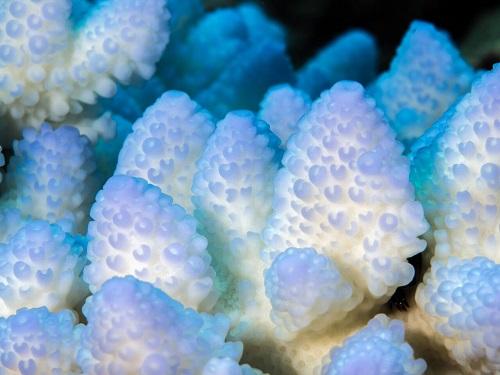
IMAGE

Credit: © 2016 Anna Roik

Tiny plant cells, known as dinoflagellates, that live within coral tissue can help to regulate the osmotic pressure in corals to better cope with a highly saline environment. KAUST researchers suggest this may be one of the secrets of corals from the Red Sea and Persian/Arabian Gulf, which are extremely tolerant of heat in extraordinarily salty waters.

Coral reefs have high biodiversity and economic value, yet these vital ecosystems are at risk as rising sea temperatures increase the frequency of local and global coral bleaching events. KAUST researchers are searching for strategies to help reduce future reef loss. "The effects of temperature and pH changes are intensely studied; however, the implications of climate-related salinity changes on corals have received little attention," explains PhD student Till Röthig, who led the paper with postdoctoral fellow Michael Ochsenkühn.

The foundation of coral reefs is based on a symbiotic relationship of the coral animal with dinoflagellate Symbiodinium species, which provide energy to the coral in exchange for nutrients and carbon dioxide. The researchers found that free-living Symbiodinium cope with highly saline conditions by producing and accumulating compatible organic osmolytes (COOs) to adjust their osmotic pressure. Screening Symbiodinium cultures exposed to low, ambient and high levels of salinity revealed that the carbohydrate floridoside is universally present at high levels in algae and corals at high salinities.

"The synthesis of COOs represents a quickly available and viable long-term solution to establish an osmotic equilibrium," explains Röthig. "Our research demonstrates that the COO floridoside is used as a conserved osmolyte to help Symbiodinium and corals to osmoadapt to the saline conditions."

Also important is that floridoside can help counter reactive oxygen species (ROS) produced through salinity stress, adds team leader, Christian Voolstra.

"ROS are produced under salinity stress, but are also produced under heat stress where they can cause coral bleaching," explains Voolstra. "Thus, the same molecule that adjusts the osmotic equilibrium and protects the dinoflagellate and coral from stress from high salinity may inadvertently contribute to increased heat tolerance due to its ROS scavenging properties."

Knowing how salinity changes impact corals has important implications for management especially considering the effects of climate change," says Röthig. "For example, suggested transplantation of temperature-resilient corals from the Red Sea to other habitats may not confer the desired temperature resistance in a new, less saline environment. Conversely, increases in seawater salinities in some places may help corals to become more stress tolerant."

###

Media Contact

Carolyn Unck
[email protected]

http://kaust.edu.sa/

Original Source

https://discovery.kaust.edu.sa/en/article/410/helping-corals-to-cope-with-pressure http://dx.doi.org/10.1126/sciadv.1602047


Share12Tweet8Share2ShareShareShare2

Related Posts

Tiny Blue Octopus from the Galápagos Islands: Small Enough to Fit in the Palm of Your Hand — Biology

Tiny Blue Octopus from the Galápagos Islands: Small Enough to Fit in the Palm of Your Hand

May 25, 2026
Rising Sightings of Blue and Fin Whales in the South East Atlantic — Biology

Rising Sightings of Blue and Fin Whales in the South East Atlantic

May 23, 2026

New Maps Reveal How European Landscapes Can Simultaneously Promote Climate Action and Biodiversity Conservation

May 22, 2026

University of Cincinnati Structural Biologists Achieve World First in Visualizing Crucial Cell Protein

May 22, 2026
Please login to join discussion

POPULAR NEWS

  • ESMO 2025: mRNA COVID Vaccines Enhance Efficacy of Cancer Immunotherapy

    315 shares
    Share 126 Tweet 79
  • New Study Reveals Plants Can Detect the Sound of Rain

    734 shares
    Share 293 Tweet 183
  • Research Indicates Potential Connection Between Prenatal Medication Exposure and Elevated Autism Risk

    847 shares
    Share 339 Tweet 212
  • Common Food Preservatives Associated with Elevated Blood Pressure and Increased Heart Disease Risk

    56 shares
    Share 22 Tweet 14

About

We bring you the latest biotechnology news from best research centers and universities around the world. Check our website.

Follow us

Recent News

Machine Learning Enhances Dual-Target Deep Brain Stimulation

Genetic Drivers of Bile Acid Metabolism Uncovered

Undermining Elder Autonomy Harms Physical Health

Subscribe to Blog via Email

Enter your email address to subscribe to this blog and receive notifications of new posts by email.

Join 83 other subscribers
  • Contact Us

Bioengineer.org © Copyright 2023 All Rights Reserved.

Welcome Back!

Login to your account below

Forgotten Password?

Retrieve your password

Please enter your username or email address to reset your password.

Log In
No Result
View All Result
  • Homepages
    • Home Page 1
    • Home Page 2
  • News
  • National
  • Business
  • Health
  • Lifestyle
  • Science

Bioengineer.org © Copyright 2023 All Rights Reserved.
