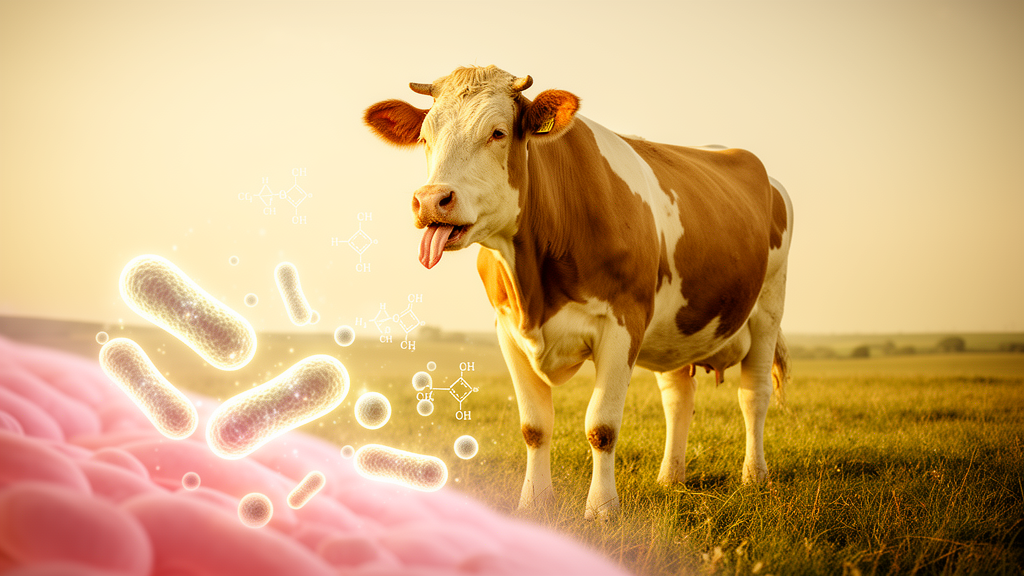
Heat-stressed Simmental cattle show coordinated changes in their vaginal microbiota, serotonin metabolism, and reproductive hormones, according to a multi-omics study published in BMC Veterinary Research. The work, led by Xing Zhao and colleagues, integrated serum biochemistry, 16S rRNA gene sequencing, metagenomic sequencing, and LC–MS/MS-based untargeted metabolomics to characterize how heat stress relates to production performance, immune and oxidative stress markers, reproductive hormones, and metabolites in cattle.
The researchers evaluated Simmental cattle at different physiological stages for heat stress using the temperature-humidity index (THI) together with physiological parameters. Cattle were classified as heat-stressed or non-heat-stressed, and the team then compared production measures, immune and oxidative stress indices, reproductive hormones, the vaginal microbiota, and metabolites in both vaginal and serum samples. Spearman correlation analysis was used to integrate the microbial, metabolic, and serum variables.
Heat stress was associated with reduced rumination time, reduced activity, and lower milk yield. The heat-stressed animals also showed alterations in immune and oxidative stress indices and decreased serum levels of several reproductive hormones: luteinizing hormone (LH), follicle-stimulating hormone (FSH), prolactin (PRL), progesterone (P4), and gonadotropin-releasing hormone (GnRH).
The vaginal microbiota analysis revealed differences in several alpha-diversity indices and in the abundance of specific bacterial taxa between heat-stressed and non-heat-stressed cattle. Notably, however, separation of the overall microbial community structure between the two groups was limited, meaning the broad composition of the vaginal microbiome did not shift dramatically even though particular taxa changed in abundance.
Metabolomic profiling of both vaginal and serum samples revealed distinct metabolic profiles between heat-stressed and non-heat-stressed conditions.
The correlation analysis produced the study’s most striking observation: the abundance of Pseudomonas syringae in the vaginal microbiota was negatively correlated with serum levels of GnRH, P4, PRL, and LH, and positively correlated with serum 5-HT levels. This pattern suggested an association among vaginal microbial alterations, serotonin metabolism, and changes in reproductive hormones, and it identified P. syringae as a key differentially abundant taxon worth testing experimentally.
To probe the biological effects of that taxon, the team used a mouse model. Following intraperitoneal inoculation of mice with P. syringae, serum 5-HT and melatonin (MT) levels increased, whereas FSH and GnRH levels decreased, and LH levels showed no significant change. This experiment provides direct evidence that P. syringae exposure can alter serotonin-related and reproductive endocrine measures in mice, though the authors’ findings in cattle themselves remain correlational, and the mouse route of exposure does not reproduce the natural vaginal context in cattle.
Collectively, the authors conclude that heat stress in Simmental cattle is accompanied by coordinated alterations in production performance, reproductive endocrine profiles, the vaginal microbiota, and host metabolism. They position the work as a novel perspective for understanding the reproductive endocrine changes associated with heat stress in this breed. Because the study design links multiple data layers within the same animals, it offers a framework for generating hypotheses about microbe–hormone interactions under heat stress, while leaving open the questions of causality, mechanism, and practical interventions that future research will need to address.
Subject of Research: Heat stress-associated vaginal microbial, serotonin metabolism, and reproductive endocrine changes in Simmental cattle
Article Title: Multi-omics analysis links heat stress-associated vaginal microbial alterations with serotonin metabolism and reproductive endocrine changes in Simmental cattle
Article References: Zhao, X., Wang, W., Gu, Y., Tan, X., Luo, R., Liu, R., Li, B., Liu, J., Cai, D., Zuo, Z., & Ma, X. (2026). Multi-omics analysis links heat stress-associated vaginal microbial alterations with serotonin metabolism and reproductive endocrine changes in Simmental cattle. BMC Veterinary Research. https://doi.org/10.1186/s12917-026-06052-z
Image Credits: AI Generated
DOI: 10.1186/s12917-026-06052-z
Keywords: heat stress, Simmental cattle, vaginal microbiota, serotonin, reproductive hormones, Pseudomonas syringae, multi-omics, metabolomics, 16S rRNA sequencing, THI, BMC Veterinary Research, analysis
News Source: William Thompson. (October 28, 2026). Heat stress reshapes vaginal microbes and serotonin in Simmental cattle. Scienmag.