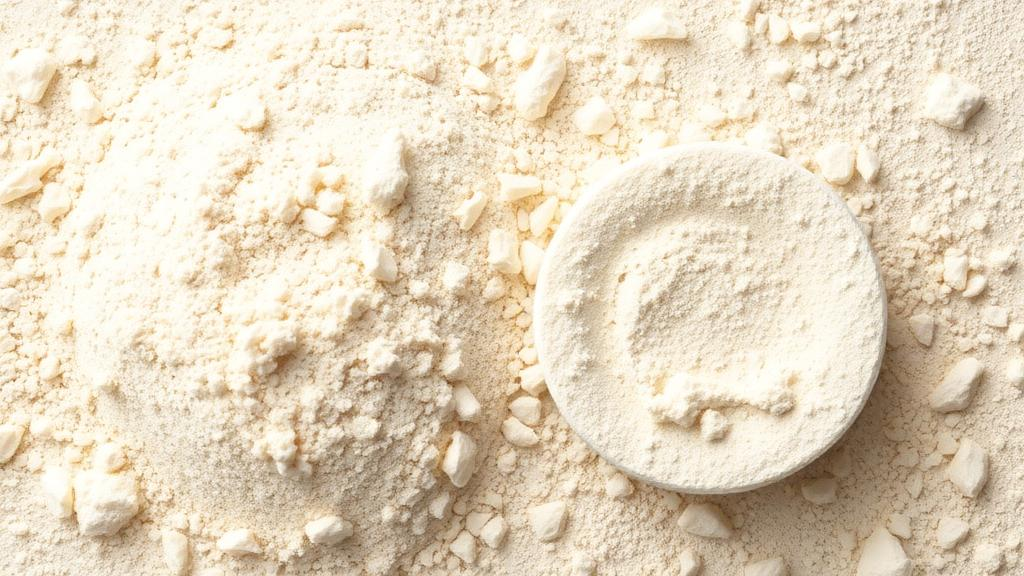
Every year, the world’s tofu and soymilk factories churn out mountains of a pale, fibrous by-product that most people have never heard of: okara. This insoluble residue, left behind after soybeans are crushed and filtered, is quietly one of the most underappreciated ingredients in the food system. Dried okara contains roughly 50 percent dietary fiber, about 25 percent protein, and around 10 percent lipid, along with a suite of bioactive compounds. Yet enormous quantities are still dumped into animal feed or fertilizer, largely because fresh okara spoils quickly and carries a stubborn beany odor and gritty mouthfeel that food manufacturers have struggled to overcome. A new study from Ghana now offers a carefully controlled answer to a deceptively simple question: what happens when you heat okara before letting nature’s own microbes ferment it?
Researchers at the University for Development Studies in Ghana’s Northern Region collected fresh wet okara from two artisanal tofu and soymilk processors near their campus, combining the batches into a homogeneous supply within minutes of collection. They then designed a rigorous 2 × 5 factorial experiment: okara was either heated at 90 to 100 degrees Celsius for just five minutes, mimicking traditional hot processing, or left unheated, and both groups were spontaneously fermented at 25 degrees Celsius for 0, 12, 24, 36, or 48 hours. No starter culture was added, meaning the fermentation relied entirely on whatever microorganisms happened to be present. After fermentation, samples were sun-dried for four to five hours at roughly 35 to 38 degrees Celsius, consistent with traditional flour processing in northern Ghana, and milled into flour for analysis. Three independent processing replicates produced 30 distinct experimental samples.
The most striking finding concerned flavor. A panel of 25 semi-trained food science students, evaluating samples in an ISO-standard sensory laboratory over three days, rated beany-flavor intensity on 9-point scales. Fermentation duration turned out to be the overwhelming driver of this attribute, explaining nearly 98 percent of the variance. Scores stayed low at 0 and 12 hours, hovering around 2.2 to 2.7, but jumped dramatically to between 6.6 and 7.5 once fermentation extended past the 12-hour mark. Crucially, the five-minute heat pretreatment itself had no significant effect, and there was no meaningful interaction between heating and fermentation time. In other words, the clock, not the heat, controlled the flavor trajectory, and the sweet spot was unmistakably early fermentation.
The authors are careful about what those rising scores actually mean. Because the panel was trained only on beany-flavor references, the elevated ratings after 24 hours may partly reflect the accumulation of new fermentation-derived odorants, such as the cheesy, natto-like, or fermented notes that other studies have linked to microbial metabolites like acetoin, pyrazines, and branched-chain fatty acids, rather than a true intensification of soybean beany character. Previous work has shown that fermentation can reduce aldehydes like hexanal, a major beany compound, while simultaneously generating entirely new aroma-active molecules. Without volatile profiling, the study cannot separate these contributions, but the practical message stands: extending spontaneous fermentation beyond 12 hours did not progressively improve the sensory profile.
Beneath the sensory story, the fermentation chemistry told a more complicated tale. Both pH and titratable acidity responded strongly to fermentation duration, but with a surprising twist: a significant interaction with thermal pretreatment. In unheated okara, pH fell from 5.35 to 4.48 within 12 hours, then rebounded sharply to 6.52 at 24 hours before dropping again to 4.24 by 48 hours. Heated samples followed the same phasic pattern, dipping to 4.78 at 12 hours, spiking to 6.74 at 24 hours, and ending at 4.59. This 24-hour rebound suggests that acidification was not sustained, possibly because the dominant microbial populations shifted toward proteolytic activity, generating alkaline nitrogenous compounds such as ammonia, a phenomenon documented in other spontaneous legume fermentations. The researchers emphasize, however, that they did not characterize the microbial community, so these mechanisms remain plausible explanations rather than proven causes.
Nutritionally, the flour held its own throughout. Crude protein ranged from about 24.5 to nearly 30 grams per 100 grams, peaking in the heated 12-hour sample, while carbohydrate, fat, ash, and calculated energy all shifted with fermentation time in treatment-dependent ways. The authors caution that these increases in measured protein and fat proportions do not indicate net synthesis of new nutrients; they more likely reflect proportional redistribution as microbes consumed organic matter and altered extractability. Similarly, ash fluctuations represent shifts in the inorganic fraction relative to declining organic components, not mineral generation. The study’s honesty on these interpretive limits is refreshing in a field where compositional gains are often oversold.
Phytochemical measurements added another layer of nuance. Total phenolic content rose from around 5.8 to over 12 micrograms of gallic acid equivalents per gram during the first 24 hours, consistent with microbial enzymes liberating phenolics from bound forms, but then declined by 48 hours, with the trajectory diverging between heated and unheated samples. Phytate, the notorious antinutrient that binds minerals, followed a non-linear path, peaking around 24 hours before dropping to its lowest levels, roughly 272 milligrams per 100 grams, at 48 hours in heated samples. Tannins showed similarly complex, pretreatment-dependent swings. None of these changes translate directly into claims about mineral bioavailability, which was not measured, but they do suggest that fermentation time reshapes the phytochemical landscape in ways that simple longer-is-better thinking misses entirely.
Functional properties, which determine how a flour behaves in real food formulations, also responded in treatment-specific ways. Water absorption capacity ranged from 3.75 to 5.02 grams of water per gram of flour, with the highest value in the heated 24-hour sample, while oil absorption and swelling power varied more modestly. Bulk and tapped densities shifted with fermentation, though the Hausner ratio and Carr’s index, the standard powder-flow metrics, remained statistically unchanged. The authors note that okara’s swelling behavior cannot be attributed to starch gelatinization alone, since the material is dominated by insoluble fiber and protein, and that heat and fermentation likely modified the accessibility and organization of water-binding components in the matrix.
Perhaps the most elegant analytical touch was the principal component analysis, which mapped all ten treatment combinations across eight quality variables. The first three components captured over 81 percent of the variation, and the patterns revealed that prolonged fermentation pushed quality attributes in different directions simultaneously rather than producing a uniform improvement. Beany flavor loaded almost entirely onto a third dimension separate from the dominant physicochemical variation, underscoring that flavor and composition respond to fermentation on partly independent tracks. The heated 12-hour sample occupied a favorable region combining low beany intensity with comparatively high measured protein.
The bottom line is a practical recommendation wrapped in appropriate caveats: heating okara at 90 to 100 degrees Celsius for five minutes followed by roughly 12 hours of spontaneous fermentation offered the best balance of low beany flavor, solid protein content, and acceptable functional properties among the tested conditions. The researchers are explicit that this is not proof of universal optimality, consumer acceptance, or microbiological safety. The pH rebound at 24 hours, combined with an uncharacterized natural microbial community and no starter culture, means safety verification is essential before any food application. Future work, they argue, should profile the microorganisms, metabolites, and volatile compounds driving these changes, and test the selected treatment in real formulated foods with actual consumers. For now, the study transforms a waste-stream liability into a data-backed ingredient candidate, and it does so with a methodological rigor that other valorization studies would do well to imitate.
Subject of Research: Effects of thermal pretreatment and spontaneous fermentation duration on the sensory, physicochemical, phytochemical, and functional quality of okara flour
Article Title: Effects of Thermal Pretreatment and Spontaneous Fermentation on the Quality Characteristics of Okara Flour
Article References: Bawa, A.-A., Akabanda, F., & Afoakwah, N. A. (2026). Effects of Thermal Pretreatment and Spontaneous Fermentation on the Quality Characteristics of Okara Flour. Food Science & Nutrition, 14(10), Article e72453. https://doi.org/10.1002/fsn3.72453
Image Credits: AI Generated
DOI: 10.1002/fsn3.72453
Keywords: okara, soybean by-product, spontaneous fermentation, thermal pretreatment, beany flavor, food valorization, phytochemicals, phytate, water absorption capacity, flour quality, food science, Ghana
News Source: Daisy Hatcher. (October 6, 2026). Heat and Fermentation Timing Shape the Quality of Okara Flour. Scienmag.