04/09/2024
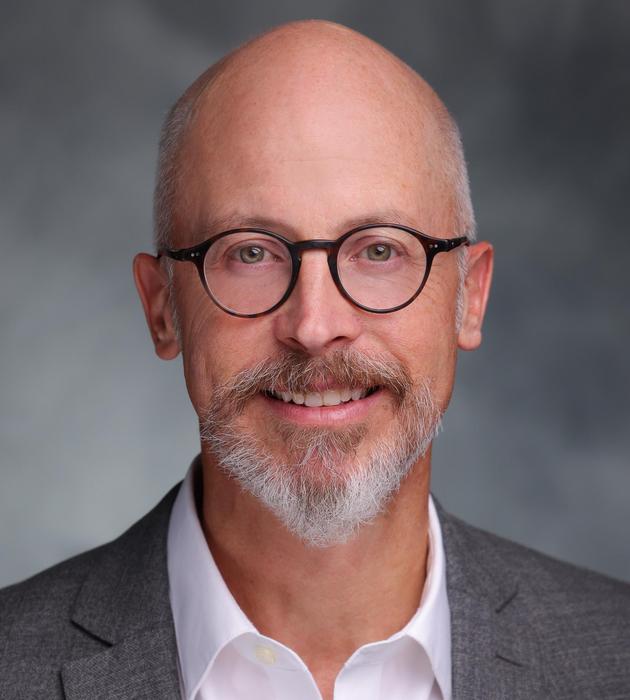
Credit: Kenneth Poss
04/09/2024
CONTACT: Deneen Wellik, [email protected]
Heart regeneration pioneer to join UW–Madison, Morgridge Institute
MADISON — A biologist who explores the potential life-saving mechanisms of how organisms regenerate damaged heart and spinal cord tissue will join the University of Wisconsin–Madison and the Morgridge Institute for Research this fall.
Kenneth Poss, presently the James B. Duke Professor of Regenerative Biology at Duke University, explores a research area that has grown tremendously in the years following James Thomson’s landmark discoveries in human stem cells. With Thomson’s retirement in 2022, the School of Medicine and Public Health at UW–Madison and Morgridge teamed together to recruit another international leader to bolster Wisconsin’s leadership in this biomedically important field.
“We are delighted to partner with the Morgridge Institute in the recruitment of an internationally renowned leader in stem cell research,” says Robert N. Golden, dean of the School of Medicine and Public Health. “We look forward to having Ken Poss join the vibrant group of scientists on our campus who are tirelessly focused on advancing the field of stem cell and regenerative medicine.”
Poss studies the mystery of how some animal species are capable of regenerating virtually any damaged tissue in their body. The Poss Lab uses zebrafish, a model species that is uniquely suited to reveal mechanisms of regeneration. He was the first to demonstrate heart muscle regeneration in this model organism in response to injuries that would be lethal to mammals, including humans.
While Poss mainly investigates the fundamental rules of organ regeneration in zebrafish, the work raises exciting questions about whether similar capabilities could one day be unlocked in humans. Human heart tissue damaged by heart attacks is unable to repair and regenerate, leading to scarring and often debilitating loss of function for millions of people.
Based on recent discoveries in the Poss lab and others globally, medical applications for heart repair are quickly becoming a question not of “if,” but of “when.”
The Poss Lab published work in 2023 that showed that genetic “enhancer elements” that switch on regeneration programs in zebrafish, which they had discovered years before, can also work in mammals. These enhancer elements are capable of guiding repair of damaged tissue in studies in mice and pigs. Most importantly, Poss says, the regeneration responses were restricted just to the injury site, and the enhancers shut down naturally over time.
“It’s a strong proof-of-concept study,” Poss says. “Factors that can turn on regeneration are often very potent factors that if mutated or over-expressed could cause cancer. We will need to engineer them in ways that will have the very tightest control only in a specific cell type for a specific time.”
Poss, a native of Green Bay, says coming to Madison opens a range of exciting possibilities for advancing regenerative biology. The breadth of UW–Madison’s excellence is already a big draw, he says, with 100-plus labs that are actively involved in regenerative, stem cell and developmental biology. In addition, he looks forward to leading recruitment of new faculty positions in regenerative biology and training the next generation of graduate students and postdocs in the field.
While his lab will be housed at Morgridge, a private nonprofit research institute that partners with UW–Madison, his academic home will be the Department of Cell and Regenerative Biology in the School of Medicine and Public Health.
“I think that this community will be very competitive for creating a national center for studying tissue regeneration,” says Poss, who co-founded the International Society for Regenerative Biology in 2021. “There will be more ways to make our strengths clear to everyone. I hope my role will be to help crystallize and get more people excited about this field.”
Deneen Wellik, chair of cell and regenerative biology, says Poss is coming to Madison at a great time. Research in past decades in developmental and stem cell biology has greatly increased our understanding of how tissues develop normally. This research has led to deep connections to regenerative biology — turning attention to how these cells can be coaxed to re-engage in these processes to promote repair and regeneration.
“UW–Madison in general, and our department specifically, has invested significant resources in recent years to hiring faculty in the regenerative biology field,” Wellik says. “To have added such an outstanding leader will amplify our strength in this field and augment continued growth at UW–Madison. Further, expertise in imaging and genomics at UW-Madison will complement advances in regenerative biology.”
Morgridge CEO Brad Schwartz says that when Thomson retired in 2022, the institute prioritized bringing in a major scientific leader who could provide a spark to this burgeoning field. Poss was the ideal candidate, not just as a great scientist but as someone who wants to build community and strengthen the whole of his field, he says.
“At Morgridge we are very committed to curiosity-driven research and fundamental mechanisms of biology, and that is really attractive to Ken,” Schwartz adds. “Because that’s how he got to where he is today, by following these intrinsically fascinating questions.”
Poss earned his Ph.D. at the Massachusetts Institute of Technology (MIT) in 1998 and has been on the faculty at Duke University since 2003. Growing up in Green Bay, Poss is a huge Packers fan and as a kid he spent part of his summers serving food and cleaning dishes at Packers training camp. “That was probably my most prestigious job,” he quips.