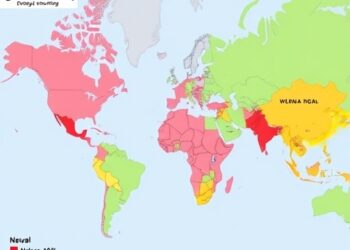
Diseases such as cancer, heart disease and stroke are deadlier in the developing world than in rich nations.
This is the finding of a new analysis from researchers at Imperial College London.
The paper, published in the journal Nature, revealed that death rates in low and middle income tropical countries from so-called non-communicable diseases (NCDs), are higher than from NCDs in Western countries.
Non-communicable disease are defined as conditions that cannot pass from person-to-person and include cancer, cardiovascular diseases, diabetes, kidney and liver disease, neurological conditions such as dementia, and mental health disorders.
Professor Majid Ezzati, lead author of the analysis from the School of Public Health at Imperial, said: "The classic portrayal of disease in poor countries is one of infections and parasites, and not conditions such as cancer and heart disease which people associate with wealthy nations. However this is not the case, and low income countries suffer more from chronic conditions than richer countries."
Among other findings, the new analysis revealed death rates from heart disease in low and middle income tropical countries were higher than that of high income countries – at least 90 deaths per 100,000 people compared to 61 deaths per 100,000 people. Stroke death rates were also much higher – at least 49 deaths per 100,000 compared to 22 per 100,000.
The research also found that cervical, stomach, and liver cancers had higher death rates in low and middle income tropical countries than in Western nations. The team say many of these cancers are in fact due to bacteria or viruses. For example, almost all cervical cancer cases are due to the human papilloma virus.
Diabetes death rates were also higher in low and middle income tropical countries compared to wealthier nations – at least 32 deaths per 100,000 compared to 11 per 100,000.
The team analysed international mortality data in Western countries, and compared this with data from low and middle-income tropical countries. These were defined as any country that had half or more of their land area between the Tropic of Cancer and the Tropic of Capricorn, and included most countries in Africa, Southeast Asia, and Latin America and the Caribbean (around 80 countries in total). Death rates were adjusted for age differences across the various countries.
The researchers found that of the 25.3 million deaths in these tropical regions in 2016, 34 per cent were from infectious and parasitic diseases, conditions surrounding pregnancy and birth, and nutritional deficiencies – while 55 per cent were from non-communicable diseases such as cancer and heart disease. Non-communicable diseases account for 90 per cent of all deaths in high income Western countries.
One of the reasons for higher death rates from chronic diseases in low-income countries is due to these diseases being detected at a later, more advanced, stage, and less effective treatments being available compared to high-income Western countries.
Cardiovascular diseases, especially heart disease and stroke, were one of the biggest killers in low and middle income countries, with nearly one in four deaths due to the condition. High blood pressure is a leading risk factor for cardiovascular disease. The team state that blood pressure is higher in low and middle-income nations than in Western countries, with the highest levels of blood pressure found in sub-Saharan Africa.
The team acknowledge that some nations in their analysis have more robust data than others – yet the overall picture remains clear.
"The persistent large burden of cancer and heart disease deaths in developing nations is due to a range of factors – for instance smoking and alcohol use are on the rise in low and middle-income countries, which would certainly play a role. But this is ultimately a story of poverty, poor housing and nutrition, and inadequate healthcare that mean diseases such as heart disease and cancer are diagnosed late, and then the treatments offered are inadequate," said Professor Ezzati.
The team outline 25 evidence-based recommendations for reducing non-communicable diseases in low and middle income countries, including measures to reduce alcohol and tobacco consumption, better housing, and more resources for detecting disease at an early stage and treating it.
###
Media Contact
kate wighton
[email protected]
020-759-42409
@imperialspark
http://www3.imperial.ac.uk/college/news