LOS ANGELES — Hearing loss affects approximately 40 million American adults, yet only one in 10 people who need hearing aids use them, research shows.
Credit: Ricardo Carrasco III
LOS ANGELES — Hearing loss affects approximately 40 million American adults, yet only one in 10 people who need hearing aids use them, research shows.
Those who don’t use hearing aids but should may want to make wearing them one of their New Year’s resolutions, according to a new study from Keck Medicine of USC published today in The Lancet Healthy Longevity.
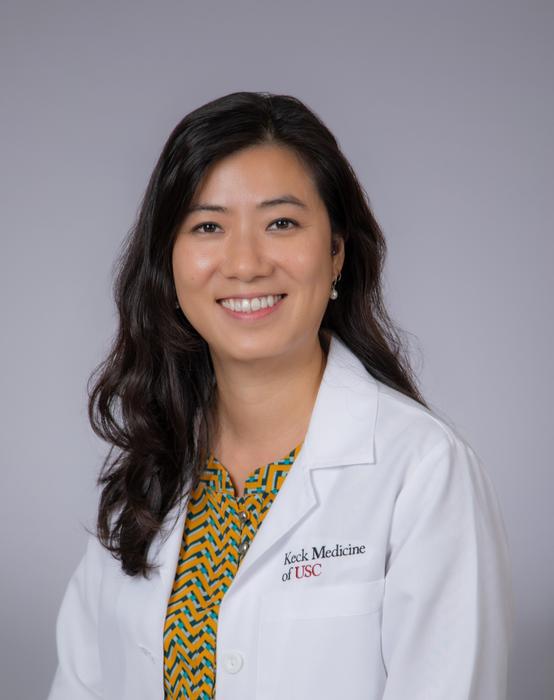
“We found that adults with hearing loss who regularly used hearing aids had a 24% lower risk of mortality than those who never wore them,” said Janet Choi, MD, MPH, an otolaryngologist with Keck Medicine and lead researcher of the study. “These results are exciting because they suggest that hearing aids may play a protective role in people’s health and prevent early death.”
Previous research has shown that untreated hearing loss can result in a reduced life span (as well as other poor outcomes such as social isolation, depression and dementia). However, until now, there has been very little research examining if the use of hearing aids can reduce the risk of death. The study represents the most comprehensive analysis to date on the relationship between hearing loss, hearing aid use and mortality in the United States, according to Choi.
Choi and her fellow researchers used data compiled by the National Health and Nutrition Examination Survey between 1999-2012 to identify almost 10,000 adults 20 years and older who had completed audiometry evaluations, a test used to measure hearing ability, and who filled out questionnaires about their hearing aid use. Researchers followed their mortality status over an average follow-up period of 10 years after their evaluations.
A total of 1,863 adults were identified as having hearing loss. Of these, 237 were regular hearing aid users, which were characterized as those who reported wearing the aids at least once a week, five hours a week or half the time, and 1,483 were identified as never-users of the devices. Subjects who reported wearing the devices less than once a month or less frequently were categorized as non-regular users.
Researchers found that the almost 25% difference in mortality risk between regular hearing aid users and never-users remained steady, regardless of variables such as the degree of hearing loss (from mild to severe); age, ethnicity, income, education and other demographics; and medical history. There was no difference in mortality risk between non-regular users and never users, indicating that occasional hearing aid use may not provide any life-extending benefit.
While the study did not examine why hearing aids may help those who need them live longer, Choi points to recent research linking hearing aid use with lowered levels of depression and dementia. She speculates that the improvements in mental health and cognition that come with improved hearing can promote better overall health, which may improve life span.
Choi hopes this study will encourage more people to wear hearing aids, even though she acknowledges that factors, including cost, stigma and difficulty finding devices that fit and function well, are barriers to use.
Choi can personally relate to these challenges. She was born with hearing loss in her left ear, but did not wear a hearing device until her 30s. It then took her several years to find ones that worked effectively for her.
She is currently working on an AI-driven database that categorizes hearing aid choices and tailors them to individual patient needs. She also advocates for larger studies to further understand the link between regular hearing aid use and a lower mortality risk and to promote hearing care.
###
For more information about Keck Medicine of USC, please visit news.KeckMedicine.org.
Journal
The Lancet Healthy Longevity
Article Publication Date
3-Jan-2024