• HOME
  • NEWS
  • EXPLORE
    • CAREER
      • Companies
      • Jobs
    • EVENTS
    • iGEM
      • News
      • Team
    • PHOTOS
    • VIDEO
    • WIKI
  • BLOG
  • COMMUNITY
    • FACEBOOK
    • INSTAGRAM
    • TWITTER
Saturday, July 18, 2026
BIOENGINEER.ORG
No Result
View All Result
  • Login
  • HOME
  • NEWS
  • EXPLORE
    • CAREER
      • Companies
      • Jobs
        • Lecturer
        • PhD Studentship
        • Postdoc
        • Research Assistant
    • EVENTS
    • iGEM
      • News
      • Team
    • PHOTOS
    • VIDEO
    • WIKI
  • BLOG
  • COMMUNITY
    • FACEBOOK
    • INSTAGRAM
    • TWITTER
  • HOME
  • NEWS
  • EXPLORE
    • CAREER
      • Companies
      • Jobs
        • Lecturer
        • PhD Studentship
        • Postdoc
        • Research Assistant
    • EVENTS
    • iGEM
      • News
      • Team
    • PHOTOS
    • VIDEO
    • WIKI
  • BLOG
  • COMMUNITY
    • FACEBOOK
    • INSTAGRAM
    • TWITTER
No Result
View All Result
Bioengineer.org
No Result
View All Result
Home NEWS Science News

Harnessing sperm to treat gynecological diseases

Bioengineer by Bioengineer
December 20, 2017
in Science News
Reading Time: 2 mins read
0
Share on FacebookShare on TwitterShare on LinkedinShare on RedditShare on Telegram
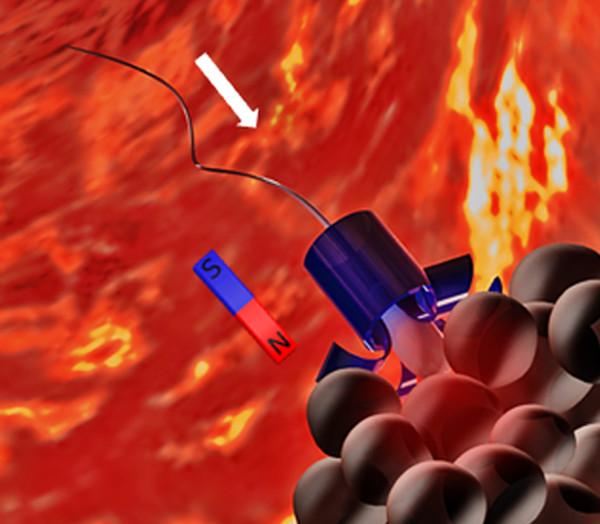
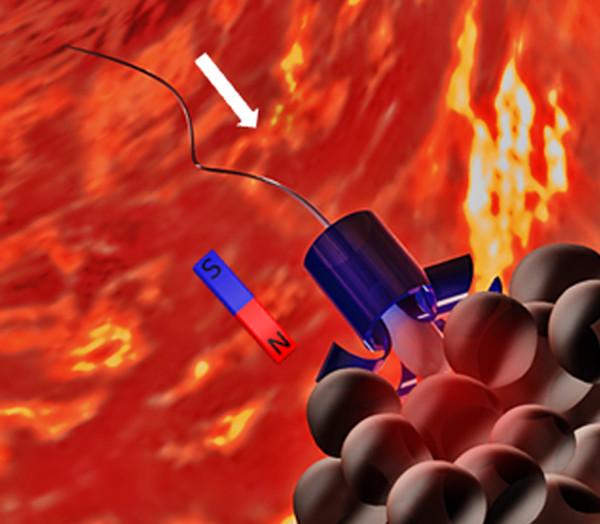
IMAGE

Credit: American Chemical Society

Delivering drugs specifically to cancer cells is one approach researchers are taking to minimize treatment side effects. Stem cells, bacteria and other carriers have been tested as tiny delivery vehicles. Now a new potential drug carrier to treat gynecological conditions has joined the fleet: sperm. Scientists report in the journal ACS Nano that they have exploited the swimming power of sperm to ferry a cancer drug directly to a cervical tumor in lab tests.

Creating an effective way to target cancer cells with drugs is challenging on multiple fronts. For example, the drugs don't always travel deeply enough through tissues, and they can get diluted in body fluids or sidetracked and taken up by healthy organs. To get around these issues, scientists have turned in some cases to loading pharmaceuticals into bacteria, which can effectively contain drug compounds and propel themselves. The microbes can also be guided by a magnetic field or other mechanism to reach a specific target. However, the body's immune system can attack the microbes and destroy them before they reach their target. Looking for another self-propelled cell as an alternative drug carrier to bacteria, Mariana Medina-Sánchez and colleagues at the Leibniz Institute for Solid State and Materials Research–Dresden (IFW Dresden) turned to sperm.

The researchers packaged a common cancer drug, doxorubicin, into bovine sperm cells and outfitted them with tiny magnetic harnesses. Using a magnetic field, a sperm-hybrid motor was guided to a lab-grown tumor of cervical cancer cells. When the harness arms pressed against the tumor, the arms opened up, releasing the sperm. The sperm then swam into the tumor, fused its membrane with that of a cancer cell, and released the drug. When unleashed by the thousands, drug-loaded sperm killed more than 80 percent of a cancerous ball while leaking very little of their payload en route. Further work is needed to ensure the system could work in animals and eventually humans, but researchers say the sperm motors have the potential to one day treat cancer and other diseases in the female reproductive tract.

###

The authors acknowledge funding from the Chinese Scholarship Council and the German Research Foundation.

The abstract that accompanies this study is available here.

The American Chemical Society, the world's largest scientific society, is a not-for-profit organization chartered by the U.S. Congress. ACS is a global leadder in providing access to chemistry-related information and research through its multiple databases, peer-reviewed journals and scientific conferences. ACS does not conduct research, but publishes and publicizes peer-reviewed scientific studies. Its main offices are in Washington, D.C., and Columbus, Ohio.

To automatically receive news releases from the American Chemical Society, contact [email protected].

Follow us on Twitter | Facebook

Media Contact

Katie Cottingham
[email protected]
301-775-8455
@ACSpressroom

http://www.acs.org

Share12Tweet8Share2ShareShareShare2

Related Posts

Factors Behind Life Satisfaction in China’s Older Adults, Study of 1,578

July 18, 2026
Delayed vs Early Cord Clamping in Preterm Twins: Echocardiography Study

Delayed vs Early Cord Clamping in Preterm Twins: Echocardiography Study

July 18, 2026

Omics and AI in Pediatric Environmental Health: Tools, Challenges, Cohort Insights

July 18, 2026

Randomized Phase II Trial Tests Nivolumab Then Nivolumab-Ipilimumab or Docetaxel

July 18, 2026
Please login to join discussion

POPULAR NEWS

  • A painless adhesive

    49 shares
    Share 20 Tweet 12
  • Groundbreaking Discovery: New Shark Species Identified for the First Time

    34 shares
    Share 14 Tweet 9
  • 研究人员开发认知工具包,实现阿尔茨海默症早期检测

    50 shares
    Share 20 Tweet 13
  • A varied menu

    51 shares
    Share 22 Tweet 12

About

We bring you the latest biotechnology news from best research centers and universities around the world. Check our website.

Follow us

Recent News

Factors Behind Life Satisfaction in China’s Older Adults, Study of 1,578

Delayed vs Early Cord Clamping in Preterm Twins: Echocardiography Study

Omics and AI in Pediatric Environmental Health: Tools, Challenges, Cohort Insights

Subscribe to Blog via Email

Enter your email address to subscribe to this blog and receive notifications of new posts by email.

Join 85 other subscribers
  • Contact Us

Bioengineer.org © Copyright 2023 All Rights Reserved.

Welcome Back!

Login to your account below

Forgotten Password?

Retrieve your password

Please enter your username or email address to reset your password.

Log In
No Result
View All Result
  • Homepages
    • Home Page 1
    • Home Page 2
  • News
  • National
  • Business
  • Health
  • Lifestyle
  • Science

Bioengineer.org © Copyright 2023 All Rights Reserved.