


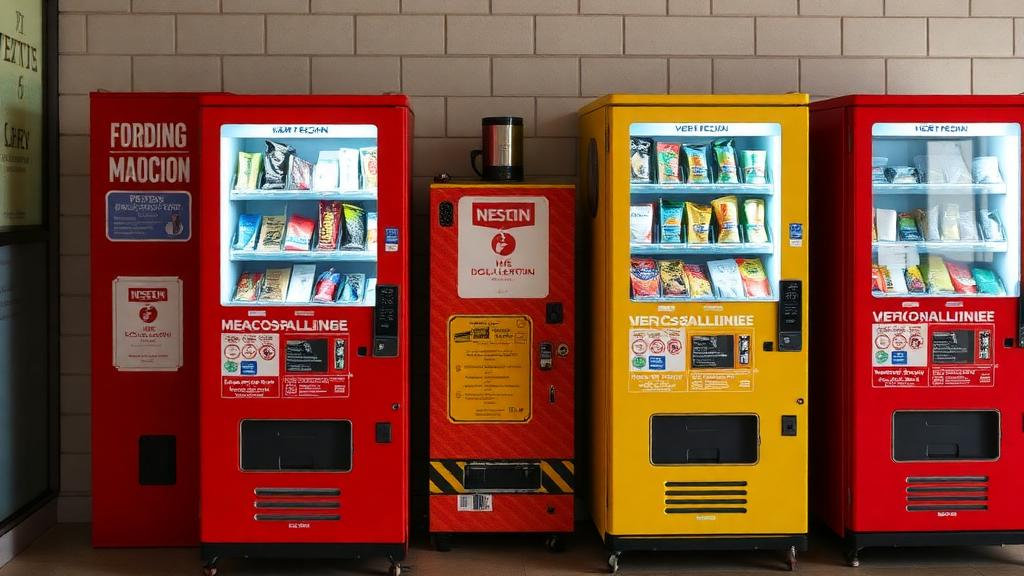
Harm reduction vending machines could offer a feasible, low-barrier way to deliver health and harm reduction supplies to formerly homeless Veterans living in supportive housing, according to a qualitative study published in Harm Reduction Journal. Researchers from the San Francisco Bay Area interviewed 60 people—44 Veteran residents and 16 on-site staff across six permanent supportive housing buildings—to identify what helps or hinders these machines in real-world settings, where evidence and practical guidance had previously been limited.
Between August and December 2024, the team purposively sampled residents and staff for semi-structured interviews, audio-recorded and transcribed the conversations, and analyzed them using inductive thematic analysis with iterative codebook development and consensus discussion. From this, they identified four implementation domains. The first concerned machine design: balancing information accessibility and product visibility with privacy. The second covered maintenance and operations, centered on ensuring access and reliable stocking. The third was program awareness, built on word-of-mouth sharing, staff buy-in, and clear signage. The fourth addressed program expansion, with Veterans prioritizing specific inventory additions and suggesting expansion to additional clinical and community locations.
Beyond these domains, participants described cross-cutting challenges tied to planning, installation, and technical, physical, and language access. Fragile access cards emerged as a practical failure point, some residents had difficulty reaching the retrieval bin, and the researchers noted a need for multilingual materials. These findings were synthesized into an implementation conceptual model intended to guide future harm reduction vending machine deployments in supportive housing.
The authors conclude that the machines were perceived as a feasible and acceptable approach to expanding low-barrier access to harm reduction and other health-related supplies in this setting. Importantly, the study measured perceptions and implementation determinants rather than health outcomes; whether the machines become trusted and routinely used resources may depend on design and execution, including attention to privacy, operational reliability, and accessibility.
The resulting recommendations emphasize user-centered design and co-development with Veteran residents and staff, dependable stocking and maintenance workflows, awareness-building integrated into routine housing processes with sign-ups offered during those processes, and accessibility features such as durable access options, waist-level retrieval bins, and multilingual materials. As an open-access publication available early as a citable accepted manuscript, the study adds participant-informed practical guidance where little previously existed, while leaving questions about long-term usage and health impact to future evaluation.
Subject of Research: Implementation determinants of harm reduction vending machines in permanent supportive housing for formerly homeless Veterans.
Article Title: Designing for access: implementation determinants of harm reduction vending machines in veterans supportive housing
Article References: Rife-Pennington, T., Douglas, M. P., Apana, N. K., Sinha, S., & Pennington, D. L. (2026). Designing for access: implementation determinants of harm reduction vending machines in veterans supportive housing. Harm Reduction Journal. https://doi.org/10.1186/s12954-026-01564-1
Image Credits: AI Generated
DOI: 10.1186/s12954-026-01564-1
Keywords: harm reduction vending machines, Veterans, supportive housing, qualitative study, implementation science, low-barrier access, San Francisco Bay Area, thematic analysis, accessibility, health supplies, Designing, access
News Source: Glenn Wilkins. (October 29, 2026). Harm Reduction Vending Machines Show Promise in Veterans Supportive Housing. Scienmag.



