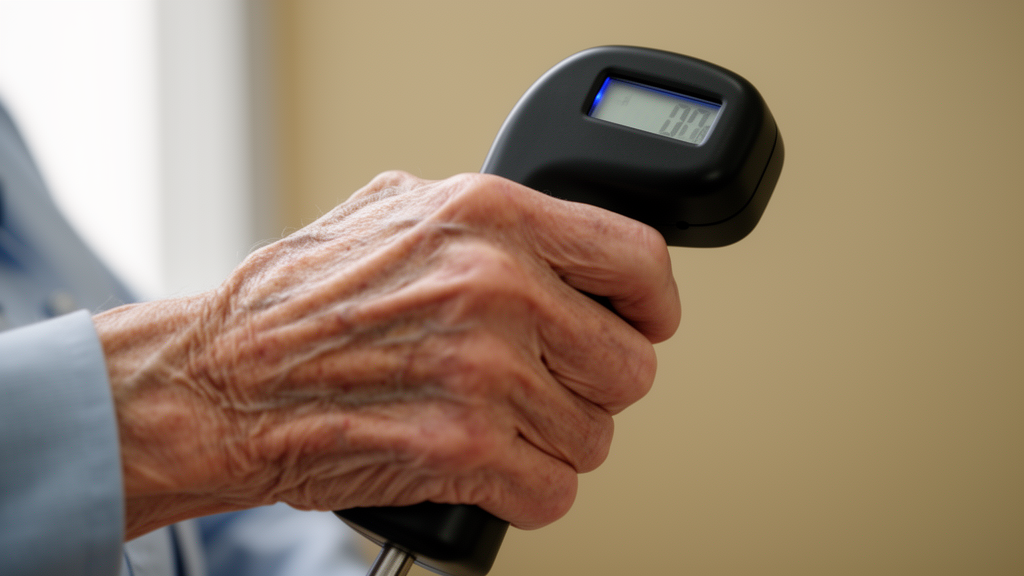
A prospective observational study published in Aging Clinical and Experimental Research has identified handgrip strength as a significant predictor of in-hospital mortality among older adults admitted to the emergency department. The research, conducted at a teaching hospital between January and December 2024, involved 499 patients aged 65 years and older.
The study design incorporated a Comprehensive Geriatric Assessment for all participating patients, which included the Clinical Frailty Scale and standardized handgrip strength testing. Probable sarcopenia was defined using the European Working Group on Sarcopenia in Older People 2 criteria, specifically based on handgrip strength values falling below established sex-specific thresholds. The primary outcomes measured were in-hospital mortality and length of stay, with statistical analyses utilizing multivariate Cox proportional hazards regression and Kaplan–Meier survival curves to assess the relationship between grip strength and clinical outcomes.
The patient cohort had a median age of 84 years. A striking finding from the baseline assessment was that 88.2% of the patients met the criteria for probable sarcopenia.
In-hospital mortality occurred in 12.4% of the cases. The study found that this mortality was significantly associated with lower handgrip strength values at multiple time points during the hospital stay. Specifically, lower handgrip strength on Day 1 was associated with mortality with a p-value of 0.001, while the association remained significant on Day 3 with a p-value less than 0.001, and on Day 7 with a p-value of 0.001.
Patients with lower handgrip strength also exhibited higher Clinical Frailty Scale scores, indicating greater overall frailty. Furthermore, this group had an increased prevalence of comorbidities such as chronic obstructive pulmonary disease, chronic kidney disease, and sepsis.
Advanced statistical analysis using restricted cubic splines revealed a non-linear relationship between handgrip strength and mortality risk. The analysis demonstrated that handgrip strength values below approximately 10 kg were associated with an exponential rise in mortality risk.
The authors conclude that in the emergency department setting, handgrip strength functions as a simple and objective biomarker that correlates with acute dynapenia and frailty. By integrating handgrip strength into routine assessment protocols, healthcare providers may enhance risk stratification and guide personalized care for older adults. This approach shifts the focus from solely diagnosing chronic sarcopenia to actively using grip strength as a predictive tool for immediate clinical outcomes.
Subject of Research: Handgrip strength as a predictor of in-hospital mortality and adverse outcomes in older emergency department patients
Article Title: Handgrip strength as a predictor of adverse outcomes among older adults in the emergency department
Article References: Salini, S., Covino, M., Risoli, A., Calvani, R., Ciciarello, F., Ingrosso, V., Recupero, C., Cacciatore, S., Massaro, C., Franceschi, F., Landi, F., & Russo, A. (2026). Handgrip strength as a predictor of adverse outcomes among older adults in the emergency department. Aging Clinical and Experimental Research. https://doi.org/10.1007/s40520-026-03509-x
Image Credits: AI Generated
DOI: 10.1007/s40520-026-03509-x
Keywords: handgrip strength, older adults, emergency department, in-hospital mortality, sarcopenia, frailty, geriatric assessment, clinical outcomes, Handgrip, strength, predictor, adverse
News Source: Beatrice Stafford. (November 10, 2026). Handgrip Strength Predicts Mortality in Older Emergency Patients. Scienmag.