• HOME
  • NEWS
  • EXPLORE
    • CAREER
      • Companies
      • Jobs
    • EVENTS
    • iGEM
      • News
      • Team
    • PHOTOS
    • VIDEO
    • WIKI
  • BLOG
  • COMMUNITY
    • FACEBOOK
    • INSTAGRAM
    • TWITTER
Tuesday, May 19, 2026
BIOENGINEER.ORG
No Result
View All Result
  • Login
  • HOME
  • NEWS
  • EXPLORE
    • CAREER
      • Companies
      • Jobs
        • Lecturer
        • PhD Studentship
        • Postdoc
        • Research Assistant
    • EVENTS
    • iGEM
      • News
      • Team
    • PHOTOS
    • VIDEO
    • WIKI
  • BLOG
  • COMMUNITY
    • FACEBOOK
    • INSTAGRAM
    • TWITTER
  • HOME
  • NEWS
  • EXPLORE
    • CAREER
      • Companies
      • Jobs
        • Lecturer
        • PhD Studentship
        • Postdoc
        • Research Assistant
    • EVENTS
    • iGEM
      • News
      • Team
    • PHOTOS
    • VIDEO
    • WIKI
  • BLOG
  • COMMUNITY
    • FACEBOOK
    • INSTAGRAM
    • TWITTER
No Result
View All Result
Bioengineer.org
No Result
View All Result
Home NEWS Science News Biology

Habitat restoration alone not enough to support threatened caribou: UBC study

Bioengineer by Bioengineer
November 27, 2019
in Biology
Reading Time: 3 mins read
0
IMAGE
Share on FacebookShare on TwitterShare on LinkedinShare on RedditShare on Telegram

Other conservation methods may also be needed until restored sites are more established
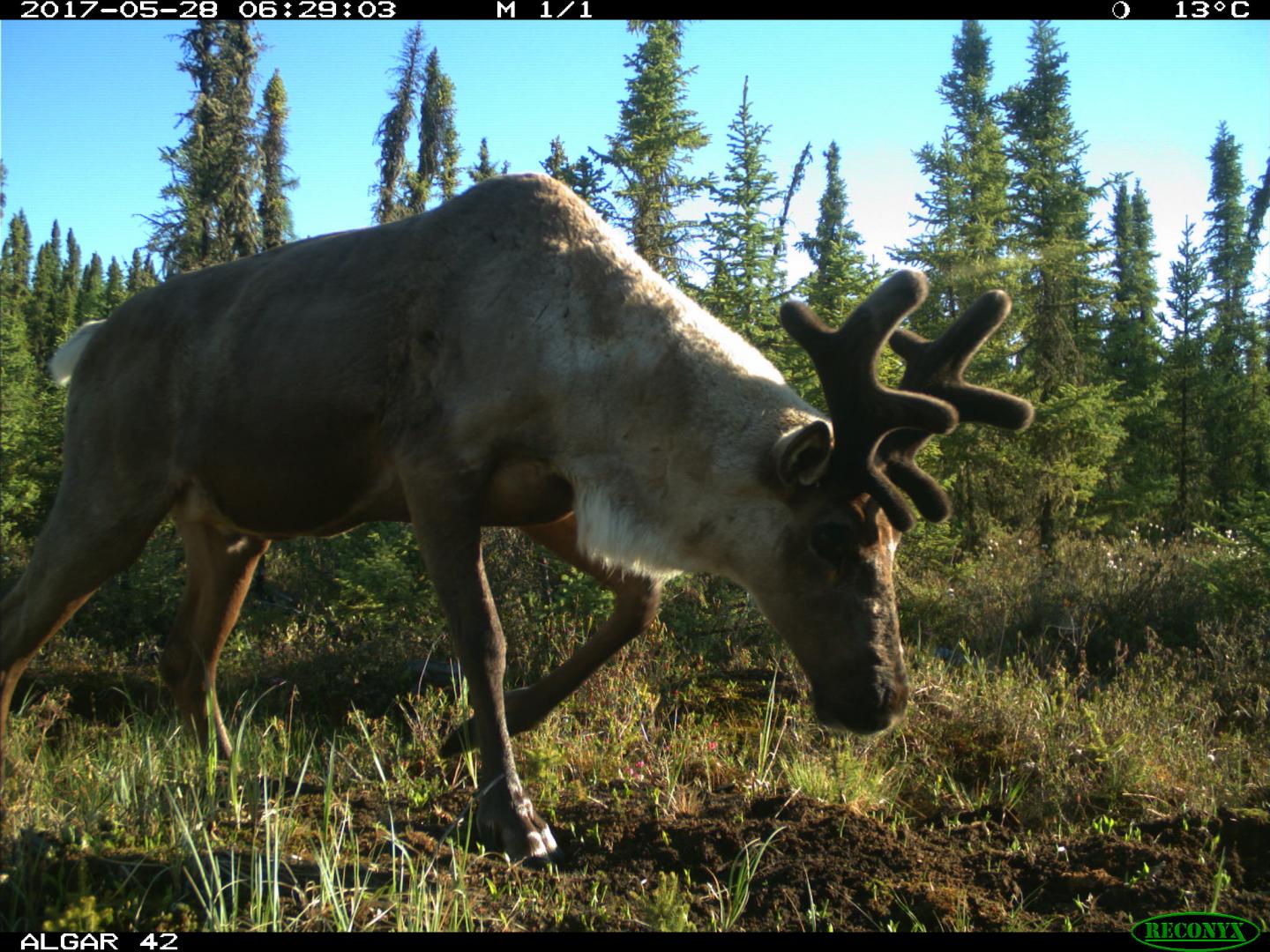
IMAGE

Credit: UBC Faculty of Forestry


New UBC research suggests restoring habitat may not be enough to save threatened woodland caribou–an iconic animal that’s a major part of boreal forests in North America and a key part of the culture and economy of many Indigenous peoples in Canada.

Caribou populations have declined rapidly in recent decades across much of western Canada, including the oil sands region of northeastern Alberta. The researchers placed hidden cameras, known as “camera traps”, in the area to see if replanting seismic lines has helped protect caribou by separating them from predators and fellow prey moving through the area.

Seismic lines, which are narrow strips of land cleared to make way for oil and gas exploration, are thought to disturb caribou habitat and promote faster travel for predators and food competitors. These lines do not recover quickly naturally, but are now being restored through replanting with native trees and natural features like mounds and tree debris.

“In theory, restoration should have made it much more difficult for predators to travel across the caribou range, but our cameras showed us a different picture,” said lead author Erin Tattersall, who did the work as a master’s student in forest sciences at UBC.

Predators like black bears and wolves, and prey like moose, used the restored seismic lines about as much as they used unrestored lines. Only white-tailed deer–a key caribou competitor –showed less use of the restored lines. Caribou preferred to use lines located in low-lying wetland areas, as well as more isolated lines–whether they’d been restored or not.

“In other words, restoration did not do much to keep caribou apart from their predators and competitors, at least not in the short term,” Tattersall said.

The work, published last week in Biological Conservation, is one of the first to challenge the assumed impacts of a caribou recovery strategy, and researchers say it makes the case for more rigorous analysis of conservation methods.

“It’s possible caribou will eventually recover in the area we studied, and other restoration approaches in other regions could also prove more immediately effective for caribou recovery,” said senior author Cole Burton, a professor of forestry who leads the Wildlife Coexistence Lab at UBC. “But our results clearly show that we can’t simply assume the best–it’s necessary to closely monitor the actual results of restoration.”

And while the study focuses on Alberta caribou, it can also be important for discussions on saving B.C. caribou, Burton added.

“We are seeing steep declines in many of B.C.’s caribou populations, and even total losses of some,” he said. “Effective restoration of already degraded habitats will ultimately be critical to recovering our caribou.”

###

Researchers with the University of Victoria’s School of Environmental Studies and InnoTech Alberta’s ecosystems management unit also contributed to the study.

Link to paper: https://www.sciencedirect.com/science/article/pii/S0006320719307013

Images (Flickr gallery): https://www.flickr.com/photos/ubcpublicaffairs/albums/72157711949903242

Media Contact
Lou Corpuz-Bosshart
[email protected]
604-999-0473

Original Source

https://news.ubc.ca/2019/11/27/habitat-restoration-alone-not-enough-to-support-threatened-caribou-ubc-study/

Related Journal Article

http://dx.doi.org/10.1016/j.biocon.2019.108295

Tags: BiologyEcology/EnvironmentForestryNaturePlant Sciences
Share12Tweet8Share2ShareShareShare2

Related Posts

Fischer’s Blue Butterflies Less Attractive on Non-Native Diet, Study Finds — Biology

Fischer’s Blue Butterflies Less Attractive on Non-Native Diet, Study Finds

May 19, 2026

How One Protein Uses Embryonic Brain Language to Maintain Plasticity in Adult Neurons

May 19, 2026

Scientists Can Now Monitor America’s Dolphin Populations Using DNA Floating in Seawater

May 19, 2026

New Insights into How Smoking Causes Lung Stiffness

May 19, 2026
Please login to join discussion

POPULAR NEWS

  • Research Indicates Potential Connection Between Prenatal Medication Exposure and Elevated Autism Risk

    845 shares
    Share 338 Tweet 211
  • New Study Reveals Plants Can Detect the Sound of Rain

    731 shares
    Share 292 Tweet 182
  • Salmonella Haem Blocks Macrophages, Boosts Infection

    62 shares
    Share 25 Tweet 16
  • Breastmilk Balances E. coli and Beneficial Bacteria in Infant Gut Microbiomes

    58 shares
    Share 23 Tweet 15

About

We bring you the latest biotechnology news from best research centers and universities around the world. Check our website.

Follow us

Recent News

Full-Body Head-Up Tilt Sleep Aids Parkinson’s, MSA

Myelin Damage in Donor Skin Distinguishes Synucleinopathies

FGFR1, Not S6K1/2, Fuels BRAF Resistance

Subscribe to Blog via Email

Enter your email address to subscribe to this blog and receive notifications of new posts by email.

Join 82 other subscribers
  • Contact Us

Bioengineer.org © Copyright 2023 All Rights Reserved.

Welcome Back!

Login to your account below

Forgotten Password?

Retrieve your password

Please enter your username or email address to reset your password.

Log In
No Result
View All Result
  • Homepages
    • Home Page 1
    • Home Page 2
  • News
  • National
  • Business
  • Health
  • Lifestyle
  • Science

Bioengineer.org © Copyright 2023 All Rights Reserved.