• HOME
  • NEWS
  • EXPLORE
    • CAREER
      • Companies
      • Jobs
    • EVENTS
    • iGEM
      • News
      • Team
    • PHOTOS
    • VIDEO
    • WIKI
  • BLOG
  • COMMUNITY
    • FACEBOOK
    • INSTAGRAM
    • TWITTER
Monday, August 10, 2026
BIOENGINEER.ORG
No Result
View All Result
  • Login
  • HOME
  • NEWS
  • EXPLORE
    • CAREER
      • Companies
      • Jobs
        • Lecturer
        • PhD Studentship
        • Postdoc
        • Research Assistant
    • EVENTS
    • iGEM
      • News
      • Team
    • PHOTOS
    • VIDEO
    • WIKI
  • BLOG
  • COMMUNITY
    • FACEBOOK
    • INSTAGRAM
    • TWITTER
  • HOME
  • NEWS
  • EXPLORE
    • CAREER
      • Companies
      • Jobs
        • Lecturer
        • PhD Studentship
        • Postdoc
        • Research Assistant
    • EVENTS
    • iGEM
      • News
      • Team
    • PHOTOS
    • VIDEO
    • WIKI
  • BLOG
  • COMMUNITY
    • FACEBOOK
    • INSTAGRAM
    • TWITTER
No Result
View All Result
Bioengineer.org
No Result
View All Result
Home NEWS Science News

Guts and glory for RMIT smart pills

Bioengineer by Bioengineer
April 24, 2017
in Science News
Reading Time: 2 mins read
0
Share on FacebookShare on TwitterShare on LinkedinShare on RedditShare on Telegram
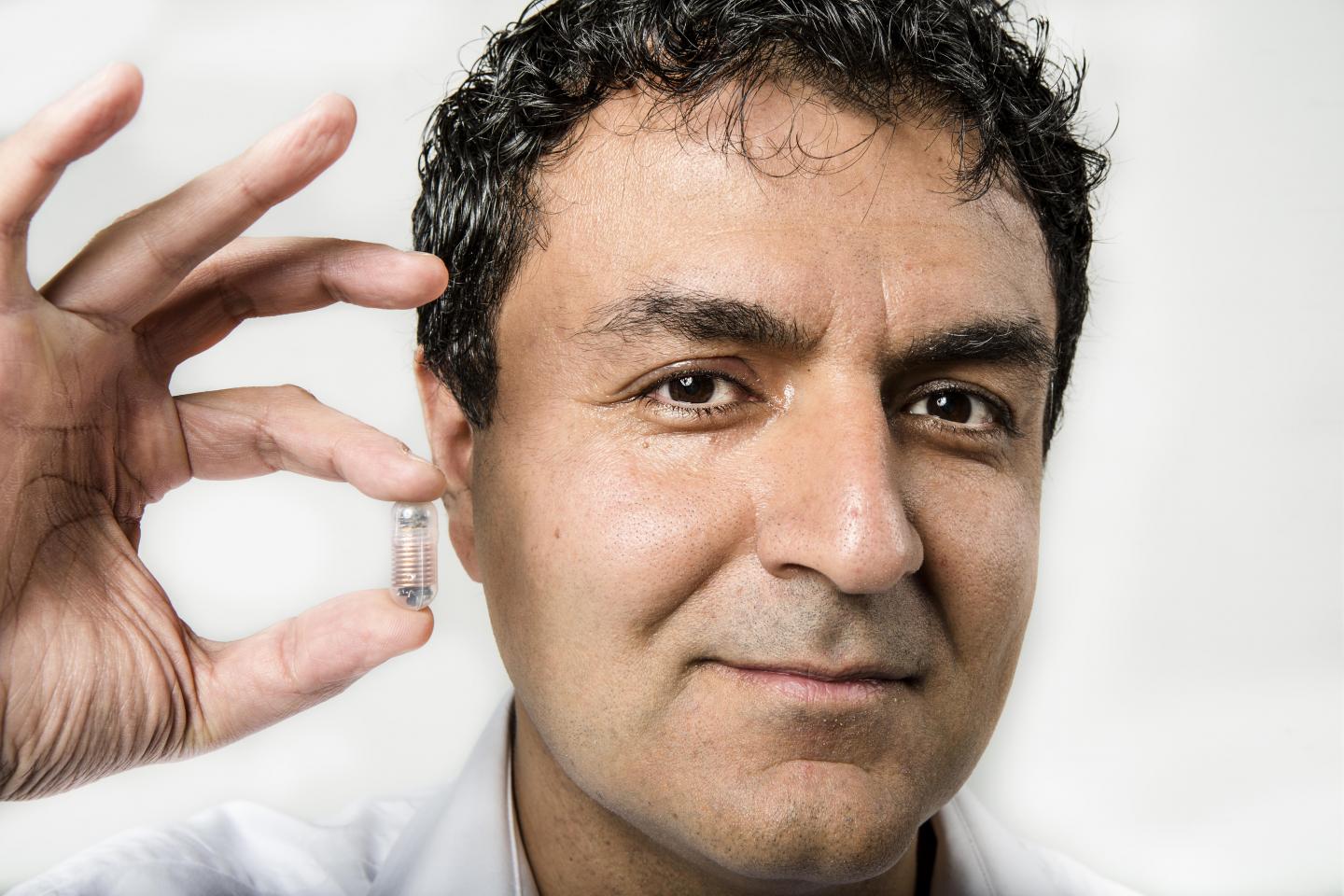
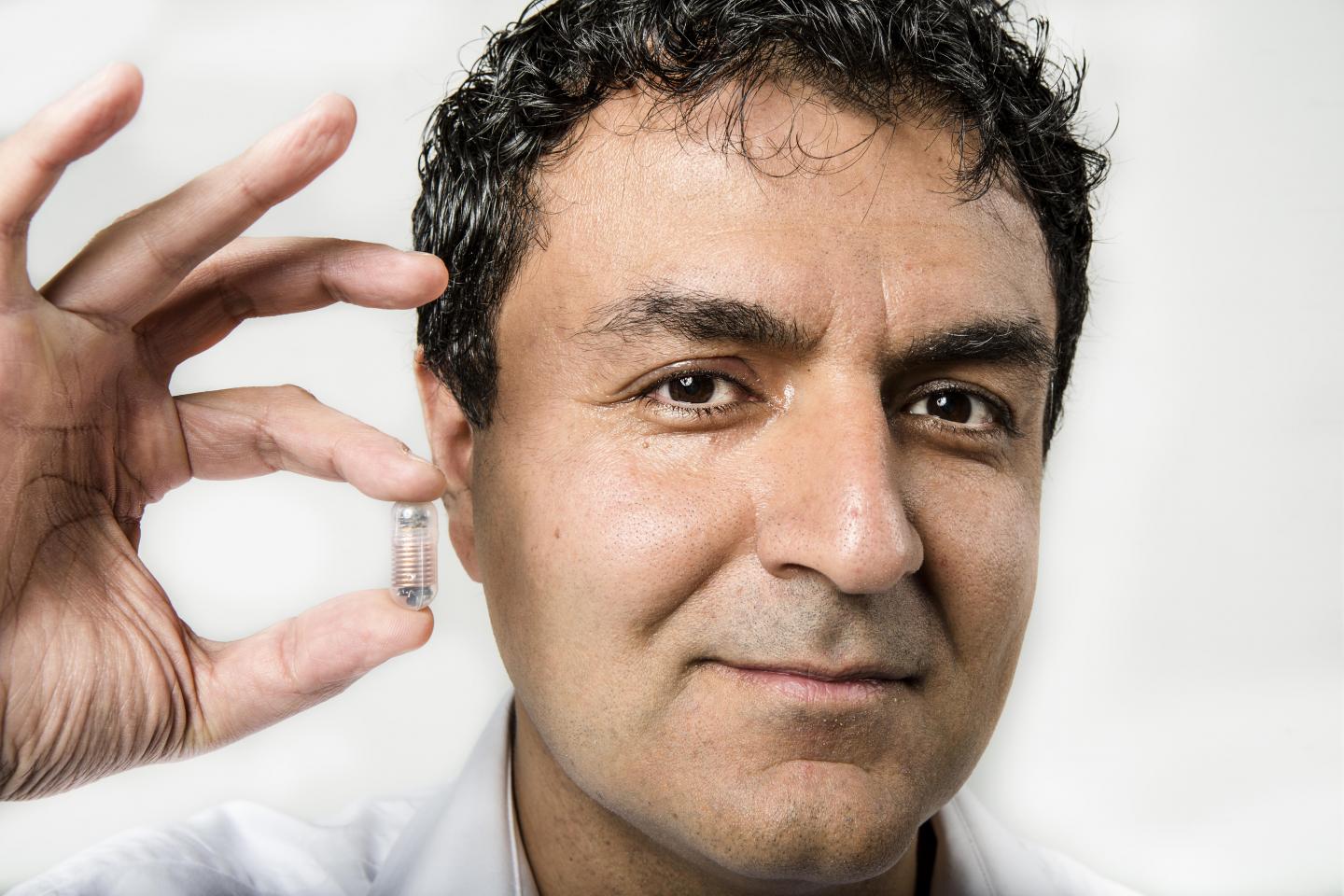
IMAGE

Credit: RMIT University

Researchers at RMIT University in Melbourne, Australia, have successfully completed phase one human trials of ingestible capsules that have the potential to revolutionise the prevention and diagnosis of gut disorders and diseases.

The research team, led by the pills' co-inventor Distinguished Professor Kourosh Kalantar-zadeh, tested the ingestible smart capsules (the size of a vitamin pill) that journey through and measure gas levels in the gastrointestinal tract.

One in five people will suffer from a gastrointestinal disorder in their lifetime, with 30 per cent of patients remaining undiagnosed. RMIT is one of the leading universities in the world researching the development of ingestible sensors.

The ingestible technology has demonstrated several thousand -times more sensitivity to gut gases than alternative techniques.

"Currently, one of the only methods for diagnosing gut disorders, such as mal-absorption of carbohydrates, irritable bowel syndrome and inflammable bowel disease, is to measure hydrogen concentrations in the breath," Kalantar-zadeh said.

"However, breath tests are mired by a lack of sensitivity and specificity and are unable to provide the necessary gold standard for diagnosis."

Co-inventor Dr Kyle Berean said: "Ingestible sensors also offer a reliable diagnostic tool for colon cancer, meaning that people won't have to undergo colonoscopies in future."

A key finding from the initial trials was just how safe the new technology is.

"Smart pills are harmless and there is no risk of capsule retention," Berean said.

An added advantage is that the capsules can be synched with smartphones, meaning results are easily accessible by users and doctors online.

The potential applications from this technology are profound.

"The sensors allow us to measure all the fluids and gases in the gut giving us a multidimensional picture of the human body," Kalantar-zadeh said. "Gas sensing is just the beginning."

The human trials were undertaken with colleagues from Monash University, who Kalantar-zadeh was quick to praise.

"We have been lucky to have Monash medical academics helping us on this journey," he said. "Without their input we would not be able to proceed."

###

A paper outlining the future of ingestible sensors has been published in the April issue of ACS Sensors (DOI 10.1021/acssensors.7b00045).

The outcomes of the human trials will be presented next month in Chicago at Digestive Disease Week (DDW), the most significant annual gathering of gastroenterologists and food scientists in the world.

Media Contact

Distinguished Professor Kourosh Kalantar-zadeh
[email protected]
61-488-332-245
@RMIT

http://www.rmit.edu.au

############

Story Source: Materials provided by Scienmag

Share12Tweet8Share2ShareShareShare2

Related Posts

Future Intensifies Competition for Scarce Clean Water

Future Intensifies Competition for Scarce Clean Water

August 10, 2026
Sovereignty, decarbonization, and energy costs influence public support for data centers

Sovereignty, decarbonization, and energy costs influence public support for data centers

August 10, 2026

AI-Designed Minibinders Target ERO1A–PDIA1 Redox Axis in Triple-Negative Breast Cancer

August 10, 2026

Parkinson’s Disease Links Cholinergic Deficits to Hallucinations

August 10, 2026
Please login to join discussion

POPULAR NEWS

  • Future Intensifies Competition for Scarce Clean Water

    29 shares
    Share 12 Tweet 7
  • Sovereignty, decarbonization, and energy costs influence public support for data centers

    29 shares
    Share 12 Tweet 7
  • AI-Designed Minibinders Target ERO1A–PDIA1 Redox Axis in Triple-Negative Breast Cancer

    29 shares
    Share 12 Tweet 7
  • Parkinson’s Disease Links Cholinergic Deficits to Hallucinations

    29 shares
    Share 12 Tweet 7

About

We bring you the latest biotechnology news from best research centers and universities around the world. Check our website.

Follow us

Recent News

Future Intensifies Competition for Scarce Clean Water

Sovereignty, decarbonization, and energy costs influence public support for data centers

AI-Designed Minibinders Target ERO1A–PDIA1 Redox Axis in Triple-Negative Breast Cancer

Subscribe to Blog via Email

Enter your email address to subscribe to this blog and receive notifications of new posts by email.

Join 86 other subscribers
  • Contact Us

Bioengineer.org © Copyright 2023 All Rights Reserved.

Welcome Back!

Login to your account below

Forgotten Password?

Retrieve your password

Please enter your username or email address to reset your password.

Log In
No Result
View All Result
  • Homepages
    • Home Page 1
    • Home Page 2
  • News
  • National
  • Business
  • Health
  • Lifestyle
  • Science

Bioengineer.org © Copyright 2023 All Rights Reserved.