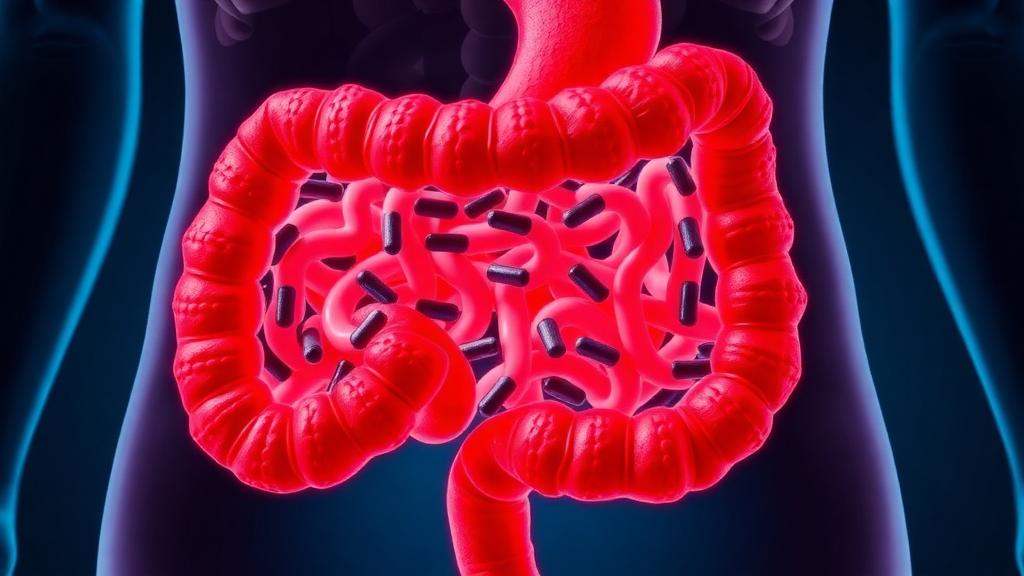
Deep inside the human gut, an invisible economy hums along. Bacteria that cannot digest a given fiber rely on neighbors to break it down first. Strains missing the genes to make a vitamin wait for someone else to supply it. This web of metabolic exchange, known as cross-feeding, has long been treated as a hallmark of microbial cooperation. A new review published in Advanced Science argues that this picture is too rosy, and that understanding cross-feeding precisely, on its own terms rather than as a story of microbial goodwill, is the key to turning it into a platform for next-generation live biotherapeutics.
The review, led by researchers at Inner Mongolia Agricultural University, organizes decades of evidence into a Mechanism-Technology-Application framework designed to separate what has actually been demonstrated from what has merely been inferred. The authors are blunt about the distinction. Cross-feeding, as they define it, is any interaction in which a resource produced, released, or made accessible by one microorganism is acquired or further transformed by another. It is not inherently cooperative, not always beneficial to the host, and not a universal organizing principle of the gut ecosystem. The same resource transfer that sustains a health-associated butyrate producer can, in a different context, feed a dangerous pathogen.
The clearest examples come from sequential degradation, sometimes called a trophic relay. Complex dietary polysaccharides and host-derived mucus glycans are too large for most gut bacteria to touch. Specialist degraders such as Bacteroides species, Akkermansia muciniphila, and Bifidobacterium bifidum cleave these polymers into sugars and oligosaccharides that downstream consumers can use. In one well-characterized relay, Bacteroides ovatus releases breakdown products during inulin degradation that support B. vulgatus, B. thetaiotaomicron, and Parabacteroides goldsteinii. In another, Akkermansia muciniphila liberates mucin-derived sugars and acetate that fuel the butyrate producer Anaerostipes caccae, linking mucus turnover to the production of a short-chain fatty acid that nourishes the colonic lining and modulates immune signaling through receptors such as GPR43.
But relays have a dark side. In antibiotic-treated mice, the same liberation of host sugars becomes a lifeline for pathogens: sialic acid and fucose released from mucus by the depleted community boost the competitive fitness of Salmonella enterica serovar Typhimurium, while sialic acid catabolism supports the post-antibiotic expansion of Clostridioides difficile. Amino acid exchange tells a similar story. In antibiotic-perturbed mice, enterococci supply leucine and ornithine that enhance C. difficile fitness, and their arginine catabolism simultaneously generates metabolic signals associated with increased virulence. Metagenomic surveys suggest that more than 40 percent of gut microbes lack complete pathways for making branched-chain amino acids, implying that such dependencies are widespread, though predicted auxotrophy alone does not prove that transfer actually occurs.
Diffusible metabolites add another layer of coupling. Hydrogen produced by fermentative bacteria such as Roseburia intestinalis can be consumed by acetogens like Ruminococcus hydrogenotrophicus or by the methanogen Methanobrevibacter smithii, keeping fermentation thermodynamically favorable while shifting the end products toward acetate or methane. Elevated methane has been associated with delayed transit and constipation-predominant irritable bowel syndrome, although the review stresses that these associations do not establish hydrogen cross-feeding as a direct cause of disease. Perhaps the most elegant demonstrated exchange is bidirectional: Bacteroides xylanisolvens supplies folate to Clostridium butyricum, which in turn provides p-aminobenzoic acid that B. xylanisolvens needs to synthesize folate, a reciprocal loop shown under controlled culture conditions but not yet traced in a living gut.
Micronutrients reveal an even more competitive dimension. Bacteroides thetaiotaomicron makes no siderophores of its own yet steals iron from enterobactin and salmochelin secreted by Enterobacteriaceae using its XusABC system, a capacity that improves its colonization fitness during inflammation. Remarkably, the XusB protein captures enterobactin and shields it from the host’s iron-sequestering lipocalin-2, but Salmonella can then reacquire the protected complex. A single iron-trafficking route can therefore bolster a commensal, blunt host nutritional immunity, and still hand iron to a pathogen. Vitamin provisioning shows similar ambiguity: auxotrophic strains in humanized germ-free mice maintain stable abundances despite dietary swings, consistent with community-level sharing, yet the actual donors and transfer routes remain unidentified.
Given this complexity, the review proposes a tiered evidence framework that mirrors a Design-Build-Test-Learn engineering cycle. Multi-omics and computational platforms such as COMETS, MICOM, and the Gut Cross-feeding Predictor generate candidate donor-resource-recipient hypotheses, but correlation networks cannot establish causality. Causal attribution demands co-culture experiments, targeted metabolite perturbation, and genetic disruption of production or uptake pathways, exemplified by a study in which paired mutants of Bifidobacterium breve and Limosilactobacillus reuteri confirmed that a nutritional interaction depended on the intermediate 1,2-propanediol. Stable-isotope tracing then resolves metabolite fate directly: labeled acetate has been shown to be incorporated into butyrate by Faecalibacterium prausnitzii and Roseburia strains, and labeled lactate and acetate traced the carbon route from Bifidobacterium adolescentis into butyrate synthesis by Eubacterium hallii via acetyl-CoA.
Even validated pairwise exchanges, however, may not survive contact with a real community. In a twelve-member synthetic gut community, pairwise interactions explained only part of the observed dynamics, and initial abundances and negative interactions imposed strong historical contingency. Functional redundancy complicates matters further: depleting specific Bacteroides members triggers compensatory expansion of relatives that partially restores glycan degradation. Host-associated models add spatial architecture, dietary fluctuation, and colonization history, all of which can attenuate or redirect interactions that looked stable in a flask. The authors argue that no single method suffices; only convergent evidence across candidate identification, causal validation, and ecological robustness testing can support claims of functional cross-feeding.
The translational implications are sobering but instructive. Cross-feeding-informed synbiotics would require a primary responder to release a defined intermediate that a secondary consumer then transforms, with a combination-specific benefit demonstrated against substrate-only and microbe-only controls, a standard that current human evidence does not meet. Among live biotherapeutic products, the dual-strain pairing of B. xylanisolvens and C. butyricum improved metabolic and barrier parameters in high-fat-diet mice, but the folate exchange was never traced in vivo. The seventeen-strain consortium GUT-103 attenuated colitis in gnotobiotic mice without resolving any donor-metabolite-recipient chain, and a thirty-seven-strain synthetic microbiota suppressed C. difficile through competitive proline depletion rather than resource transfer at all. Engineered examples cut both ways: redirecting polysaccharide-utilization loci in Bacteroides uniformis altered glycan flow to downstream consumers, a relatively direct case of engineered cross-feeding, while the clinical candidate NOV-001 achieved porphyran-dependent, largely reversible engraftment in a Phase 1/2a trial yet showed variable colonization, genetic instability, and no significant benefit over placebo for urinary oxalate. The Phase 2b ECO-RESET trial of SER-287 similarly failed its primary endpoint despite confirmed engraftment, demonstrating that colonization is not efficacy.
The review’s conclusion is neither dismissive nor utopian. Cross-feeding offers a rigorous, mechanistically grounded framework for prioritizing dietary substrates, strain combinations, and engineered resource-allocation strategies, and emerging tools, from spatially resolved transcriptomics to gut-on-chip platforms and digital-twin modeling, should progressively narrow the gap between inference and demonstration. But a reproducible, closed engineering cycle for gut microbial communities has not been achieved across heterogeneous human hosts, and the immediate priority is prospective validation of the full causal chain linking substrate availability, microbial activity, metabolite transfer, ecological persistence, safety, and clinically meaningful benefit. Cross-feeding, the authors emphasize, must be evaluated within the competitive, host-regulated ecology of the gut rather than as an isolated, programmable switch. The microbial economy of the intestine is real, increasingly legible, and, in carefully defined cases, already manipulable. Turning that legibility into reliable medicine is the task the field now faces.
Subject of Research: Metabolic cross-feeding interactions in the gut microbiome and their application to live biotherapeutic development
Article Title: Programming Gut Microbiome Function Through Cross‐Feeding: From Ecological Mechanisms to Live Biotherapeutics
Article References: Sun, C., Ma, T., Jin, H., Li, Z., Cheng, Y., Li, J., Kwok, L.-Y., & Sun, Z. (2026). Programming Gut Microbiome Function Through Cross‐Feeding: From Ecological Mechanisms to Live Biotherapeutics. Advanced Science, 13(55), Article e77267. https://doi.org/10.1002/advs.77267
Image Credits: AI Generated
DOI: 10.1002/advs.77267
Keywords: gut microbiome, cross-feeding, microbial metabolism, live biotherapeutics, synbiotics, butyrate, short-chain fatty acids, synthetic communities, stable-isotope tracing, microbiome therapeutics, colonization resistance, precision nutrition
News Source: Morgan Morrow. (October 8, 2026). Gut Microbes Trade Metabolites in Ways Scientists Are Learning to Program. Scienmag.