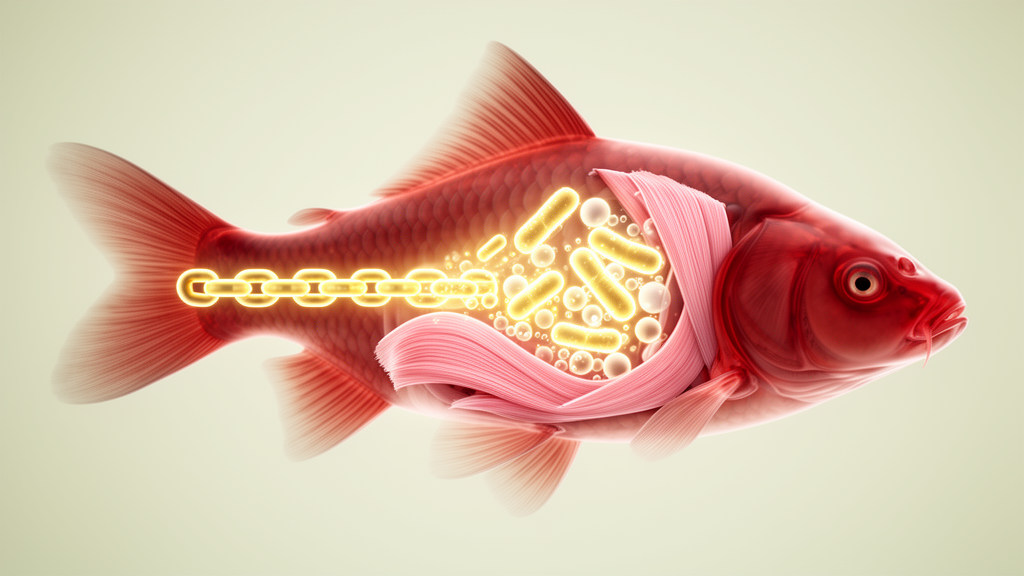
Researchers have mapped connections between the gut microbiome and the fatty acid composition of muscle in Hebao red carp, an aquaculture species prized for its unsaturated fatty acid content. The study, published in Animal Microbiome, integrated gut microbial data, serum metabolomics, and measurements of 50 muscle fatty acid phenotypes collected from 219 fish, aiming to clarify a relationship that has remained poorly characterized in fish.
The analysis identified significant associations between specific bacterial genera and fatty acid traits. Among them, Curtobacterium stood out for showing broad negative correlations with multiple fatty acid measures, particularly saturated fatty acids and composite indices such as total polyunsaturated fatty acid (PUFA) and omega-3 (N3) levels. In other words, fish carrying more of this genus tended to show lower values for these muscle lipid traits.
Complementing the correlation work, the team applied random forest machine learning to assess which microbes best predict fatty acid levels. This analysis highlighted two genera, Kaistia and Curtobacterium, as carrying the highest feature importance for predicting both PUFA and N3 levels in muscle, reinforcing the association signals seen in the correlation analysis.
To move beyond simple associations, the researchers performed mediation analysis that incorporated serum metabolites. This revealed that multiple gut microbes may influence up to 33 fatty acid phenotypes through pathways involving key serum metabolites, including phosphocholine, the medium-chain acylcarnitine carnitine C8:0, and the free fatty acid FFA 22:5. These metabolites appear to act as potential intermediaries linking microbial presence in the gut to the lipid profile of muscle tissue.
The findings contribute to a growing appreciation that host–microbe interactions shape host physiology, including metabolism, immune homeostasis, and overall health. In fish, however, the specific link between the gut microbiome and muscle fatty acids had not been systematically examined with multi-omics data at this scale before.
According to the authors, the results deepen understanding of the gut microbiome’s role in shaping muscle fatty acid composition and offer insights into microbiome-based strategies for enhancing beneficial fatty acids in aquaculture species. Such strategies remain an outlook rather than a demonstrated intervention, since the study reports associations and mediation pathways in a single fish population, not a test of microbial manipulation.
It is also worth noting the scope of the work: the study is observational in design, drawing its conclusions from patterns across 219 carp rather than from controlled experiments that alter gut bacteria and measure the consequences. The mediation analysis suggests plausible routes by which microbes could affect muscle lipids, but establishing causation would require further experimental work.
For aquaculture, the identification of specific bacterial genera tied to PUFA and omega-3 levels provides candidate targets for future research into how feed, probiotics, or husbandry conditions might shape gut communities in ways that favor desirable fatty acid profiles in fish flesh. The open-access study, published on 22 October 2026, is available as a peer-reviewed accepted manuscript carrying a permanent DOI.
Subject of Research: Associations between gut microbiota and muscle fatty acid composition in Hebao red carp
Article Title: Multi‑omics elucidation of gut microbiota associated with muscle fatty acid composition in Hebao red carp
Article References: Li, J., Huang, X., Ye, Y., Wang, Y., Yang, Z., Zhou, Q., Xia, H., Zhang, W., & Yang, H. (2026). Multi‑omics elucidation of gut microbiota associated with muscle fatty acid composition in Hebao red carp. Animal Microbiome. https://doi.org/10.1186/s42523-026-00651-9
Image Credits: AI Generated
DOI: 10.1186/s42523-026-00651-9
Keywords: gut microbiome, fatty acids, Hebao red carp, aquaculture, multi-omics, polyunsaturated fatty acids, omega-3, serum metabolomics, random forest, mediation analysis, Curtobacterium, Kaistia
News Source: Morgan Morrow. (October 28, 2026). Gut bacteria linked to fatty acid profiles in Hebao red carp muscle. Scienmag.