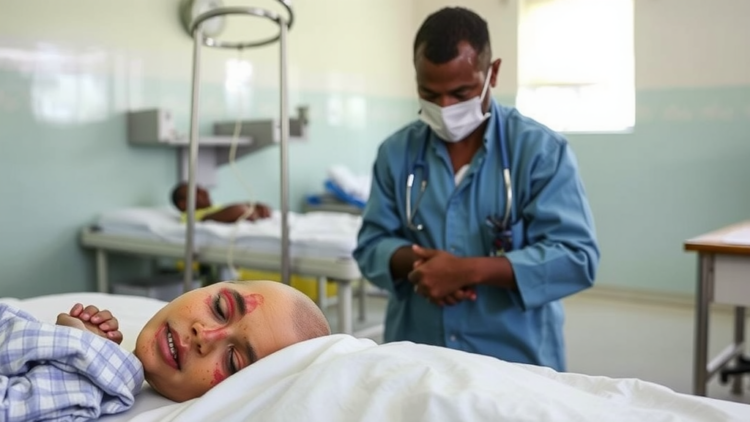
Gunshot injuries remain one of the most visible and devastating consequences of prolonged armed conflict, and few places illustrate their burden more clearly than Mogadishu, Somalia. A new prospective study conducted at the Mogadishu Somali Turkey Recep Tayyip Erdogan Training and Research Hospital (MSTH) has now provided one of the most detailed recent portraits of who is shot, where they are wounded, how they are treated, and how they fare when they reach the emergency department of a major trauma center in a fragile state. The research, published in the Journal of Emergency and Disaster Medicine, followed every patient presenting with a gunshot wound to the hospital’s emergency department over a seven-month window in 2024, offering a rare granular look at firearm trauma in a setting where systematic data have long been scarce.
Injury is recognized globally as one of the top ten causes of illness and death, and violent acts, including those that occur during war and civil conflict, rank among the ten leading contributors to injury worldwide. The burden is not distributed evenly. In the sub-Saharan African region, fatality from injury is among the highest in the world, driven by a combination of interpersonal violence, communal clashes, military violence, armed robbery, and political conflict. Somalia, after more than three decades of instability, exemplifies this pattern, yet the country has historically lacked the kind of hospital-based injury surveillance that informs trauma system design elsewhere. The MSTH study was designed in part to address that gap by capturing data prospectively rather than reconstructing events from retrospective charts.
The study enrolled all patients who arrived at the emergency department of MSTH with gunshot wounds between June 1, 2024, and December 31, 2024. Data were collected prospectively from both electronic and paper-based medical records using a standardized data collection form designed specifically for the investigation. This approach allowed the research team, led by Abdullahi Ahmed Ahmed with colleagues Abdishakur Mohamed Abdirahman and Sahara Ali Yusuf, to document demographic characteristics, injury patterns, anatomical distribution of wounds, treatment provided, and short-term outcomes in a systematic fashion. Because the hospital functions as one of the principal referral and training centers in the Somali capital, its emergency department sees a substantial share of the city’s most serious trauma.
The demographic and circumstantial profile of the victims reflects the realities of urban violence in Mogadishu. Among patients whose status could be classified, soldiers represented the largest single group, accounting for 30.0 percent of cases, or 45 individuals. Passengers, people injured while traveling, made up 18.7 percent, or 28 cases, a figure that underscores how ordinary movement through the city can place civilians in the line of fire. Civilians grouped under the category of others formed the largest overall share at 34.0 percent, or 51 patients. Taken together, the classification shows that while combatants are heavily represented, the majority of those shot were not active participants in hostilities but people caught in the crossfire of insurgent attacks, crossfire incidents, and other forms of armed violence.
The anatomical pattern of injuries provides important clues about both the mechanisms of wounding and the demands placed on surgical services. A striking finding was the frequency of long bone fractures: 18 percent of cases involved comminuted fractures of the femur, tibia, humerus, or other major limb bones. The authors note that this proportion is higher than the 12 percent documented in Kenya and similar to recent findings from Nigeria and Uganda, suggesting that high-velocity injuries and close-range discharges contribute to severe skeletal destruction in the Somali context. Comminuted fractures, in which the bone shatters into multiple fragments, typically require complex orthopedic intervention, prolonged hospitalization, and often leave patients with lasting functional impairment, making their prevalence a marker of both injury severity and future disability burden.
Traumatic brain injuries were documented in 8.0 percent of cases, or 12 patients. Head wounds from firearms carry particularly grave prognoses, and their management in a resource-constrained environment poses formidable challenges, from imaging capacity to neurosurgical expertise. The presence of traumatic brain injury in roughly one in twelve gunshot patients highlights the need for rapid triage, appropriate imaging, and clear protocols for when operative intervention is feasible and when palliative care is the only realistic option. The study’s documentation of these injuries adds to the growing evidence base on the spectrum of firearm trauma in conflict-affected African settings.
Perhaps the most encouraging headline finding concerns survival among those who reach hospital care. Only one death occurred in the emergency department, corresponding to an overall emergency department mortality of 0.7 percent. Intensive care unit admissions comprised 12.7 percent of the cohort, indicating that a meaningful minority of patients required advanced organ support after initial resuscitation. In addition, three patients, or 2.0 percent, left against medical advice, a phenomenon common in settings where families face financial constraints, security concerns, or distrust of hospital care. The authors explicitly contrast their low emergency department mortality with the substantially higher figures reported from other conflict zones, including up to 9.2 percent in the Democratic Republic of the Congo and between 5 and 10 percent in parts of Sudan.
That comparison deserves careful interpretation. A low in-department mortality does not necessarily mean that gunshot trauma is less lethal in Mogadishu overall; it may reflect selection effects, in which the most severely injured patients die before ever reaching the emergency department, or differences in transport times, prehospital care, and the case mix that survives to presentation. The authors acknowledge precisely this limitation, noting that the single-hospital, prospective design may not fully represent broader epidemiological trends across Somalia and cannot capture patients who die before reaching hospital care or who never access formal medical services at all. Prehospital variables, including the type of weapon used, the intent behind the shooting, and the relationship between shooter and victim, were insufficiently documented, limiting the contextual interpretation of injury patterns and outcomes.
Another significant gap the study identifies is the absence of standardized long-term outcome data. Emergency department mortality is a crude and early endpoint; it says nothing about whether patients regain mobility after complex limb fractures, recover cognitive function after brain injuries, or return to work and family life. The authors argue that this lack of longitudinal follow-up underscores an important deficiency in trauma research in the region and highlights the need for prospective longitudinal studies assessing functional recovery, disability, and quality of life after gunshot injury. Without such data, health planners cannot accurately estimate the chronic burden of firearm violence, including the rehabilitation services, prosthetics, and psychosocial support that survivors require.
Looking forward, the research team calls for a new generation of injury surveillance built on multicenter, registry-based, and prospective designs that integrate data from emergency medical services, hospitals, and law enforcement. Such an integrated system would allow Somalia to move beyond single-site snapshots toward a national picture of firearm injury, one that could inform targeted prevention strategies, from conflict mediation and community policing to weapon control measures and improved prehospital care. The MSTH study, modest in scope but rigorous in method, demonstrates that high-quality prospective trauma data can be collected even in one of the world’s most challenging security environments. Its findings, that most gunshot victims survive to leave the emergency department, that soldiers and civilians alike bear the burden of injury, and that severe limb fractures and brain injuries impose a substantial surgical load, offer both reassurance about the resilience of the trauma system and a clear roadmap for the research and policy work that must follow.
Subject of Research: Epidemiology and emergency department outcomes of gunshot wound patients at a major trauma hospital in Mogadishu, Somalia
Article Title: Epidemiology, clinical patterns, and management outcomes of gunshot wounds in Somalia: a study from MSTH emergency department
Article References: Ahmed, A. A., abdirahman, A. M., & Yusuf, S. A. (2026). Epidemiology, clinical patterns, and management outcomes of gunshot wounds in Somalia: a study from MSTH emergency department. Journal of Emergency and Disaster Medicine, 2(1), Article 5. https://doi.org/10.1007/s44467-025-00008-3
Image Credits: AI Generated
DOI: 10.1007/s44467-025-00008-3
Keywords: gunshot wounds, Somalia, Mogadishu, emergency department, trauma, conflict violence, long bone fractures, traumatic brain injury, prospective study, injury surveillance, sub-Saharan Africa, mortality
Cite Scienmag News
APA MLA Chicago
Cassandra Pierce. (September 22, 2026). Gunshot Wounds at a Mogadishu Trauma Hospital: Patterns, Outcomes and Gaps. Scienmag. https://scienmag.com/gunshot-wounds-at-a-mogadishu-trauma-hospital-patterns-outcomes-and-gaps/
Cassandra Pierce. “Gunshot Wounds at a Mogadishu Trauma Hospital: Patterns, Outcomes and Gaps.” Scienmag, 22 September 2026, https://scienmag.com/gunshot-wounds-at-a-mogadishu-trauma-hospital-patterns-outcomes-and-gaps/. Accessed 22 September 2026.
Cassandra Pierce. “Gunshot Wounds at a Mogadishu Trauma Hospital: Patterns, Outcomes and Gaps.” Scienmag. September 22, 2026. https://scienmag.com/gunshot-wounds-at-a-mogadishu-trauma-hospital-patterns-outcomes-and-gaps/
Copy citation Download RIS
Tags: conflict violencedetailed prospective studies on firearm injuriesemergency departmentemergency department gunshot wound managementfirearm injury treatment challengesfirearm trauma in conflict zonesgun violence epidemiology in sub-Saharan AfricaGunshot injury patterns in Mogadishugunshot woundshealth system response to gunshot woundsinjury surveillanceinjury-related mortality and morbidity in Somalialong bone fracturesMogadishumortalityprospective studySomaliaSomalia armed conflict injury statisticssub-Saharan Africatraumatrauma care gaps in fragile statestrauma hospital outcomestrauma research in conflict-affected regionstraumatic brain injury