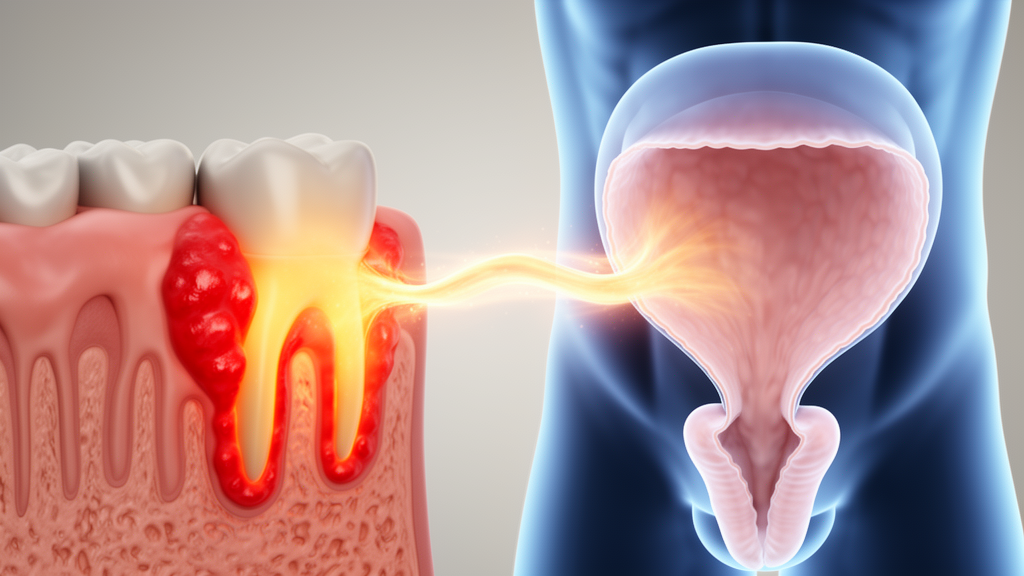
A provocative new hypothesis is drawing attention to an unexpected connection in women’s health: the state of the gums may influence how vulnerable the bladder and vagina become during and after the menopause transition. In a narrative review published in Frontiers in Cellular and Infection Microbiology, researchers from Qingdao Municipal Hospital and collaborators propose an estrogen-sensitive oral-systemic-genitourinary axis, in which periodontal inflammation could amplify genitourinary susceptibility through circulating inflammatory signals and, possibly, through changes in intestinal and vaginal microbial ecosystems. The idea does not require bacteria from the mouth to travel to the urinary tract; instead, the authors argue, systemic inflammation generated by diseased periodontal tissues may act as an amplifier on mucosal surfaces already weakened by declining estrogen.
The biological logic begins with the menopause transition itself. Using the STRAW + 10 staging framework, the review distinguishes perimenopause, which includes the transition and the following 12 months, from postmenopause, the period after the final menstrual period. During these stages, hormonal variability gradually gives way to more sustained hypoestrogenism. Because estrogen receptors are expressed in the salivary glands, oral mucosa, gingival tissues, vagina, urethra, and bladder, attenuated estrogen signaling can impair epithelial renewal, barrier integrity, local immune defense, and the maintenance of microbial habitats across both compartments. Yet the authors are careful to note that neither perimenopause nor postmenopause should be described as a uniformly proinflammatory state: longitudinal data from the Study of Women’s Health Across the Nation show that trajectories of high-sensitivity C-reactive protein and IL-6 differ among women, with increases around the final menstrual period confined to some groups and influenced by premenopausal overweight, obesity, and race or ethnicity.
Within the oral cavity, the review emphasizes that hormonal change reshapes the ecological terrain rather than producing a single, reproducible menopause-associated microbial signature. Reduced salivary secretion, mucosal dryness, altered gingival immunity, and changes in alveolar bone metabolism may increase the inflammatory potential of established biofilms. Clinical studies bear this nuance out. The AMICA study, comparing 19 menstruating women with 20 postmenopausal women, found no significant overall difference in salivary bacterial composition but identified differences in metabolites, glycoside hydrolase activities, and lipid mediators. A 2024 cross-sectional study of 30 women aged 40 to 65 reported site-specific associations between salivary estrone and estradiol and microbial profiles at the tongue dorsum, buccal mucosa, and subgingival plaque. Meanwhile, the Buffalo OsteoPerio study of 1,270 postmenopausal women found differences in subgingival diversity and 18 taxa across categories of menopausal hormone therapy use, largely unchanged after adjustment for age, body mass index, and oral hygiene. A 2025 comparison of pre- and postmenopausal women found more pronounced clinical attachment loss in postmenopausal participants without an overall dysbiotic shift, separating tissue damage from the measured microbial profile.
When periodontitis develops, the picture changes from ecological drift to active inflammatory burden. The review describes how disruption of the gingival barrier, including ulcerated pocket epithelium, exposes inflamed tissue and capillaries to bacteria and their products. Lipopolysaccharides, proteases, nucleic acids, and bacterial extracellular vesicles may disseminate and activate innate immune pathways, while inflamed gingiva releases elevated IL-1β, IL-6, TNF, IL-17, chemokines, and prostaglandins. IL-6 provides a plausible link to hepatic amplification because it activates hepatocyte STAT3 signaling and induces C-reactive protein, serum amyloid A, fibrinogen, and other acute-phase proteins. Supporting clinical evidence includes a cross-sectional study of older Japanese adults in which periodontal inflamed surface area was associated with higher hs-CRP, and meta-analyses showing that periodontal treatment can reduce hs-CRP in patients with type 2 diabetes. A 13-year prospective cohort found periodontitis and systemic inflammatory markers independently associated, and interacting on the additive scale, with all-cause and cardiovascular mortality.
The review also explores more speculative mechanisms, including persistent myeloid reprogramming and the oral-gut route. In mouse models, periodontitis induced IL-1-dependent reprogramming of hematopoietic stem and progenitor cells, and bone marrow transfer increased susceptibility to inflammatory arthritis in recipients. In vitro exposure of human bone marrow progenitors to IL-1β produced monocyte descendants with heightened cytokine responses. However, the authors reserve the term trained immunity for lasting changes supported by metabolic or epigenetic remodeling, and they explicitly state that a contribution from persistent myeloid reprogramming remains unproven in perimenopausal or postmenopausal women with recurrent genitourinary disease. Similarly, experiments showing that periodontitis-associated oral bacteria and orally primed Th17 cells can contribute to intestinal inflammation in susceptible mice, and that salivary microbiota from severe periodontitis patients altered murine gut communities, identify the gut as a possible intermediary, but swallowing oral bacteria does not imply stable intestinal colonization.
On the genitourinary side, the evidence is strongest for recurrent urinary tract infection. Hypoestrogenism can weaken vaginal, urethral, and bladder epithelial resilience, reduce glycogen availability, diminish Lactobacillus-associated colonization resistance, and impair tissue repair. An analysis of postmenopausal SWAN participants found that vaginal atrophy markers were associated with non-Lactobacillus-dominant communities, whereas higher estrone or estradiol were associated with Lactobacillus crispatus dominance. A randomized trial in postmenopausal women found fewer urinary tract infections among those receiving vaginal estrogen, and the 2025 AUA/CUA/SUFU guideline recommends vaginal estrogen for perimenopausal and postmenopausal women with recurrent UTI when there is no contraindication. A year-long study also found lower intestinal microbial richness and fewer butyrate-producing bacteria in women with rUTI history, supporting an association involving the intestinal ecosystem and host responses rather than simple intestinal overgrowth of Escherichia coli.
The review is equally careful with the vaginal diagnoses. Bacterial vaginosis criteria such as Amsel and Nugent were developed mainly in reproductive-age populations, and the reduced lactobacilli and elevated pH of hypoestrogenism can mimic BV features, making diagnosis after menopause difficult without considering epithelial maturation and inflammation. Vulvovaginal candidiasis, by contrast, is associated with an estrogenized vaginal environment rather than estrogen deficiency alone. Aerobic vaginitis and desquamative inflammatory vaginitis add inflammatory phenotypes that can overlap with hypoestrogenic epithelial changes, and parabasal cells indicate immaturity rather than infection. Genitourinary syndrome of menopause can cause overlapping symptoms and coexist with infection, so symptoms alone do not establish recurrent infection. The authors conclude that the clinical evidence connecting hypoestrogenism with recurrent UTI is stronger than the evidence for corresponding effects on BV, vulvovaginal candidiasis, aerobic vaginitis, or DIV.
The proposed axis therefore comprises three interacting components: a hypoestrogenic background that may reduce mucosal resilience, periodontal inflammatory burden as a potential amplifier, and a local genitourinary microbial or inflammatory challenge. These components need not occur in a fixed order, and their relative contributions may differ among women and outcomes. Notably, the connection does not require stable colonization of the urinary or vaginal tract by periodontal pathogens. Circulating signals could influence mucosal responses directly, while changes in intestinal ecology or immunity could provide an additional route through vaginal and periurethral reservoirs to bladder susceptibility. Experimental precedents include germ-free mice receiving periodontitis-associated human oral microbiota, which showed altered intestinal composition, hepatic transcriptional programs, and circulating metabolites, and a study in ovariectomized mice in which salivary microbiota from periodontitis patients aggravated systemic osteoclastogenesis by remodeling the gut microbiota and suppressing tryptophan metabolism.
The closest direct clinical study remains inconclusive. An exploratory randomized trial with 30 female participants distributed among control, oral-hygiene, and periodontal-treatment groups reported improved periodontal measures and fewer positive urine cultures after treatment, but did not distinguish symptomatic infection from asymptomatic bacteriuria, did not analyze menopausal status, had short follow-up, and did not assess inflammatory or multisite microbial mediators. The authors are explicit that evidence supporting the individual components is stronger than direct human evidence for the complete pathway. What remains unproven is whether periodontal inflammation increases symptomatic recurrent UTI during perimenopause or postmenopause, whether periodontal treatment reduces that risk, and which mechanisms would mediate any benefit; evidence is even less direct for periodontal effects on GSM symptoms or the individual vaginal disorders.
To move the hypothesis from plausibility to proof, the review outlines a research agenda: longitudinal multisite studies integrating hormonal trajectories, periodontal status, systemic immune markers, and microbiologically confirmed genitourinary outcomes, with serial sampling of subgingival plaque, blood, stool, vaginal or periurethral samples, and urine in appropriately staged participants. Strain-resolved analyses, standardized reporting, contamination controls, and careful handling of confounders such as age, adiposity, diabetes, smoking, medications, and antibiotic exposure are all specified. The authors also propose a factorial trial testing whether reducing periodontal inflammation adds benefit to vaginal estrogen in eligible women with periodontitis and recurrent UTI, with the primary outcome being the rate of symptomatic, culture-confirmed urinary recurrences. Until such studies are done, periodontal inflammation stands as a modifiable exposure with established systemic effects, and its proposed role in genitourinary vulnerability remains a compelling but untested idea.
Subject of Research: The proposed estrogen-sensitive oral-systemic-genitourinary axis linking periodontal inflammation to genitourinary vulnerability in perimenopause and postmenopause
Article Title: Periodontal inflammation may amplify genitourinary vulnerability in perimenopause and postmenopause
Article References: Zhang, Y., Hua, J., Li, W., Xia, B., Yang, C., Hou, X., & Chu, W. (2026). Periodontal inflammation may amplify genitourinary vulnerability in perimenopause and postmenopause. Frontiers in Cellular and Infection Microbiology, 16, Article 1971575. https://doi.org/10.3389/fcimb.2026.1971575
Image Credits: AI Generated
DOI: 10.3389/fcimb.2026.1971575
Keywords: periodontitis, menopause, perimenopause, recurrent urinary tract infection, genitourinary syndrome of menopause, oral microbiome, systemic inflammation, vaginal microbiome, estrogen deficiency, gut-vagina axis, vaginal estrogen, mucosal immunity
News Source: Kristina Jarvis. (October 17, 2026). Gum Inflammation May Quietly Weaken the Bladder and Vagina After Menopause. Scienmag.