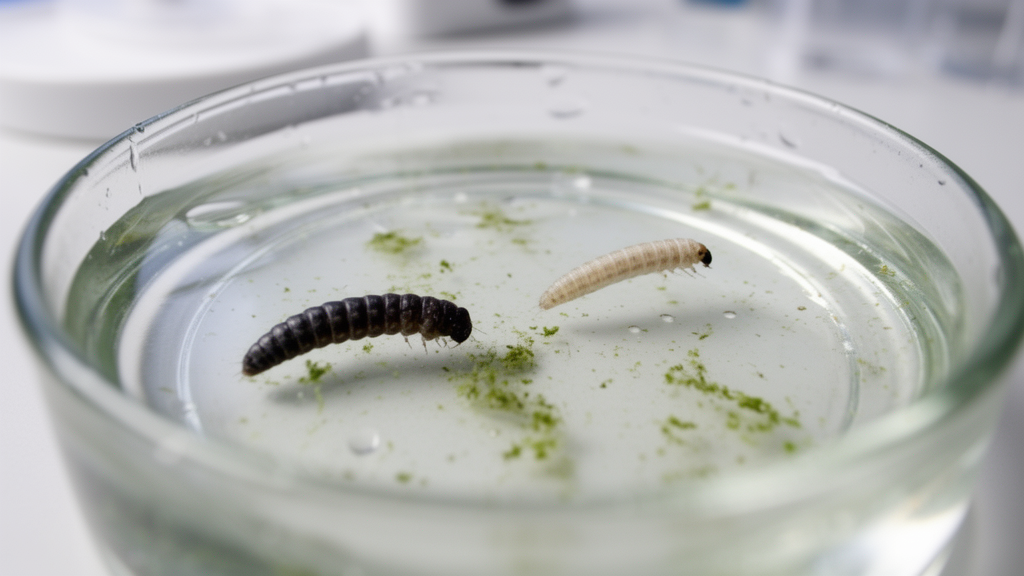
Larval nutrition leaves measurable marks on adult mosquitoes, and a new experimental study of the northern house mosquito Culex pipiens shows that those marks differ sharply between the sexes. Researchers reared larvae under five food levels, ranging from full ad libitum feeding down to just 5% of that amount, and tracked how each level affected survival, development, sex ratio and adult wing morphology. The results, published open access in Parasites & Vectors, reveal that developmental stress becomes detectable well before larvae starve, with nonlinear thresholds emerging around 33–38% of the ad libitum food supply.
The experimental design was straightforward but comprehensive. Larvae were assigned to nutritional treatments of 100%, 50%, 25%, 10% and 5% of the ad libitum condition, allowing the team to map exactly where stress responses switch on. Food restriction reduced survival, slowed and desynchronized development, decreased the proportion of females in emerging cohorts, reduced wing size, altered wing shape and increased variation in wing asymmetry.
These traits together provide a multi-dimensional picture of how a developing mosquito responds to a shrinking food supply. One of the study's clearest findings is that most morphological responses were sex-dependent, with females showing greater sensitivity to nutritional restriction than males. The responses were not linear.
Life-history and morphological traits showed nonlinear patterns, with statistical thresholds detected at roughly 33–38% of the ad libitum level. Among the treatment levels tested, measurable developmental stress first became apparent at 25% of full feeding, while severe population collapse occurred below 10%. This kind of quantitative boundary distinguishes the tested levels at which stress becomes detectable from those at which populations crash.
The researchers also asked which traits serve as the most reliable indicators of nutritional stress. Developmental time and wing size emerged as the most sensitive measures, responding clearly across the food gradient. Fluctuating asymmetry, a commonly used stress marker in insects, showed comparatively lower sensitivity in this system.
Beyond its basic-science interest, the work has practical implications. Environmental conditions during larval development influence many adult life-history traits in holometabolous insects, and understanding these effects is essential for vector control programs and for the laboratory rearing of mosquitoes used in research. By defining biologically meaningful stress levels, the study offers a quantitative framework for optimizing mosquito rearing protocols used in vector biology studies.
Subject of Research: Sex-dependent effects of larval food restriction on life-history and wing traits in Culex pipiens mosquitoes
Article Title: The cost of growing up hungry: sex-dependent effects of larval diet in Culex pipiens
Article References: Santillán-Guayasamín, S., Christe, P., & Glaizot, O. (2026). The cost of growing up hungry: sex-dependent effects of larval diet in Culex pipiens. Parasites & Vectors. https://doi.org/10.1186/s13071-026-07627-3
Image Credits: AI Generated
DOI: 10.1186/s13071-026-07627-3
Keywords: Culex pipiens, larval nutrition, mosquitoes, developmental stress, life-history traits, wing morphology, fluctuating asymmetry, sex-dependent, vector biology, thresholds, Parasites & Vectors, cost
News Source: Daisy Hatcher. (October 23, 2026). Growing Up Hungry: Larval Food Stress Hits Female Mosquitoes Hardest. Scienmag.