NEW YORK, April 24, 2024 — Sexual dimorphism—the visible difference between females and males—can be seen in diverse animals, including humans. One intriguing aspect of this phenomenon is sex-limited polymorphism, where one sex displays greater variations in a particular trait than the other. In a recent study published in Science Advances, a team of researchers delve into the genetic underpinnings behind the color polymorphism observed in adult females of the brood parasitic Cuculus, more widely known as cuckoo birds, shedding light on the evolution and functional significance of this phenomenon.
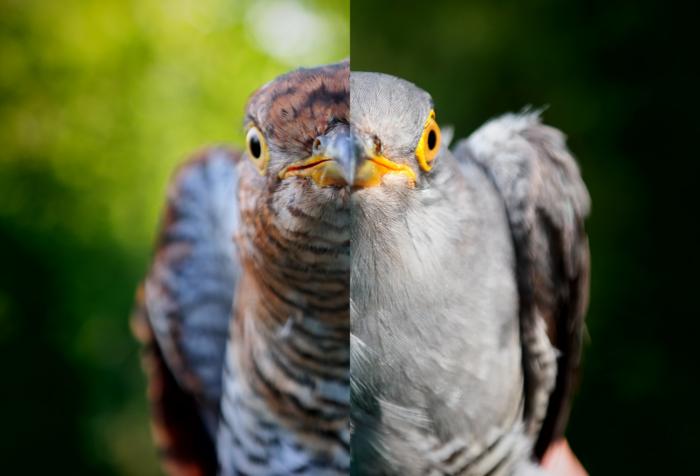
Credit: Bianka Regina Jaska
NEW YORK, April 24, 2024 — Sexual dimorphism—the visible difference between females and males—can be seen in diverse animals, including humans. One intriguing aspect of this phenomenon is sex-limited polymorphism, where one sex displays greater variations in a particular trait than the other. In a recent study published in Science Advances, a team of researchers delve into the genetic underpinnings behind the color polymorphism observed in adult females of the brood parasitic Cuculus, more widely known as cuckoo birds, shedding light on the evolution and functional significance of this phenomenon.
Several species of cuckoos, a genus of birds distributed across Africa and Eurasia, exhibit sex-limited polychromatism (color differences) in their typically striped and hawk-mimetic plumage. Specifically, while adult male cuckoos feature a gray plumage, adult females can display either gray or rufous (reddish-brown) plumage. Furthermore, the prevalence of each female color morph varies between cuckoo species as well as between different populations within the same species.
The internationally collaborative study was initiated by Mark E. Hauber, executive director of the CUNY Advanced Science Research Center (CUNY ASRC) and a psychology professor at the CUNY Graduate Center, in collaboration with a group of Hungarian field ornithologists. For their study, the team employed a genome-wide association analysis on nuclear DNA data, which was obtained from Common and Oriental cuckoos in the wild and from museum specimens. Their aim was to identify candidate genes responsible for the observed polychromatism in adult female cuckoos, the mechanisms of pigmentation underlying the coloration, and the evolutionary history of the mutation.
Genes that affect males and females differently often reside on the sex chromosomes. In mammals, including humans, males represent the heterogametic sex, characterized by their XY sex chromosomes. As such, genes on the Y chromosome exclusively manifest in males, distinguishing them from females with XX chromosomes. Conversely, in birds, females exhibit heterogamy with ZW sex chromosomes, distinct from the ZZ chromosomes of male birds. This disparity led the researchers to hypothesize that the variation in color observed in female cuckoos is likely linked to gene(s) on the female sex chromosome.
“We found that, instead of a single gene or set of genes, nearly all variations in the gray or rufous coloration were associated with the full length of the female-limited W chromosome,” said Hauber. “That was really unexpected.”
Further exploration into the biochemical basis of coloration encoded on the W chromosome uncovered a commonality across the two closely related cuckoo species: both and the Common and Oriental cuckoos utilize two shared forms of melanin-based pigmentation, the same chemical found in human skin pigmentation, to control the intensity of brown and gray coloration in their plumage.
The researchers also utilized genomic data from the two species to examine the evolutionary history of color polymorphism in female cuckoos. Their analysis revealed that a single mutation for female-only polychromatism originated over 1 million years ago in the shared ancestor of these cuckoos, predating species divergence which occurred roughly 140,000 years ago.
The study’s findings prompt intriguing questions about the benefits of female’s evolving multiple morphs. Female cuckoos of the less common morph may gain advantages in mimicking rufous juvenile cuckoos to evade the attention of harassing males interested in mating. Additionally, the often-rarer rufous plumage may be strategic for these brood parasite birds, which lay their eggs in the nests of other birds, forcing the hosts to care for their young. The rufous plumage may help females avoid recognition as parasites by potential host species parents, which often attack and occasionally kill adult cuckoos near their nests.
The study transforms our understanding of sex-limited polymorphism and also adds to knowledge regarding sexual dichromatism, highlighting the adaptive advantages that can arise from such intricate evolutionary adaptations.
Article DOI: 10.1126/sciadv.adl5255
About the Advanced Science Research Center at the CUNY Graduate Center
The Advanced Science Research Center at the CUNY Graduate Center (CUNY ASRC) is a world-leading center of scientific excellence that elevates STEM inquiry and education at CUNY and beyond. The CUNY ASRC’s research initiatives span five distinctive, but broadly interconnected disciplines: nanoscience, photonics, neuroscience, structural biology, and environmental sciences. The center promotes a collaborative, interdisciplinary research culture where renowned and emerging scientists advance their discoveries using state-of-the-art equipment and cutting-edge core facilities.
Journal
Science Advances
DOI
10.1126/sciadv.adl5255
Method of Research
Data/statistical analysis
Subject of Research
Animals
Article Title
Evolution of female-limited coloration in cuckoos
Article Publication Date
24-Apr-2024