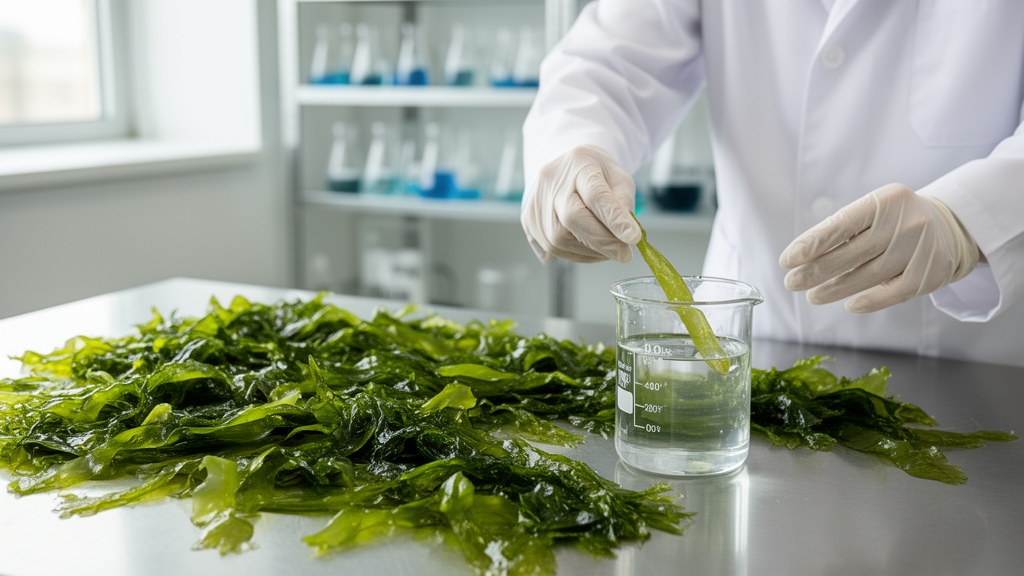
The green seaweed Ulva, a familiar blade-like alga of coastal waters worldwide, is emerging as one of the most versatile feedstock candidates in marine aquaculture, yet its global production remains strikingly small. A comprehensive review published in Aquaculture Science and Management brings together decades of research on how this chlorophyte can be cultivated sustainably at industrial scale, examining everything from the physiology of growth and genome-level tools to seedling production, tank farming, open-sea cultivation and the alga’s role in nutrient removal and carbon capture. The authors argue that despite growing industrial interest in Ulva biomass for animal and fish feed, agriculture, pharmaceuticals and cosmeceuticals, the framework of advances in sustainable biomass production has remained largely underexplored in scientific reviews, and their synthesis aims to close that gap.
The scale of the opportunity is framed by striking production statistics. Global seaweed production stands at 34.7 million tonnes wet weight, worth USD 14.7 billion in first-sale value, and 97 percent of that output comes from aquaculture rather than wild harvesting. Yet the revenue is concentrated in just five genera: Laminaria/Saccharina accounts for 31.29 percent, Porphyra 18.36 percent, Kappaphycus/Eucheuma 16.32 percent, Gracilaria 13.60 percent and Undaria 12.92 percent. Green seaweeds barely register, with only 16,696 tonnes produced in 2019, a mere 0.05 percent of all seaweeds. Within that small share, Ulva contributed roughly 2,155 tonnes. The review positions this imbalance as both a challenge and an opportunity, since Ulva’s widespread distribution across marine, estuarine and even freshwater environments, its lack of intrinsic toxins, and its high protein, micronutrient and dietary fiber content make it a preferred plant-based resource waiting to be scaled.
At the heart of the review is the physiology that governs how fast Ulva grows and how much biomass it can deliver. Photosynthesis is central, and it is highly sensitive to irradiance, temperature, salinity and nutrient concentrations. In wild fronds of U. fasciata, the net photosynthetic oxygen evolution rate rose from 25.2 micromoles of oxygen per gram fresh weight per hour at dawn to 168 at noon, before falling to 42.4 at dusk, demonstrating the powerful influence of light intensity. Primary productivity in the same species was reported to be 20 percent higher under white light than blue light, while in U. ohnoi higher stocking density and self-shading significantly reduced growth rates. Nutrient supply matters too: ammonia enrichment boosted photosynthesis and growth in U. prolifera, and higher nitrogen concentrations had similar effects in U. fasciata. But when light was limiting, nutrient enrichment could not compensate, leading the authors to conclude that light management should be prioritized alongside nutrient supply in any cultivation strategy.
Salinity tolerance adds another layer of adaptive flexibility. Ulva can survive across a range of 5 to 40 practical salinity units, with maximum growth reported at 20 PSU, though growth declines under hypersaline conditions as reduced turgor pressure and cumulative enzyme effects impede cell division. Photosynthetic carbon fixation typically follows the C3 pathway, with a few cases combining C3 and C4 routes. The review also highlights the alga’s efficient acquisition of ammonium, at 94.8 percent uptake, roughly 52.7 micromoles per liter, over nitrate, which enhances growth in nutrient-rich environments such as fishpond effluents. Antioxidant enzymes, including superoxide dismutase, which increased 17 to 35 percent, and catalase, up 30 to 43 percent, protect cells from oxidative stress under intense light and temperature fluctuations. These physiological traits, the authors argue, are essential for maximizing productivity in controlled cultivation systems and for selecting strains based on both product composition and physiological adaptability.
Genomic and molecular tools are now reshaping what is possible in Ulva breeding. The genus is already established as a classic model organism for studying development, multicellularity and evolution, and recent genome and transcriptome studies have revealed stress-responsive genes in U. prolifera that reflect its ability to survive adverse conditions. Expansion of CONSTANS-LIKE transcription factors in U. mutabilis appears to integrate multiple environmental signals driving thallus development, and genome analysis has identified homologs of genes involved in biosynthesis of phytohormones such as abscisic acid, ethylene, salicylic acid and auxin, though bioassays did not clearly confirm their role in growth. About 27 putative cell cycle-related genes with a speculative role in rapid growth have been identified in U. prolifera, and during gametogenesis 45 percent of Ulva’s genes are differentially expressed, with an RWP-RK transcription factor identified as crucial for early development. A golden gate cloning system has been developed for molecular cloning in U. mutabilis, successfully producing stable transgenic lines, and a DNA-free CRISPR-Cas9 system has been demonstrated for genome editing in U. prolifera, achievements the review says will accelerate future gene characterization and functional genomics.
One of the most practical bottlenecks in Ulva farming is seedling supply. Cultivation has relied primarily on vegetative propagation, but this method suffers from the disintegration of vegetative tissue over prolonged periods due to swarmer formation, severely hampering continuity of biomass production. The review champions spore-based seedling production as a viable alternative, supported by artificial induction of reproduction. Thallus fragmentation emerges as the most effective abiotic stimulus for inducing sporulation, followed by temperature, dehydration, light and photoperiod, with fragment sizes of 0.12 to 5 millimeters yielding 90 to 100 percent sporulation response. The underlying mechanism involves sporulation inhibitors, high molecular weight glycoproteins of 1 to 4 times ten to the seventh Daltons, which are diluted by fragmentation and thereby trigger swarmer formation. Once released, swarmers attach to substrates such as ropes and nets in open-sea farming, then undergo distal and lateral cell division to form mature thalli. The authors note that while laboratory results are promising, the gap between experimental success and commercial operation remains wide, with only a few cases translated into practice.
Protoplast technology offers another route to strain improvement. Enzymatic protoplast isolation, using a protocol of 2 percent cellulose, 1 percent sodium chloride and 0.8 molar mannitol at pH 6.0 and 20 degrees Celsius for two hours, yielded the highest viable protoplast count in U. reticulata at 88.6 times ten to the sixth cells per gram fresh weight. Intergeneric protoplast fusion between Monostroma oxyspermum and U. reticulata has been demonstrated for enhancing functional traits, and protoplasts of U. lactuca seeded onto nets have been successfully out-planted at sea with a regeneration rate of 94 percent. Developmental variants of U. reticulata protoplast-derived germlings, including a disk-type variant tolerant to temperatures up to 30 degrees Celsius, have been maintained in the laboratory for more than a year, indicating suitability for in vitro germplasm preservation. Still, the review cautions that protoplast technology in seaweeds remains largely of academic interest because of specialized skill requirements, high infrastructure costs, long screening periods and unpredictable fusion outcomes.
For actual biomass production, the review evaluates several cultivation methods. The germling cluster method, a tank-based protocol for free-floating U. prolifera, induces synchronized release of swarmers three days after fragmentation, which then aggregate into clusters of 10 to 100 multicellular germlings that reach about one millimeter within seven days under aeration. The same stock has been reproduced up to ten times over a year, and daily growth rates of 18.2 to 54.5 percent were reported in year-round farming using deep seawater in Japan. Land-based cultivation offers superior control over quality, traceability and security, with U. compressa grown in cost-effective laboratory prototypes achieving average growth of 8 to 11 percent per day and feedstock production of 20 to 30 grams per square meter per day. Open-sea cultivation, meanwhile, has been commercially practiced in Japan since 1985, producing about 1,300 to 1,500 tonnes dry weight annually, with experimental success also reported in India and Brazil, where biomass ranged from 404 to 830 grams fresh weight per square meter over an 11-week cycle in Port Okha.
Beyond feedstock, the review highlights Ulva’s ecosystem services. In laboratory conditions, U. lactuca exhibited 100 percent carbon dioxide utilization in CO2-enriched seawater, and its carbon-concentrating mechanisms, aided by the enzyme carbonic anhydrase, convert bicarbonate into CO2 to enhance photosynthesis and sequestration. External dehydration of bicarbonate contributes 34 to 68 percent of the CO2 supply supporting net photosynthetic rates across various Ulva species. On the nutrient front, U. reticulata achieved 100 percent reduction in ammoniacal nitrogen within 12 hours and nitrite nitrogen within 18 hours in a 12-day biofilter experiment, while U. fasciata removed 76 percent of nitrate nitrogen from mariculture effluent. In the Yellow Sea, estimated nitrogen, phosphorus and carbon removal during a green tide event reached approximately 7,460, 1,050 and 173,000 tonnes respectively. These capabilities position Ulva as a candidate for integrated multi-trophic aquaculture and eutrophication mitigation.
The review closes with recommendations for making large-scale Ulva cultivation viable: adopting DNA-free CRISPR-Cas9 genome editing, shifting from vegetative propagation to spore-based or protoplast-based seedling production, developing land-based nurseries, integrating cultivation with coastal and fishery management frameworks, and building a dedicated biosecurity framework for disease, epiphyte and pest management. The authors also emphasize monetary incentives such as green deals and energy tax exemptions for aquaculture industries engaged in bioremediation and carbon capture, alongside knowledge-sharing tools like AquaSpace and GlobalSeaweedSTAR to equip farmers with best practices. A SWOT analysis underscores that while Ulva holds significant nutritional, environmental and commercial potential, consistent cultivation protocols, biosecurity frameworks, market development and policy support remain essential before large-scale commercialization can be realized.
Subject of Research: Advances in sustainable biomass production of the green seaweed Ulva for industrial feedstock applications
Article Title: A comprehensive assessment of the framework of advances in the sustainable feedstock production of industrially important green seaweed Ulva (Chlorophyta)
Article References: Dinesh Kumar, S., Balar, N., Bhushan, S., Jaiswar, S., Trivedi, K., Kazi, M. A., Mathew, D. E., Rathod, S. G., Bodar, P. A., Majumder, A., Rakhasiya, B., Rajai, J. V., Kaushik, A., Depani, P., Bhagiya, B. K., Habsi, M., & Mantri, V. A. (2026). A comprehensive assessment of the framework of advances in the sustainable feedstock production of industrially important green seaweed Ulva (Chlorophyta). Aquaculture Science and Management, 3(1), Article 13. https://doi.org/10.1186/s44365-026-00041-x
Image Credits: AI Generated
DOI: 10.1186/s44365-026-00041-x
Keywords: Ulva, green seaweed, seaweed aquaculture, sustainable feedstock, biorefinery, protoplast technology, germling cluster, nutrient removal, carbon sequestration, biosecurity, SDGs, open sea cultivation
News Source: Alan Morgan. (October 28, 2026). Green seaweed Ulva moves from wild harvest to engineered sustainable feedstock. Scienmag.