Weill Cornell Medicine has been awarded a five-year, $5 million grant from the United States Department of Health and Human Services through the Office of Population Affairs under the Teen Pregnancy Prevention Program to conduct a randomized trial testing whether a bilingual video game called “No Baby No (No Bebé No)” can increase the use of contraception among sexually active Black and Hispanic adolescents.
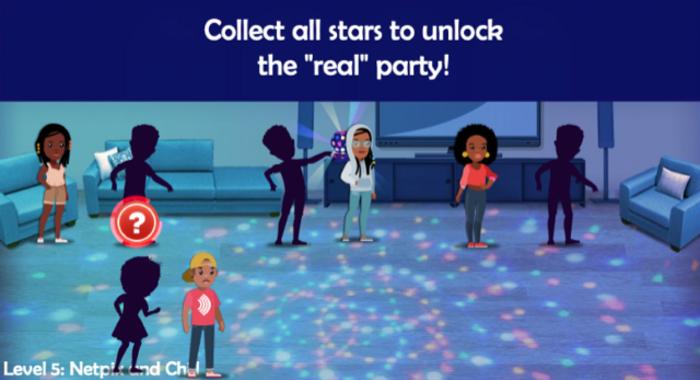
Credit: 1st Playable Productions, video game developer.
Weill Cornell Medicine has been awarded a five-year, $5 million grant from the United States Department of Health and Human Services through the Office of Population Affairs under the Teen Pregnancy Prevention Program to conduct a randomized trial testing whether a bilingual video game called “No Baby No (No Bebé No)” can increase the use of contraception among sexually active Black and Hispanic adolescents.
“Nine out of ten teens play video games. No Baby No empowers Black and Hispanic adolescents to learn about contraception, and the potential consequences of not using it, in a risk-free virtual world that is culturally responsive and inclusive of their language, slang and in scenarios they face in real life,” said principal investigator Dr. Aileen Gariepy, an associate professor of obstetrics and gynecology and director of Complex Family Planning at Weill Cornell Medicine and an obstetrician-gynecologist at NewYork-Presbyterian/Weill Cornell Medical Center.
Annually, there are over 10 million teen pregnancies in the U.S., of which about 75 percent are unintended with broad disparities. Pregnancy rates are two to three times higher among Black and Hispanic adolescents than white teens. The lower use of contraception is a major factor driving this difference: 23.2 percent of Black teens and 12.8 percent of Hispanic teens did not use contraception during their last sexual encounter compared to 6.8 percent of white teens, according to a 2020 report from the Centers for Disease Control and Prevention (CDC).
To address this disparity, Dr. Gariepy partnered with Black and Hispanic teens to design a video game intervention that utilizes education, skill building, contraception promotion and simulation training.
No Baby No can be played in English or Spanish and begins in a house party setting. Players choose avatars (digital representations of partygoers) and guide them through different situations, including how to talk about sex with a partner, whether to have sex and choosing to use contraception. Players earn points by unlocking evidence-based information and answering questions. They can then use points to “buy” contraception for their avatars.
Players’ avatars can speak with “Dr. AllGoodNoJudgment,” a virtual expert who facilitates medically accurate decision-making. Players spin a wheel to see if a pregnancy occurred based on their avatars’ choice of contraception or not using any. Players can then advance to the next level and enter a new party scenario.
Pilot test results among 26 Black and Hispanic teens found that No Baby No increased reproductive health knowledge, self-efficacy, risk assessment skills and intentions to use contraception. Previous focus group feedback informed game refinements, such as earning points for “buying” contraceptives and disabling the ability to use contraception, if an avatar chooses to use alcohol or cannabis.
For the grant, Dr. Gariepy is collaborating with co-investigator Dr. Serena Flaherty, an adolescent health expert and Cornell-Hunter health equity research fellow at Weill Cornell Medicine.
Dr. Gariepy is working locally to recruit 650 Black and Hispanic adolescents, ages 16 to 19, for the study. The Community Engagement and Research Component of Weill Cornell’s Clinical & Translational Science Center and NewYork-Presbyterian’s Division of Community and Population Health are facilitating collaborations with several organizations that provide programs for teens in New York City.
Study participants will be randomized to play No Baby No or a popular non-sexual health video game on provided tablets for one hour weekly over four weeks. The research team will assess players’ reports of contraception use during their last sexual encounter at the beginning of the study, after four weeks of game play and 12 months later.
“If No Baby No increases the use of contraception, it holds great promise for addressing racial and ethnic disparities by reducing unintended pregnancies,” Dr. Gariepy said. “At present, the game has a heterosexual focus, but if effective, we could easily add components for different groups and needs in the future.”
The grant reported in this newsroom story was awarded by the United States Department of Health and Human Services through the Office of Population Affairs under the Teen Pregnancy Prevention Program, federal award number 1 TP2AH000081-01-00.