• HOME
  • NEWS
  • EXPLORE
    • CAREER
      • Companies
      • Jobs
    • EVENTS
    • iGEM
      • News
      • Team
    • PHOTOS
    • VIDEO
    • WIKI
  • BLOG
  • COMMUNITY
    • FACEBOOK
    • INSTAGRAM
    • TWITTER
Wednesday, July 8, 2026
BIOENGINEER.ORG
No Result
View All Result
  • Login
  • HOME
  • NEWS
  • EXPLORE
    • CAREER
      • Companies
      • Jobs
        • Lecturer
        • PhD Studentship
        • Postdoc
        • Research Assistant
    • EVENTS
    • iGEM
      • News
      • Team
    • PHOTOS
    • VIDEO
    • WIKI
  • BLOG
  • COMMUNITY
    • FACEBOOK
    • INSTAGRAM
    • TWITTER
  • HOME
  • NEWS
  • EXPLORE
    • CAREER
      • Companies
      • Jobs
        • Lecturer
        • PhD Studentship
        • Postdoc
        • Research Assistant
    • EVENTS
    • iGEM
      • News
      • Team
    • PHOTOS
    • VIDEO
    • WIKI
  • BLOG
  • COMMUNITY
    • FACEBOOK
    • INSTAGRAM
    • TWITTER
No Result
View All Result
Bioengineer.org
No Result
View All Result
Home NEWS Science News

Good cellular neighbors combat incipient cancers

Bioengineer by Bioengineer
August 2, 2017
in Science News
Reading Time: 2 mins read
0
Share on FacebookShare on TwitterShare on LinkedinShare on RedditShare on Telegram
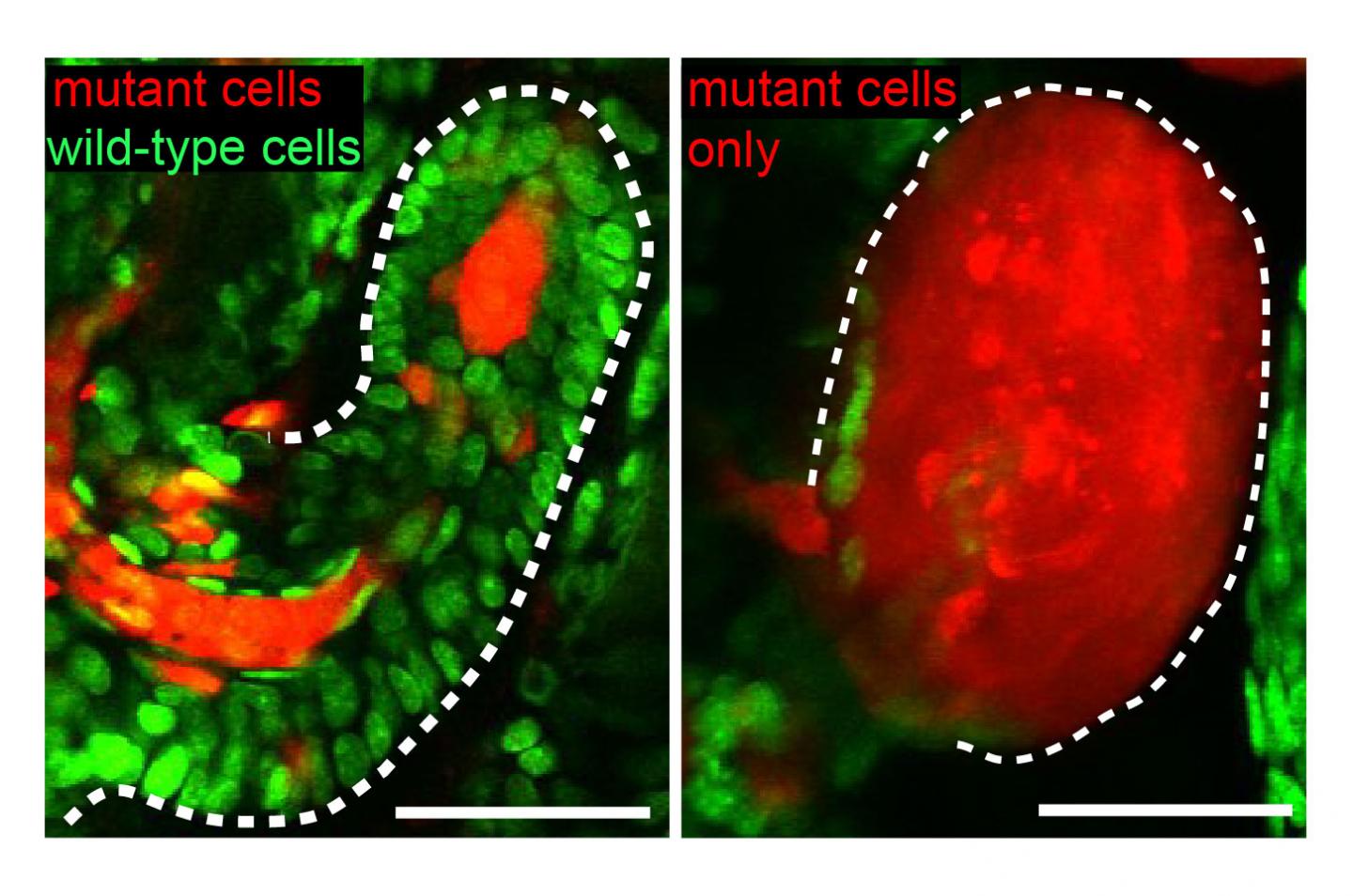
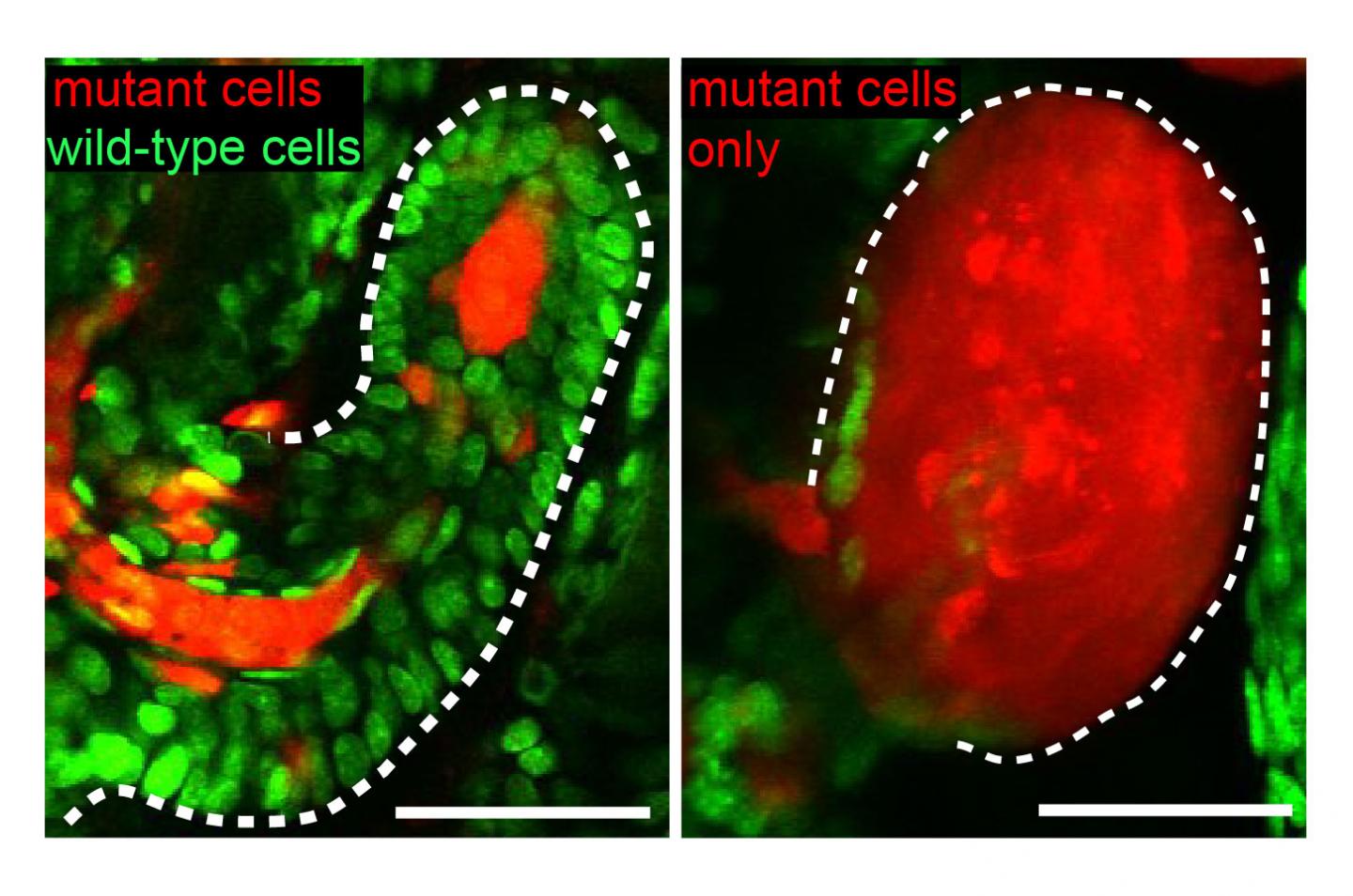
IMAGE

Credit: Yale University

Scientists have spent decades studying the nature of tumor cells, but few have looked to see what was happening in the surrounding tissue.

When Yale researchers took a closer look at skin cells, they discovered the unaffected neighbor cells are not helplessly awaiting invasion of cancer cells but acting like cellular police, actively correcting tissue flaws created by their aberrant neighbors, the investigators report Aug. 2 in the journal Nature.

"The normal cells can even corral and escort mutant cells out of the tissue and clean up the mess the mutant cells left behind, in order to keep the tissue healthy and functional," said Samara Brown. She and fellow graduate student Cristiana Pineda are lead authors of the study.

"We found a dynamic, active process of correction conserved across different mutational systems and even a mutation-independent model," Pineda added.

The Yale team studied damaged cells or activated oncogenes in mouse tissue and used new live-imaging technology to study behavior of surrounding cells. They found these wild-type cells were necessary for the elimination of tumors, which progressed dramatically in their absence, and for correcting aberrations caused by damaged cells.

Primary funding for the study was provided by the National Institutes of Health and New York Stem Cell Foundation.

Brown and Pineda work in the lab of senior author Valentina Greco, associate professor of genetics, cell biology, and dermatology.

###

Media Contact

Bill Hathaway
[email protected]
203-432-1322
@yale

http://www.yale.edu

Related Journal Article

http://dx.doi.org/10.1038/nature23304.
Share12Tweet8Share2ShareShareShare2

Related Posts

Flame retardant BDE-209 targets molecularly linked to ulcerative colitis

July 6, 2026
Ultra-high frequency particle impacts mimic rockbursts to shatter hard rock

Ultra-high frequency particle impacts mimic rockbursts to shatter hard rock

July 6, 2026

Kidney transplant outcomes in older adults studied by German researchers

July 6, 2026

Embodied cognition yields interpretable trajectory predictions for autonomous systems.

July 6, 2026
Please login to join discussion

POPULAR NEWS

  • Detection of EDCs in Breast Milk and Infant Urine Up to Six Months Highlights Early Exposure Risks

    77 shares
    Share 31 Tweet 19
  • New Drug Candidate Developed at McMaster Shows Potential for Treating Brain Cancer

    58 shares
    Share 23 Tweet 15
  • Saying Goodbye to PGY-6: Pediatric Fellowship Realities

    103 shares
    Share 41 Tweet 26
  • KTU Researchers Explore Ultrasound’s Role in Enhancing Blood Flow Beyond Diagnostics

    53 shares
    Share 21 Tweet 13

About

We bring you the latest biotechnology news from best research centers and universities around the world. Check our website.

Follow us

Recent News

Flame retardant BDE-209 targets molecularly linked to ulcerative colitis

Ultra-high frequency particle impacts mimic rockbursts to shatter hard rock

Kidney transplant outcomes in older adults studied by German researchers

Subscribe to Blog via Email

Success! An email was just sent to confirm your subscription. Please find the email now and click 'Confirm' to start subscribing.

Join 83 other subscribers
  • Contact Us

Bioengineer.org © Copyright 2023 All Rights Reserved.

Welcome Back!

Login to your account below

Forgotten Password?

Retrieve your password

Please enter your username or email address to reset your password.

Log In
No Result
View All Result
  • Homepages
    • Home Page 1
    • Home Page 2
  • News
  • National
  • Business
  • Health
  • Lifestyle
  • Science

Bioengineer.org © Copyright 2023 All Rights Reserved.