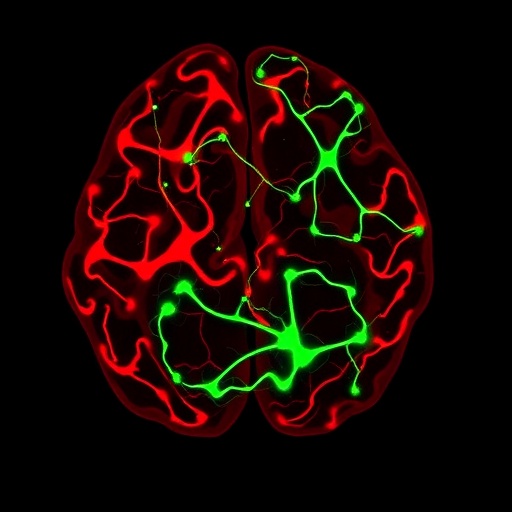
A surprising discovery in Parkinson’s disease research is challenging one of the field’s most familiar assumptions: that restoring movement necessarily requires increasing activity in neurons that stimulate the motor system. In a study published in npj Parkinson’s Disease, Garcia Moreno, Gashi, Lukenic and colleagues report that inhibitory neurons in a deep-brain region called the substantia nigra can improve movement when they release glutamate alongside their usual inhibitory chemical signal. In a mouse model of Parkinson’s disease, this unusual form of chemical co-release was associated with a reversal of motor deficits.
Parkinson’s disease develops when dopamine-producing neurons in the substantia nigra gradually degenerate. Dopamine normally helps the basal ganglia, a network of interconnected brain structures, select and coordinate movement. When dopamine levels fall, the balance between pathways that facilitate and suppress movement is disrupted. The result can be slowness, rigidity, tremor and difficulty initiating actions. Existing treatments, including levodopa and deep-brain stimulation, can provide substantial relief, but they do not fully restore normal circuit function and may become less effective or produce complications over time.
The new work focuses on a population of nigral neurons traditionally understood as inhibitory. These cells use gamma-aminobutyric acid, or GABA, to reduce the activity of their target neurons. In the classical model of basal-ganglia circuitry, inhibitory signaling from the substantia nigra helps regulate motor output by suppressing activity in downstream structures. The study suggests that these neurons may possess a second, less expected communication channel: under certain conditions, they can also release glutamate, the brain’s principal excitatory neurotransmitter.
GABA and glutamate usually have opposing effects. GABA commonly makes it more difficult for a receiving neuron to fire, while glutamate activates receptors that promote electrical excitation and can strengthen communication between neurons. The biological effect of a neuron capable of releasing both transmitters depends on timing, receptor distribution and the identity of its targets. Rather than acting as a simple brake, such a cell may deliver a more complex signal—simultaneously inhibiting one component of a circuit while exciting another.
According to the researchers, this glutamate co-release had a powerful effect in mice displaying Parkinsonian motor impairment. Enhancing the ability of inhibitory nigral neurons to release glutamate was reported to reverse deficits in movement, indicating that the excitatory component of their signaling can compensate for circuit disturbances caused by dopamine loss. The finding does not mean that glutamate is universally beneficial or that simply increasing excitation throughout the brain would treat Parkinson’s disease. Instead, it points to the importance of where, when and from which cells glutamate is released.
The study also highlights how much remains to be understood about neuronal identity. Brain cells are often classified according to a single neurotransmitter, such as dopamine, GABA or glutamate. Yet many neurons are capable of co-releasing more than one chemical messenger, allowing them to influence multiple targets through distinct mechanisms. Co-release can depend on separate vesicle populations, presynaptic calcium dynamics and the molecular machinery that transports neurotransmitters into synaptic vesicles. These details may allow the same neuron to produce rapid, precisely timed effects that cannot be predicted from its primary transmitter alone.
The reported results are particularly notable because they shift attention from replacing dopamine to rewiring the logic of the motor circuit. Dopamine loss affects several interconnected pathways, and restoring dopamine pharmacologically does not necessarily recreate the normal pattern of signaling. By harnessing glutamate release from a carefully defined group of nigral neurons, researchers may be able to strengthen selected pathways without broadly activating the entire motor network. Such circuit-specific strategies could eventually complement dopamine replacement or stimulation-based therapies.
However, the findings remain preclinical. A response observed in a mouse model may not translate directly to people with Parkinson’s disease, whose condition involves diverse genetic, cellular and clinical features. The safety of manipulating glutamate signaling will also require careful evaluation. Excessive or poorly targeted glutamatergic activity can disrupt network stability and, in some circumstances, contribute to excitotoxicity, a process in which overactivation damages neurons. Any future therapy would therefore need precise control over the affected cells, the amount of transmitter released and the duration of treatment.
The study nevertheless opens a provocative line of investigation. If inhibitory neurons in the substantia nigra can be engineered or pharmacologically modulated to deliver a beneficial combination of inhibitory and excitatory signals, they could become an unexpected therapeutic target for Parkinson’s disease. The work reinforces a broader lesson in neuroscience: the brain’s circuits are not organized according to simple opposites, and cells labeled “inhibitory” may have the capacity to restore movement through an excitatory signal. Further studies will need to determine how this co-release operates across disease stages, whether it can produce lasting benefits and how safely the mechanism can be translated from mice to patients.
Subject of Research: Glutamate co-release from inhibitory nigral neurons and its effects on motor deficits in a Parkinson’s disease mouse model.
Article Title: Glutamate co-release from inhibitory nigral neurons reverses motor deficits in a Parkinson’s disease mouse model.
Article References: Garcia Moreno, S.I., Gashi, L., Lukenic, M. et al. “Glutamate co-release from inhibitory nigral neurons reverses motor deficits in a Parkinson’s disease mouse model.” npj Parkinson’s Disease (2026). https://doi.org/10.1038/s41531-026-01508-3
Image Credits: AI Generated
DOI: 10.1038/s41531-026-01508-3
Keywords: Parkinson’s disease, substantia nigra, glutamate, GABA, neurotransmitter co-release, motor deficits, basal ganglia, neuronal signaling, mouse model, neurodegeneration
Tags: basal ganglia dysfunctionchemical neurotransmitter co-releasedopamine neuron degenerationglutamate co-releaseinhibitory neuronsmotor deficits reversalneural circuit modulationneurochemical mechanismsnigral neuronsParkinson’s diseaseParkinson’s treatment strategiessubstantia nigra