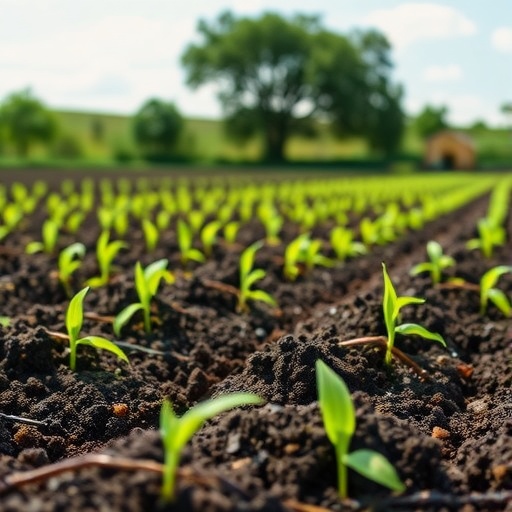
In the quest to combat escalating climate change, biochar has emerged as a promising solution for carbon sequestration and soil health improvement. Biochar is a carbon-rich product derived from the thermal decomposition of plant or animal biomass under limited oxygen conditions—a process known as pyrolysis. This innovative material is widely regarded for its potential to lock carbon in soils for extended periods, potentially mitigating greenhouse gas emissions. However, emerging research indicates that the efficacy of biochar, especially in agricultural lands, may be significantly compromised by escalating global temperatures.
A rigorous meta-analysis involving over two thousand paired observational data points collected from thirty-two peer-reviewed studies brings a cautionary perspective to light. This extensive synthesis reveals that warming conditions substantially intensify carbon dioxide emissions from soils amended with biochar. Specifically, the analysis concludes that warming increases CO₂ emissions from biochar-treated soils by an average of 77% across diverse ecosystems. This effect intensifies dramatically in croplands, where emissions surged by approximately 117.5%, starkly contrasting with a more modest 30.9% increase detected in forest soils.
These findings underscore a vital complexity in soil carbon dynamics under climate change stressors. The prevailing assumption that biochar unequivocally retains carbon in soils requires reassessment, particularly in light of thermal sensitivity. The interaction between higher temperatures and microbial activity plays a pivotal role. Warmer soil environments accelerate microbial metabolism, enhancing the decomposition rates of both native soil organic matter and biochar-associated carbon fractions. This process results in amplified carbon release back into the atmosphere, potentially negating the intended carbon sequestration benefits of biochar application.
Agricultural systems pose unique challenges in this context due to the frequent soil disturbances from tillage, irrigation, and fertilizer application. Such interventions expose more organic substrates to microbial communities, thereby increasing their vulnerability to thermal-driven degradation. Consequently, the combination of biochar amendment and elevated soil temperatures in croplands necessitates refined management practices that consider dynamic soil carbon pool responses to climate warming.
Furthermore, the study illuminates how biochar feedstock types and production parameters influence soil carbon emission responses under warming scenarios. Woody biomass-derived biochars were associated with stronger positive CO₂ emissions feedbacks compared to those derived from crop residues or grasses. Similarly, biochars produced at higher pyrolysis temperatures, applied at elevated rates, or processed into smaller particle sizes were linked to exacerbated warming-induced carbon losses. These nuanced insights imply that not all biochar formulations confer equal climate mitigation advantages.
Given this complexity, it becomes evident that a ‘one-size-fits-all’ biochar application strategy is insufficient. Tailoring biochar use requires rigorous site-specific analyses incorporating land-use type, soil physical and chemical properties, biochar characteristics, and projected warming trajectories. Adaptive management approaches must factor in these interrelated variables to optimize carbon retention outcomes and sustain soil ecosystem functions under future climate regimes.
Practically, the research advocates for strategic shifts in biochar production and application protocols. Using non-woody feedstocks such as crop residues or grass biomass rather than wood may mitigate enhanced carbon emissions under warming. Maintaining pyrolysis temperature within moderate ranges can improve biochar stability and reduce labile carbon fractions susceptible to microbial mineralization. Additionally, fine-tuning application rates to avoid excessive biochar inputs may help curb unintended amplification of CO₂ emissions.
Beyond agricultural practices, these insights bear critical implications for climate policy frameworks and carbon accounting methodologies. Biochar is increasingly integrated into carbon removal portfolios and included in initiatives targeting soil carbon enhancement. However, many life-cycle assessment models and soil carbon sequestration projections currently lack thorough incorporation of warming-induced flux dynamics. This omission risks overestimating the net climate mitigation potential of biochar-based solutions.
Addressing these knowledge gaps demands expanded empirical investigations. Most existing data derive from controlled laboratory studies or temperate zones, while tropical, arid, polar, and high-latitude ecosystems remain underrepresented. Future field experiments employing realistic warming gradients and multi-ecosystem sampling are essential to develop more robust predictive models that can guide biochar applications under complex real-world conditions.
Despite these emerging challenges, biochar remains a valuable instrument in the sustainable management of soils. Its multifaceted benefits, including improving soil fertility, enhancing water retention, and remediating environmental contaminants, reaffirm its importance. However, the new evidence presented underscores the urgency of designing informed, climate-responsive biochar interventions. Aligning biochar use with region-specific environmental factors and warming projections will be crucial for maximizing its carbon sequestration efficacy.
In summary, this comprehensive meta-analysis offers a pivotal recalibration of biochar’s climate role in the context of global warming. It calls for heightened scientific scrutiny and adaptive management to ensure biochar continues to serve as a meaningful climate mitigation strategy. By embracing nuanced, ecosystem-sensitive approaches, researchers, policymakers, and land managers can unlock biochar’s full potential while mitigating unintended warming-driven carbon losses.
Subject of Research:
Biochar application impacts on soil carbon dioxide emissions under warming conditions
Article Title:
Warming increases CO2 emissions in biochar-amended cropland soil
News Publication Date:
4 June 2026
Web References:
http://dx.doi.org/10.1007/s42773-026-00628-6
References:
Xu, T., Xu, Q., Lei, Y., Li, F., Kumar, A., Hui, D., Xue, J., Shan, S., Li, Y., Li, H., & Lin, J. (2026). Warming increases CO₂ emissions in biochar-amended cropland soil. Biochar, 8, 106.
Image Credits:
Tongyu Xu, Qiufeng Xu, Yan Lei, Fei Li, Amit Kumar, Dafeng Hui, Jianming Xue, Shengdao Shan, Yongfu Li, Hepeng Li & Junjie Lin
Keywords:
Biochar, Climate Change, Carbon Sequestration, Soil Carbon, CO₂ Emissions, Global Warming, Agricultural Soils, Soil Microbial Activity, Pyrolysis, Carbon Cycle, Sustainable Agriculture, Ecosystem Management
Tags: agricultural soil carbon emissionsbiochar carbon sequestration in soilsbiochar climate benefitsbiochar CO2 emissions increasebiochar efficacy under global warmingbiochar soil health improvementclimate change and soil carboncropland soil carbon dynamicsmeta-analysis biochar studiespyrolysis biochar productionrising temperatures impact biocharwarming effects on soil carbon