• HOME
  • NEWS
  • EXPLORE
    • CAREER
      • Companies
      • Jobs
    • EVENTS
    • iGEM
      • News
      • Team
    • PHOTOS
    • VIDEO
    • WIKI
  • BLOG
  • COMMUNITY
    • FACEBOOK
    • INSTAGRAM
    • TWITTER
Sunday, January 11, 2026
BIOENGINEER.ORG
No Result
View All Result
  • Login
  • HOME
  • NEWS
  • EXPLORE
    • CAREER
      • Companies
      • Jobs
        • Lecturer
        • PhD Studentship
        • Postdoc
        • Research Assistant
    • EVENTS
    • iGEM
      • News
      • Team
    • PHOTOS
    • VIDEO
    • WIKI
  • BLOG
  • COMMUNITY
    • FACEBOOK
    • INSTAGRAM
    • TWITTER
  • HOME
  • NEWS
  • EXPLORE
    • CAREER
      • Companies
      • Jobs
        • Lecturer
        • PhD Studentship
        • Postdoc
        • Research Assistant
    • EVENTS
    • iGEM
      • News
      • Team
    • PHOTOS
    • VIDEO
    • WIKI
  • BLOG
  • COMMUNITY
    • FACEBOOK
    • INSTAGRAM
    • TWITTER
No Result
View All Result
Bioengineer.org
No Result
View All Result
Home NEWS Science News Chemistry

Global Pharmaceutical Policy

Bioengineer by Bioengineer
October 2, 2020
in Chemistry
Reading Time: 2 mins read
0
IMAGE
Share on FacebookShare on TwitterShare on LinkedinShare on RedditShare on Telegram

The only text available today which provides an up to date account of international pharmaceutical policy research.
IMAGE

Credit: University of Huddersfield

THE pandemic has stressed the need for rigorous, evidence-based pharmaceutical research and for populations to have ready access to the medicines that result. Two new books from a University of Huddersfield expert help to lay the groundwork and will aid the decision process for policy makers around the world.

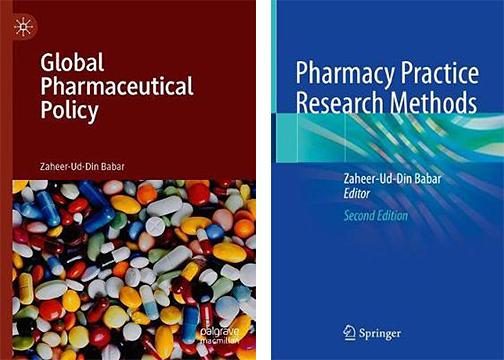
Zaheer-Ud-Din Babar is Professor in Medicines and Healthcare at the University and is the editor of the all-new publication Global Pharmaceutical Policy. Also issued recently is an updated edition of his Pharmacy Practice Research Methods.

Both books were completed before COVID-19 struck, but the topics they cover have acquired extra relevance for the whole world, said Professor Babar.

“Previously, we thought that many issues such as access to medicines were mainly for developing countries. But now we see that health systems, even in developed countries, are confronted by similar problems. They were not ready for the pandemic.”

The new edition of Pharmacy Practice Research Methods – first issued in 2015 – has been updated to cover a wide range of recent developments and has chapters on topics such as how to improve the use of medicines plus different pharmaceutical research methods and trials of new medicines.

“Safety is a big issue and the book strengthen the research methods used to investigate the use of new medicines,” says Professor Babar.

His newest book is Global Pharmaceutical Policy. It has contributions from some 25 experts around the world and, in addition to his role as editor, Professor Babar has contributed four chapters himself – on topics such as medicine safety in a globalised context, pharmacy policy making and the key issue of access to medicines.

The book is the only text that provides an up-to-date account of international pharmaceutical research policy, filling a gap in the available literature with its global point of view. Its chapters cover subjects that include generic medicines, access to vaccines and immunisation programmes, global antibiotic use and resistance and sustainable management of the pharmaceutical supply chain.

Professor Babar states that the potential readership of the new book goes beyond pharmacy specialists to include all healthcare professionals, members of think tanks and policy makers around the world.

###

Media Contact
Zaheer-Ud-Din Babar
[email protected]

Original Source

https://www.hud.ac.uk/news/2020/october/prof%E2%80%99s-books-bring-pharmacy-policy-into-keen-focus/

Tags: Medicine/HealthPharmaceutical ChemistryPharmaceutical SciencePharmaceutical SciencesPharmaceutical/Combinatorial Chemistry
Share12Tweet8Share2ShareShareShare2

Related Posts

blank

Advancing Alkene Chemistry: Homologative Difunctionalization Breakthrough

January 8, 2026
Biocompatible Ligand Enables Safe In-Cell Protein Arylation

Biocompatible Ligand Enables Safe In-Cell Protein Arylation

January 8, 2026

Monovalent Pseudo-Natural Products Boost IDO1 Degradation

January 7, 2026

Catalytic Enantioselective [1,2]-Wittig Rearrangement Breakthrough

January 7, 2026
Please login to join discussion

POPULAR NEWS

  • Enhancing Spiritual Care Education in Nursing Programs

    154 shares
    Share 62 Tweet 39
  • PTSD, Depression, Anxiety in Childhood Cancer Survivors, Parents

    145 shares
    Share 58 Tweet 36
  • Impact of Vegan Diet and Resistance Exercise on Muscle Volume

    47 shares
    Share 19 Tweet 12
  • SARS-CoV-2 Subvariants Affect Outcomes in Elderly Hip Fractures

    45 shares
    Share 18 Tweet 11

About

We bring you the latest biotechnology news from best research centers and universities around the world. Check our website.

Follow us

Recent News

Gut Microbes and Metabolism Linked to Childhood Constipation

Impact of Parvovirus B19 on Childhood Myocarditis

Antibiotic Use in Culture-Negative Preterm Infants Explored

Subscribe to Blog via Email

Enter your email address to subscribe to this blog and receive notifications of new posts by email.

Join 71 other subscribers
  • Contact Us

Bioengineer.org © Copyright 2023 All Rights Reserved.

Welcome Back!

Login to your account below

Forgotten Password?

Retrieve your password

Please enter your username or email address to reset your password.

Log In
No Result
View All Result
  • Homepages
    • Home Page 1
    • Home Page 2
  • News
  • National
  • Business
  • Health
  • Lifestyle
  • Science

Bioengineer.org © Copyright 2023 All Rights Reserved.