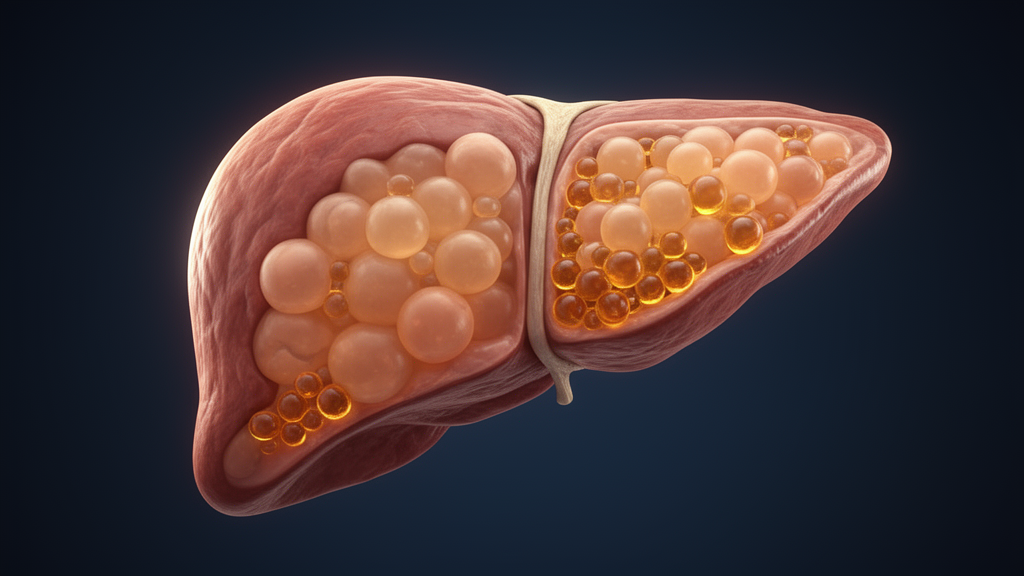
Global incident cases, prevalence, and disability-adjusted life years for non-alcoholic fatty liver disease and metabolic dysfunction-associated steatotic liver disease, including cirrhosis, approximately doubled between 1990 and 2021. According to findings published in BMC Gastroenterology, age-standardized incidence and prevalence increased globally over this three-decade period. In contrast, age-standardized disability-adjusted life year rates remained stable, registering an estimated annual percentage change of 0.04. Decomposition analyses identified population growth and aging as the primary drivers of this expanding absolute burden.
The worldwide burden was accompanied by widening absolute disparities across populations. Researchers measured absolute inequality using the slope index of inequality, which expanded from 20 per 100,000 to 36 per 100,000 between 1990 and 2021. The geographical distribution revealed pronounced regional concentrations, with high-burden areas identified in North Africa and the Middle East, Latin America, and Eastern Europe.
To evaluate these temporal trends and demographic drivers, the investigators evaluated data from the Global Burden of Disease 2021 study. The analytical framework incorporated decomposition methods, health inequality metrics, and Bayesian age-period-cohort modeling to generate global projections extending through 2040. Complementary subnational analyses within the United States integrated mortality records from the CDC WONDER database alongside predictive time-series models, specifically autoregressive integrated moving average and Prophet forecasting architectures.
Within the United States, mortality patterns exhibited substantial geographic and temporal variations. The South and Midwest recorded both the highest baseline mortality rates and the most rapid rate increases across the country. The data also highlighted a distinct temporal shift, marked by a sharp inflection in mortality occurring in the year 2020.
To identify the key drivers of subnational disparities in the United States, researchers applied extreme gradient boosting paired with SHapley Additive exPlanations attribution. The machine-learning model pinpointed state-level diabetes prevalence as the dominant predictor of mortality, demonstrating a nonlinear positive association once diabetes prevalence exceeded approximately 10 to 12 percent. Conversely, higher educational attainment displayed an inverse association with mortality at levels above approximately 90 percent.
Forecasts through 2035 project that mortality from metabolic liver disease will continue to increase in the United States, with the steepest projected rises concentrated in the Southwest and Appalachia. Based on global trajectories and machine-learning attribution, the study authors concluded that prevention strategies must focus on systemic metabolic risk management, recommending the integration of liver fibrosis screening into routine clinical care for diabetes and obesity.
Subject of Research: Global and United States trends, burden, and machine-learning attribution for NAFLD and MASLD
Article Title: NAFLD/MASLD, including cirrhosis: Burden from 1990 to 2040, GBD decomposition, CDC WONDER analysis, and machine-learning attribution
Article References: Zhao, L., Li, B., Zhang, X., Liu, J., Li, J., Zhang, H., Cui, K., Ma, J., Zhao, F., & Zhu, Q. (2026). NAFLD/MASLD, including cirrhosis: Burden from 1990 to 2040, GBD decomposition, CDC WONDER analysis, and machine-learning attribution. BMC Gastroenterology. https://doi.org/10.1186/s12876-026-05442-9
Image Credits: AI Generated
DOI: 10.1186/s12876-026-05442-9
Keywords: NAFLD, MASLD, cirrhosis, Global Burden of Disease, CDC WONDER, disability-adjusted life years, liver fibrosis, diabetes prevalence, XGBoost, SHAP attribution, Bayesian age-period-cohort projections, Prophet forecasting, slope index of inequality, metabolic dysfunction-associated steatotic liver disease, non-alcoholic fatty liver disease, ARIMA forecasting, Appalachia
News Source: Ophelia Keating. (November 12, 2026). Global NAFLD and MASLD Cases Doubled Between 1990 and 2021. Scienmag.