Salmonella infections are often associated with contaminated food, but the most dangerous cases begin when the bacterium escapes the intestine and enters the bloodstream or other normally sterile tissues. These invasive infections can progress rapidly, particularly in young children, older adults, and people whose immune systems are weakened. A new global genomic surveillance study published in Nature Communications examines how antibiotic resistance has emerged and spread in invasive Salmonella, revealing a pathogen shaped by both evolution and geography. By analyzing bacterial genomes collected across regions and over time, the researchers traced the appearance of resistance traits prioritized by the World Health Organization and identified the spatiotemporal patterns that allow them to expand.
The study addresses a central problem in modern infectious-disease control: antibiotic resistance is not a single, uniform phenomenon. Different Salmonella lineages can acquire different resistance genes, lose them, or exchange them with unrelated bacteria. Invasive disease makes this problem especially urgent because treatment frequently begins before laboratory results are available. Clinicians may need to select an antibiotic based on local expectations, even though the infecting strain may have traveled across borders or acquired resistance in a distant setting. Genomic surveillance provides a way to see these hidden connections by comparing the DNA of bacterial isolates rather than treating every infection as an isolated event.
The researchers’ approach combines whole-genome sequencing with epidemiological and geographic analysis. Whole-genome sequencing reads the genetic material of each isolate at high resolution, allowing scientists to distinguish closely related strains and detect mutations or acquired DNA segments associated with drug resistance. Computational pipelines can identify known antimicrobial-resistance genes, changes in chromosomal targets, and mobile genetic elements such as plasmids. Plasmids are circular DNA molecules that can move between bacteria, sometimes carrying several resistance genes at once. When genomic data are linked to the date and location of sample collection, researchers can reconstruct evolutionary trees and estimate when resistant groups emerged, expanded, or moved between regions.
The analysis focuses on resistance considered a priority by the World Health Organization, a designation intended to direct attention toward threats that are difficult to treat and capable of causing substantial public-health harm. In Salmonella, resistance may compromise drugs used against invasive infections, including important classes relied upon when illness is severe. The significance of the findings lies not simply in detecting resistance genes, but in showing how they are distributed among bacterial lineages and how their prevalence changes over time. A resistance determinant found sporadically in unrelated strains suggests a different control challenge from one concentrated in a rapidly expanding international lineage.
The genomic picture indicates that resistant invasive Salmonella is being driven by multiple evolutionary processes rather than by one universal outbreak. Some resistance patterns are associated with the expansion of particular clonal groups—near-identical descendants of a common ancestor—while others appear to have been assembled through repeated horizontal gene transfer. In horizontal gene transfer, bacteria exchange genetic material directly or acquire DNA from their surroundings, enabling resistance to spread faster than ordinary reproduction alone would allow. This distinction matters for surveillance. Containing a single expanding lineage may require tracing transmission and interrupting its spread, whereas mobile resistance elements can demand broader monitoring across food systems, hospitals, communities, and animal populations.
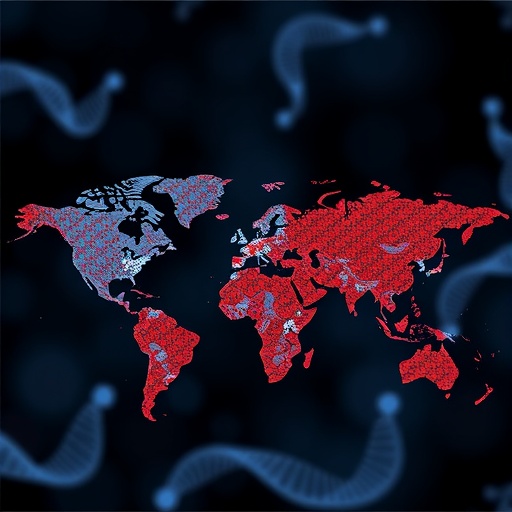
The study’s spatial and temporal perspective is particularly important because Salmonella moves through interconnected ecological networks. Human infections can be linked to food production, livestock, poultry, wildlife, water, travel, and international trade. A strain detected in a hospital may reflect local transmission, but it may also represent an imported infection or a lineage circulating through a shared food or animal reservoir. By mapping related genomes across time and place, genomic surveillance can reveal whether resistance is emerging independently in several regions or spreading outward from established reservoirs. Such information can help public-health agencies determine where prevention should be concentrated and whether interventions are reducing transmission.
The findings also demonstrate why conventional surveillance alone can underestimate the threat. Routine monitoring often depends on phenotypic susceptibility testing, in which bacteria are grown in the presence of antibiotics to determine whether they are inhibited. This remains essential because it measures the organism’s actual response to treatment, but it may not explain how resistance is spreading. Genomic data can identify the genetic basis of resistance, uncover relationships between isolates, and detect combinations of genes that are likely to produce multidrug resistance. Conversely, genome-based prediction must be interpreted carefully: the presence of a gene does not always produce the same level of resistance, and some mechanisms remain incompletely characterized. The strongest systems therefore combine sequencing, laboratory testing, and clinical information.
For patients with invasive salmonellosis, the implications are immediate. When first-line therapy fails, bacteremia can persist and complications can become more severe, extending hospital stays and increasing the need for reserve antibiotics. The global patterns described in the study support a move toward faster, more integrated diagnostic systems capable of connecting a patient’s isolate to international databases. A genome generated within days could help identify a resistant lineage, alert clinicians to a possible treatment problem, and notify epidemiologists that apparently unrelated cases may be connected. Such systems are most useful when data are shared rapidly and consistently, with standardized methods that make results comparable across countries.
The researchers’ work ultimately presents antibiotic resistance as a moving target that must be monitored at the level of genes, lineages, populations, and ecosystems. Invasive Salmonella does not evolve in isolation, and its resistance profile can change as bacteria encounter antibiotics and exchange DNA in human, animal, and environmental settings. Global genomic surveillance cannot replace vaccination, food-safety measures, infection prevention, responsible antibiotic use, or improved access to diagnostics. It can, however, show where those measures are most urgently needed and reveal emerging threats before they become widely established. By turning scattered bacterial genomes into a dynamic map of evolution and transmission, the study offers a framework for detecting the next wave of priority resistance while there is still time to contain it.
Subject of Research: Global genomic surveillance of WHO-priority antibiotic resistance in invasive Salmonella
Article Title: Global genomic surveillance uncovers emergence and spatiotemporal patterns of World Health Organization priority antibiotic resistance in invasive Salmonella
Article References: Pei, Y., Yang, Z., Pang, X. et al. “Global genomic surveillance uncovers emergence and spatiotemporal patterns of World Health Organization priority antibiotic resistance in invasive Salmonella.” Nature Communications (2026). https://doi.org/10.1038/s41467-026-76354-1
Image Credits: AI Generated
DOI: 10.1038/s41467-026-76354-1
Keywords: invasive Salmonella, antibiotic resistance, antimicrobial resistance, genomic surveillance, whole-genome sequencing, WHO priority pathogens, bacterial evolution, infectious diseases, global health
Tags: antibiotic resistance gene transferantibiotic treatment strategies for Salmonellaantimicrobial resistance in foodborne pathogensevolution of antibiotic resistance in bacteriagenomic surveillance of bacterial pathogensglobal spread of antibiotic resistanceinvasive bacterial disease epidemiologyinvasive Salmonella infectionsSalmonella antibiotic resistance patternsSalmonella genome analysisspatiotemporal dynamics of Salmonella resistanceWHO-priority antibiotic resistance