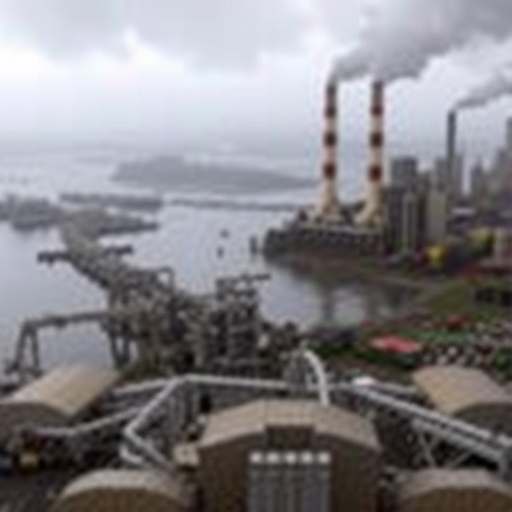
The global production and dissemination of chemicals have accelerated at an unprecedented pace, outstripping the capacity of current regulatory frameworks to effectively assess and manage their associated risks. This alarming conclusion emerges from a comprehensive study conducted by researchers affiliated with ETH Zurich and Rheinland-Pfalz Technical University Kaiserslautern-Landau. The work, recently published in the Annual Review of Environment and Resources, offers a critical analysis of the state of chemical pollution worldwide and highlights the pressing need for transformative strategies to protect human health and the environment from the expanding array of synthetic chemicals.
Modern industry and consumer lifestyles rely on an extensive variety of chemicals, encompassing pharmaceuticals, pesticides, industrial intermediates, additives in consumer products, and plasticizers. Each chemical group presents unique challenges due to differing toxicity profiles, persistence in the environment, and modes of action. The authors undertook a systematic synthesis of available data to delineate the primary contributors to chemical risk on a global scale, focusing especially on substances like pesticides and PFAS (per- and polyfluoroalkyl substances) that exemplify distinct toxicological and environmental persistence concerns.
Pesticides represent one of the most acutely hazardous classes of chemicals due to their designed bioactivity against living organisms. Their intrinsic toxicity demands rigorous monitoring of environmental residues to prevent adverse effects on non-target species and ecosystems. Empirical measurements have revealed that many pesticides persist in aquatic environments at concentrations exceeding ecotoxicological safety thresholds. Such persistence not only threatens biodiversity but also jeopardizes critical ecosystem services, necessitating enhanced regulatory scrutiny and control measures to mitigate environmental contamination.
In contrast, PFAS compounds, while generally exhibiting lower acute toxicity compared to pesticides, pose a significant long-term hazard owing to their extraordinary chemical stability and resistance to degradation. Introduced initially in the mid-20th century as safer alternatives to other hazardous substances, PFAS have since become ubiquitous in industrial applications and consumer goods. Their molecular structures resist enzymatic and chemical breakdown, leading to bioaccumulation and persistent environmental reservoirs that progressively elevate exposure risks for both wildlife and humans.
The complexity of global chemical pollution extends beyond toxicity and persistence to encompass challenges related to the sheer volume and diversity of synthetic substances introduced annually. The exponential increase in novel chemical entities complicates systematic risk assessments, overwhelming the capacity of traditional toxicological testing and regulatory procedures. As a result, many chemicals enter widespread use with insufficient data on their long-term impacts, creating blind spots in risk governance that could have far-reaching consequences for public health and ecological integrity.
To address these multifaceted challenges, the authors advocate for a paradigm shift in chemical management, emphasizing the reduction of chemical production and a prioritization strategy that restricts substances exhibiting both high toxicity and environmental persistence. Under this framework, exceptions would be permitted only for indispensable applications lacking viable alternatives, such as certain PFAS utilized in critical medical devices. This approach necessitates robust innovation incentives and supportive policy frameworks to catalyze the development of safer chemical alternatives and green chemistry solutions.
The environmental and human health implications of chemical pollution are inherently global, transcending national borders and requiring coordinated international responses. The study underscores the urgency of incorporating chemical pollution into the global environmental change agenda alongside established concerns such as climate change and biodiversity loss. Effective governance must leverage international institutions and multilateral agreements to harmonize standards, share data, and enforce compliance in a manner commensurate with the scale and transboundary nature of chemical threats.
Moreover, the interdisciplinary nature of chemical pollution demands integration of insights from toxicology, environmental science, industrial chemistry, and policy studies. Advancing quantitative exposure and effect assessments requires investment in high-throughput screening technologies, environmental monitoring networks, and novel modeling approaches capable of predicting mixture effects and cumulative burdens. Such scientific advancements are crucial to inform evidence-based regulatory decisions and prioritize chemicals for risk management interventions.
Stakeholder engagement is equally vital, encompassing industry sectors, governmental agencies, academia, and civil society. Transparent communication and collaborative governance will facilitate the development and adoption of safer chemicals, enhance public awareness of pollution risks, and support the implementation of sustainable production and consumption patterns. Growing public concern and advocacy for chemical safety could drive political will and funding commitments essential for transformative change in chemical management frameworks.
Ultimately, the study warns that failure to adapt current regulatory systems and production paradigms risks entrenching persistent chemical contamination that compromises planetary health. Without decisive action, the cumulative burden of diverse chemical pollutants will exacerbate environmental degradation, threaten human well-being, and undermine the resilience of ecosystems crucial for life-supporting functions. Addressing the global chemical pollution crisis demands concerted interdisciplinary research, innovative policy mechanisms, and a collective commitment to sustainable chemical stewardship.
The findings of the ETH Zurich and RPTU Kaiserslautern-Landau collaboration illuminate a critical juncture in the trajectory of chemical pollution. By highlighting the distinct challenges posed by pesticide toxicity and PFAS persistence, the research offers a blueprint for strategic management aligned with the precautionary principle and sustainability objectives. The authors call upon regulatory bodies, industry innovators, and international organizations to spearhead a transition towards a chemical economy that safeguards human health and preserves environmental integrity for future generations.
In conclusion, advancing the science and governance of chemical pollution is imperative to address an escalating environmental crisis with profound global ramifications. This study catalyzes a vital discourse on how to navigate the complexities of chemical risks in an increasingly synthetic world. Through holistic assessment, targeted regulation, and international collaboration, the potential hazards of chemical proliferation can be mitigated, contributing to resilient ecosystems and healthy societies worldwide.
Subject of Research: Global Chemical Pollution and Risk Assessment Challenges
Article Title: The State of the World’s Chemical Pollution
News Publication Date: 6-Oct-2025
Web References: DOI: 10.1146/annurev-environ-111523-102318
References: Scheringer M, Schulz R. 2025. The State of the World’s Chemical Pollution. Annual Review of Environment and Resources.
Image Credits: Scheringer M, Schulz R. 2025
Keywords: Chemical Pollution, PFAS, Pesticides, Toxicity, Environmental Persistence, Risk Assessment, Regulatory Challenges, Global Environmental Change, Chemical Management, Ecotoxicology, Sustainable Chemistry, Global Governance
Tags: chemical toxicity profilescomprehensive chemical risk assessmentconsumer product additivesenvironmental impact of pesticidesglobal chemical pollutionhealth effects of chemical exposuremodern industrial chemicalspersistent organic pollutantsPFAS environmental concernsregulatory frameworks for chemicalssynthetic chemical riskstransformative strategies for chemical management