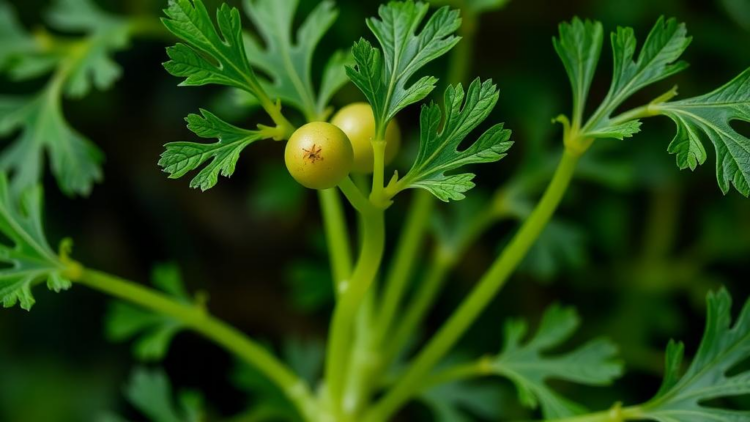
Deep in the forested slopes of Fengjie County, in Chongqing Municipality of southwestern China, a slender perennial herb has been quietly growing along roadsides and stony slopes, mistaken for years as just another member of a notoriously confusing plant genus. Now, a team of Chinese botanists has formally unveiled it as a species new to science: Sanicula fengjiensis, a member of the carrot family, Apiaceae, described in the open-access journal Ecology and Evolution on the basis of a combination of careful anatomical study and cutting-edge genomic analysis. The discovery is a striking reminder that even in well-collected regions, species can hide in plain sight when the characters that define them are too subtle for the naked eye.
The genus Sanicula, commonly known as sanicles or snakeroots, comprises roughly 42 taxa distributed from East Asia to North America. It has long been regarded as one of the taxonomically trickiest lineages within the subfamily Saniculoideae, largely because its members show bewildering variation in rhizomes, leaves, inflorescences, and above all fruits. Considered a relatively primitive branch of the subfamily, the genus has seen only four species and one variety newly described over the past two decades, while seven species and one variety have been sunk into synonymy as botanists re-examined old names. China stands as one of the great centers of Sanicula diversity, harboring around 16 species, which makes every revisional study there a high-stakes exercise in sorting genuine evolutionary novelty from mere intraspecific variation.
The story of S. fengjiensis began during botanical expeditions conducted between 2022 and 2024, when researchers encountered an unusual population of Sanicula whose inflorescences resembled those of S. caerulescens, a widely distributed species found across much of China and into Vietnam. Both plants share pseudo-racemose inflorescences, a hallmark of S. caerulescens. But on closer inspection, the Fengjie plants diverged dramatically in fruit morphology, the single most important diagnostic feature in this genus. In S. caerulescens, the fruits are sparsely to densely covered with short, straight spinous bristles that fuse at the base into a thin sheath. In the Fengjie plants, those prickles were entirely absent, with the ribs fused basally into a thin layer and the valleculae bearing only occasional sparse scales or tubercles. That difference led the team to hypothesize they were dealing with an overlooked taxon rather than a variant of a familiar species.
To test that hypothesis rigorously, the researchers mounted a two-pronged investigation combining classical morphology with molecular phylogenetics. On the morphological side, they examined physical specimens or high-resolution images from 64 herbaria, observed living plants from five populations of S. caerulescens, four of S. orthacantha, three of S. lamelligera, and the type population of the new species, which they monitored over two consecutive growing seasons. Living individuals were also transplanted to the Institute of Botany, Jiangsu Province and Chinese Academy of Sciences, allowing repeated observations under cultivation. Ten quantitative characters were measured, including inflorescence length, number of primary branches, terminal capitate umbel diameter, involucral bract dimensions, calyx tooth dimensions, and fruit body dimensions, alongside the maximum height of fruit-surface appendages.
The statistical results were unambiguous. A principal component analysis of the ten quantitative characters showed the first two components accounting for 49.8 percent of total morphological variation, with S. fengjiensis clearly separated from its three closest relatives. The single most diagnostic trait proved to be the maximum height of the fruit-surface appendages: in S. fengjiensis this ranged from just 0.033 to 0.101 millimeters, with no overlap whatsoever with S. caerulescens at 0.253 to 0.625 millimeters, S. lamelligera at 0.152 to 0.447 millimeters, or S. orthacantha at 0.265 to 0.800 millimeters. A Kruskal-Wallis test confirmed this differentiation was highly significant. Terminal capitate umbel diameter also separated the species cleanly at the level of interquartile ranges, and petal color added a further visual cue: the new species bears predominantly white flowers, whereas S. caerulescens displays blue to purple petals.
On the molecular front, the team generated complete plastome sequences for four individuals of the new species, each exactly 155,501 base pairs long, exhibiting the typical quadripartite structure of a large single-copy region, a small single-copy region, and two inverted repeats, encoding 132 genes in total with a GC content of 38.2 percent. They also amplified and sequenced the nuclear ribosomal ITS and ETS regions, producing 21 new ITS and 20 new ETS sequences across the genus. Phylogenetic reconstruction using maximum-likelihood and Bayesian inference, together with a coalescent-based ASTRAL summary of the gene trees, consistently recovered the four sampled accessions of S. fengjiensis as a coherent, distinct clade. In the plastome tree, that clade received maximal support, with a bootstrap value of 100 and a posterior probability of 1.00, and was resolved as sister to a broader lineage containing S. rugulosa, S. brevispina, S. orthacantha, S. lamelligera, and S. caerulescens.
Intriguingly, the nuclear and plastid datasets told slightly different stories about where the new species sits within that framework. The ASTRAL tree based on ITS and ETS placed S. fengjiensis alongside S. orthacantha, grouped with S. lamelligera, and sister to the clade of S. caerulescens populations, though several of these deeper relationships carried only modest support. This topological discordance between organellar and nuclear phylogenies is a well-known phenomenon in plant systematics, potentially reflecting ancient hybridization, incomplete lineage sorting, or other evolutionary processes, and the authors note that its underlying cause cannot be determined from the present data alone. Crucially, however, both datasets agreed on the fundamental point: the Fengjie plants form their own lineage, distinct from every species against which they were compared.
The detective work extended into the herbarium itself. Among the historical material, the researchers identified a specimen collected in 1963 from the vicinity of Huanglingmiao in Yichang, Hubei Province, whose diagnostic fruit characters matched the Fengjie plants precisely. Targeted field surveys in Yichang in 2021, 2023, and 2024, including searches around Huanglingmiao and nearby potentially suitable habitats, failed to relocate any living plants at the historical locality. The team therefore treats the Yichang specimen as a historical herbarium record rather than evidence of a confirmed extant population, a cautious approach that underscores how much remains unknown about the species’ true range.
That range, as currently documented, is strikingly narrow. S. fengjiensis is known with certainty only from its type locality at Lianhua Village in Fengjie County, where it grows along roadsides, in forest understories, and on stony slopes at elevations of roughly 100 to 200 meters, notably lower than the 400-to-2,140-meter ranges typical of its relatives. The species flowers from late March to early May and fruits from late March to early June. Given that only one extant population and one historical locality are known, and that its full distribution, population dynamics, and potential threats remain unclear, the authors tentatively assess it as Data Deficient under the IUCN Red List Categories and Criteria, while emphasizing that it appears rare in its type locality and surrounding areas.
Beyond the description itself, the study offers a methodological lesson for biodiversity science in the genomic era. In taxonomically complex groups, taxa can remain overlooked or misidentified when morphological characters provide insufficient resolution, particularly when herbarium specimens lack the reproductive structures needed for reliable identification. By integrating detailed examination of fruit anatomy, quantitative statistical analysis, complete plastome sequencing, and nuclear ribosomal markers, the researchers demonstrated how a cryptic lineage can be pulled out of the shadow of a widespread lookalike. With herbaria increasingly recognized as a major frontier for species discovery, and with China’s Sanicula flora still yielding surprises after decades of study, S. fengjiensis stands as both a new name in the flora and an argument for looking harder at the plants we thought we already knew.
Subject of Research: Taxonomic description of a new Sanicula species from China using morphology and molecular phylogenetics
Article Title: Sanicula fengjiensis (Apiaceae), a New Species From China Revealed by Integrative Morphological and Molecular Evidence
Article References: Li, H.-M., Liao, J.-M., Ma, X.-D., & Song, C.-F. (2026). Sanicula fengjiensis (Apiaceae), a New Species From China Revealed by Integrative Morphological and Molecular Evidence. Ecology and Evolution, 16(10), Article e74390. https://doi.org/10.1002/ece3.74390
Image Credits: AI Generated
DOI: 10.1002/ece3.74390
Keywords: Sanicula, Apiaceae, new species, China, plastome, phylogenetics, ITS, ETS, taxonomy, fruit morphology, biodiversity, Chongqing
Cite Scienmag News
APA MLA Chicago
Drew Townsend. (October 2, 2026). Ghost of the Understory: DNA and Fruit Anatomy Unmask a Hidden Parsley Relative in China. Scienmag. https://scienmag.com/ghost-of-the-understory-dna-and-fruit-anatomy-unmask-a-hidden-parsley-relative-in-china/
Drew Townsend. “Ghost of the Understory: DNA and Fruit Anatomy Unmask a Hidden Parsley Relative in China.” Scienmag, 2 October 2026, https://scienmag.com/ghost-of-the-understory-dna-and-fruit-anatomy-unmask-a-hidden-parsley-relative-in-china/. Accessed 2 October 2026.
Drew Townsend. “Ghost of the Understory: DNA and Fruit Anatomy Unmask a Hidden Parsley Relative in China.” Scienmag. October 2, 2026. https://scienmag.com/ghost-of-the-understory-dna-and-fruit-anatomy-unmask-a-hidden-parsley-relative-in-china/
Copy citation Download RIS
Tags: ApiaceaeApiaceae family diversitybiodiversitybotanical research in ChinaChinaChinese botanical discoveryChongqingcryptic plant speciesDNA analysis in plant identificationETSfruit anatomy in plant classificationfruit morphologygenomic tools in botanyITSnew plant species descriptionnew speciesphylogeneticsplant species unmaskingplant taxonomyplastomeSaniculaSanicula genussubtropical forest florataxonomy