


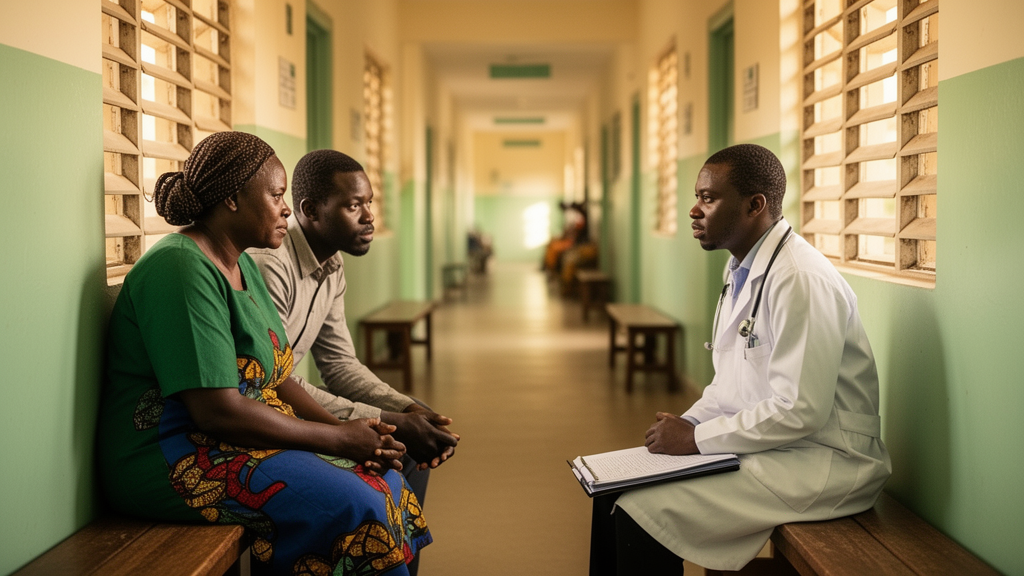
Effective communication is critical in palliative care, especially when breaking bad news. A qualitative study conducted in Northern Ghana has examined how that moment unfolds, drawing on the accounts of patients, family members and healthcare professionals in a palliative care setting. The research, published in BMC Palliative Care, explored the communication approaches clinicians use when breaking bad news and the experiences, responses, coping strategies and disclosure preferences of everyone involved. Its central finding is a tension familiar to palliative care teams worldwide but sharpened here by cultural context: patients generally wanted bad news delivered directly, while their family members generally preferred that information be withheld to protect them from emotional distress.
The study employed an interpretive phenomenological design, an approach suited to capturing how individuals experience a phenomenon from the inside. Seventeen participants were purposively recruited from a tertiary hospital in Northern Ghana: five patients, five family members and seven healthcare professionals. Data were generated through semi-structured interviews and analysed using reflexive thematic analysis, with the text-analysis tool Voyant Tools used as a supplementary means of identifying recurring word patterns in the data. The analysis identified two major themes: communication experiences and disclosure preferences, and emotional responses and coping strategies.
Within the first theme, healthcare professionals reported adopting both structured communication approaches, including the SPIKES protocol, and adaptive, context-specific strategies. Patients generally preferred direct disclosure of bad news, with family members present when it happened. Family members, by contrast, generally supported withholding information to protect patients from emotional stress. One healthcare professional described the resulting clash as an ethical dilemma, a framing that captures the position in which clinicians are placed when a patient’s wish for honesty conflicts with a family’s wish for protection. The study also found that language barriers and cultural beliefs influenced how bad news was interpreted, adding a further layer of complexity to conversations already freighted with grief.
The second theme documented the emotional aftermath of disclosure. Participants reported intense reactions to bad news, including shock, fear, sadness and uncertainty. Against that backdrop, several coping mechanisms emerged as important: spirituality, family support, previous caregiving experience, professional debriefing and clear communication.
The authors conclude that breaking bad news in palliative care in Northern Ghana is shaped by the interplay of patient autonomy, family involvement, cultural values and professional responsibility. Because patients preferred direct disclosure while family members supported protective non-disclosure, the practice creates an ethical dilemma for healthcare professionals rather than a problem with a single technical fix. The study suggests that healthcare facilities may consider culturally responsive communication training, the establishment of disclosure guidelines, and the provision or strengthening of emotional support services to improve communication in palliative care. As an exploratory qualitative study drawing on seventeen participants at a single tertiary hospital, it does not measure how widely these preferences hold across Ghana or elsewhere; what it offers instead is a detailed account of how patients, families and clinicians experience one of medicine’s hardest conversations, and a grounded basis for training and policy that take those experiences seriously.
Subject of Research: Communication experiences and disclosure preferences in palliative care in Northern Ghana
Article Title: Breaking bad news in palliative care settings: a qualitative study from Northern Ghana
Article References: Aliu, Z., Abdulai, M., & Mumuni, E. (2026). Breaking bad news in palliative care settings: a qualitative study from Northern Ghana. BMC Palliative Care. https://doi.org/10.1186/s12904-026-02389-2
Image Credits: AI Generated
DOI: 10.1186/s12904-026-02389-2
Keywords: palliative care, breaking bad news, Northern Ghana, qualitative research, disclosure preferences, SPIKES protocol, healthcare communication, coping strategies, family involvement, patient autonomy, ethical dilemma, interpretive phenomenology
News Source: Ophelia Keating. (October 30, 2026). Ghana study reveals family-patient divide over breaking bad news. Scienmag.



