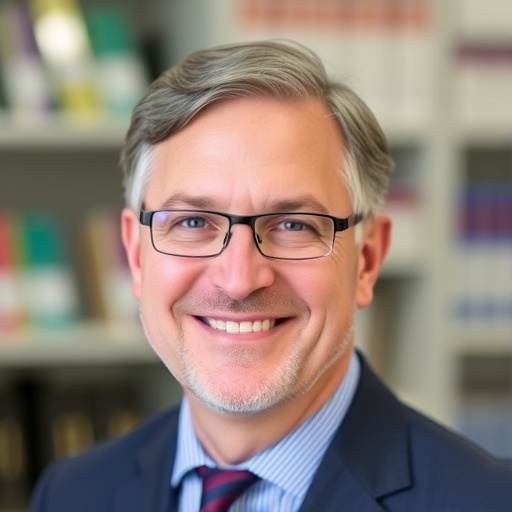
In a groundbreaking advancement poised to accelerate the field of cancer immunotherapy, the Ludwig Institute for Cancer Research has inaugurated the Ludwig Laboratory for Cell Therapy at Weill Cornell Medicine’s Sandra and Edward Meyer Cancer Center. This new initiative is under the leadership of Dr. George Coukos, a preeminent physician-scientist recognized worldwide for his authoritative expertise in tumor immunology and cellular immunotherapy. Dr. Coukos’s appointment marks a significant step forward in translating cellular-based cancer therapies from bench to bedside, promising to reshape therapeutic landscapes for multiple malignancies.
Dr. Coukos returns to the United States following a highly influential and transformative tenure as the founding director of the Lausanne Branch of the Ludwig Institute, as well as head of the Department of Oncology at UNIL and CHUV in Switzerland. Throughout his decade in Lausanne, Coukos spearheaded a pioneering research program focused on cellular immunotherapies and cancer vaccines. His vision integrated basic tumor immunology with clinical applications, effectively bridging scientific discovery with patient care. This dual focus enabled his team to make landmark discoveries that illuminate how the immune system can be harnessed to target cancer cells more effectively.
Under Coukos’s direction, the Lausanne Branch became an internationally renowned hub of innovation and translational research excellence. He meticulously built a multidisciplinary team of investigators distinguished for their scientific rigor and translational acumen. This collaborative effort gave rise to several cutting-edge technologies that are now being utilized in innovative clinical trials. These studies aim to optimize individualized cellular therapies by tailoring them to the unique molecular signatures of malignancies such as melanoma, sarcoma, and lung cancer, among others.
Cellular immunotherapy represents a revolutionary therapeutic modality wherein a patient’s own immune cells, specifically those capable of recognizing tumor antigens, are isolated, expanded ex vivo, and then reintroduced to the patient to mediate tumor eradication. A critical step in many advanced protocols involves the genetic and functional reengineering of these immune cells to enhance their specificity, persistence, and cytotoxic potency. This strategy addresses the challenges posed by tumor heterogeneity and the immunosuppressive tumor microenvironment, which often undermine the efficacy of conventional therapies.
Dr. Coukos’s research has significantly contributed to unveiling the sophisticated mechanisms tumors employ to evade immune detection and destruction. His work elucidated cellular and molecular pathways that tumors manipulate to suppress immune surveillance, offering new therapeutic targets. Furthermore, his team identified particular immune markers that correlate with anti-tumor responses, facilitating patient stratification and the customization of immunotherapeutic strategies to maximize clinical benefit.
The translational strategies advanced under Coukos’s leadership leverage this mechanistic understanding to devise combination therapies that potentiate T cell responses in patients. His pioneering studies have demonstrated the synergistic benefits of combining personalized cancer vaccines with adoptive T cell therapies, especially in challenging contexts like advanced ovarian cancer. These approaches aim to prime and expand tumor-reactive lymphocytes while simultaneously dismantling tumor-derived immunosuppressive barriers, thereby enhancing therapeutic outcomes.
Equipped with such a robust foundation of research and clinical experience, Dr. Coukos is uniquely positioned to build an impactful translational and clinical cell therapy program at Weill Cornell Medicine. The Ludwig Laboratory for Cell Therapy will capitalize on the institution’s concentration of leading cancer immunology experts and its vibrant ecosystem of cutting-edge research. This interdisciplinary environment fosters rapid innovation and paves the way for accelerated clinical translation of novel immuno-oncology agents.
Notably, the proximity of the Ludwig Collaborative Laboratory at Weill Cornell offers a fertile ground for collaborative projects, particularly in cancer immunotherapy research innovations. Furthermore, the affiliation with the Princeton Branch of the Ludwig Institute, linked to the Rutgers Cancer Institute, broadens the scope for integrating insights from cancer and immune metabolism. This multidisciplinary network enhances the laboratory’s capacity to pioneer next-generation cellular therapies informed by metabolic modulation, an emerging frontier in oncology.
Dr. Coukos’s return also ensures continuity and expansion of the high standards established during his tenure in Lausanne. While the Lausanne Branch appoints an interim director, Ludwig Distinguished Scholar Douglas Hanahan, to oversee ongoing activities, the strategic focus on cellular immunotherapy remains resolute, with potential for dynamic growth and innovation. This leadership transition underscores Ludwig Institute’s commitment to sustaining and advancing its global pioneering role in cancer research.
The inception of the Ludwig Laboratory for Cell Therapy at Weill Cornell marks an important milestone in global efforts to harness the immune system to combat cancer effectively. It embodies a vision where cutting-edge scientific discovery seamlessly translates into transformative clinical therapies. By integrating novel cellular engineering techniques, mechanistic immunology, and robust clinical evaluation, this program promises to deliver breakthrough treatments that may markedly improve survival and quality of life for cancer patients worldwide.
Beyond therapeutic innovation, this laboratory exemplifies the evolving paradigm in oncology research, emphasizing precision medicine tailored to individual tumor and patient biology. It showcases the power of international collaboration and multidisciplinary integration, hallmarks that define modern cancer research excellence. As this new chapter unfolds, the scientific and medical communities eagerly anticipate the consequential discoveries and clinical successes that will emerge from this pioneering effort.
In summary, the establishment of the Ludwig Laboratory for Cell Therapy, helmed by George Coukos at Weill Cornell Medicine, represents a transformative leap in the field of cancer immunotherapy. Through combining deep mechanistic insight with bold translational initiatives, the lab is set to push the boundaries of cellular therapies, ultimately advancing personalized and effective treatments for a broad spectrum of cancers. This initiative exemplifies the premier standard of innovative cancer research with the potential to significantly impact patient outcomes on a global scale.
Subject of Research: Tumor immunology and cellular immunotherapy for cancer treatment
News Publication Date: February 2, 2026
Web References:
https://www.cell.com/immunity/fulltext/S1074-7613(24)00413-8
Ludwig Lausanne scientists identify and show how to target a key tumor defense against immune attack
Immune networks in tumors prime responses to a personalized immunotherapy
https://www.nature.com/articles/s41551-023-01013-5
https://www.nature.com/articles/s41590-023-01477-2
Image Credits: Ludwig Cancer Research
Keywords: Health and medicine, Cancer, Tumor immunology, Cellular immunotherapy, Cancer vaccines, Adoptive T cell therapy
Tags: breakthroughs in cancer vaccinescancer immunotherapy advancementscellular immunotherapy leadershipclinical applications in cancer treatmentGeorge Coukosimmunology and patient careLausanne Branch of Ludwig InstituteLudwig Laboratory for Cell Therapyoncology research programstranslating cancer therapiestumor immunology expertiseWeill Cornell Medicine