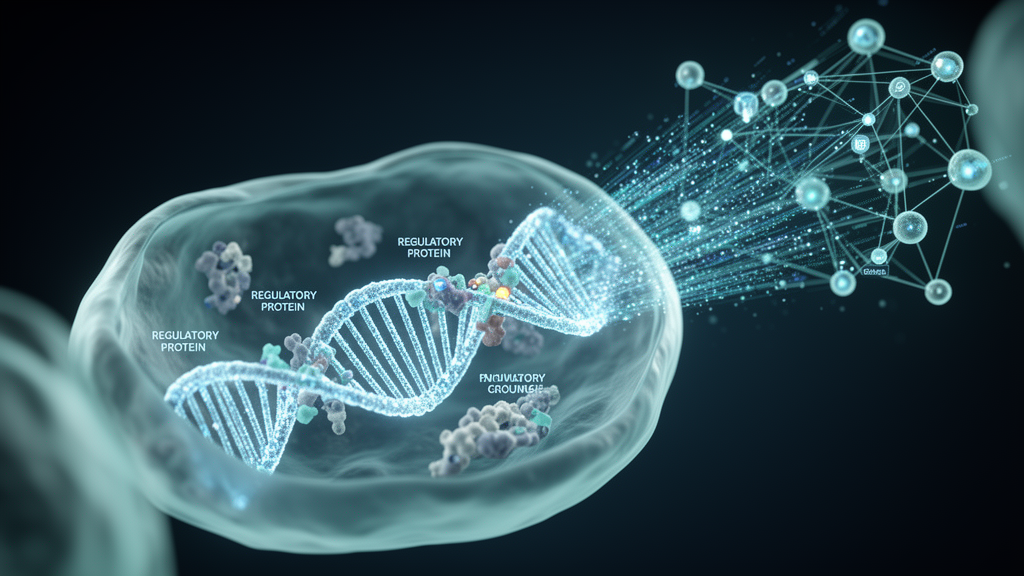
Perturb-seq has become one of the most information-dense formats in functional genomics, combining single-cell RNA sequencing with pooled genetic or chemical perturbations so that thousands of conditions can be profiled in a single experiment. The strength of this design lies in its scale: a single assay can capture how the loss of a transcription factor, the activation of a signaling pathway, or the application of a small molecule reshapes the transcriptome across many cells at once. Yet the raw output of such an experiment is fundamentally a table of gene-level counts. The regulatory logic that produced those changes, namely which cis-regulatory elements were engaged and which transcription factor motifs drove the observed expression shifts, is not directly measured. Bridging that gap has traditionally required a second layer of analysis, often involving chromatin accessibility assays, ChIP-seq data, or external annotations of enhancers and promoters, each of which introduces additional experimental cost or assumptions about transferability across cell types and conditions.
GenPerturb addresses this gap by taking a different route: rather than requiring matched chromatin data in the same experiment, it leverages pretrained sequence-to-expression models that have already learned, from large-scale external datasets, how DNA sequence features relate to gene expression. The core idea is to fit a condition-specific linear readout on top of the sequence embeddings produced by such a model, using the observed pseudobulk expression from Perturb-seq as the target. Because the same gene-centred sequence representation underlies both the control and perturbed conditions, subtracting the attribution scores from the control readout from those of the perturbed readout yields a differential attribution map. This map ranks candidate regulatory regions and motif instances as computational hypotheses associated with each fitted contrast, effectively asking which sequence elements changed their predicted contribution to expression when the perturbation was applied.
The pretrained models underlying this approach belong to a broader family of genomic foundation models that have been trained on diverse sources of sequence and expression data, learning representations that encode regulatory grammar, promoter architecture, and motif composition without being explicitly told what to look for. By freezing the pretrained model and training only a lightweight linear head on top of its embeddings, GenPerturb keeps the computational cost manageable while still benefiting from the rich regulatory priors embedded in the learned representations. This transfer learning strategy is particularly valuable in the Perturb-seq setting, where the number of cells per condition can be limited and the signal-to-noise ratio for individual perturbations may be modest, making it difficult to train deep models from scratch on the target data alone.
The evaluation presented in the study reveals both the promise and the boundaries of this approach. When the fitted readouts were assessed for their ability to recover observed expression variation, they performed well at explaining differences between genes, which is expected given that sequence features such as promoter strength, CpG content, and motif density vary substantially across the genome and are well captured by pretrained models. However, the recovery of variation across perturbation conditions within each gene was more modest. This is a meaningful distinction: explaining why gene A differs from gene B in baseline expression is a different problem from explaining why gene A changes under perturbation X versus perturbation Y. The latter requires the model to capture condition-specific regulatory dynamics that may not be fully encoded in static sequence representations, particularly when perturbations act through indirect mechanisms, feedback loops, or chromatin remodeling that alters accessibility independently of sequence.
On the single available erythroid Perturb-multiome benchmark, where matched chromatin accessibility data existed for validation purposes, the region rankings produced by GenPerturb showed agreement with accessibility labels that was comparable to annotation-based scoring methods. Notably, the agreement was slightly closer in the 1–10 and 10–100 kb distance strata from the transcription start site, which are the ranges where distal enhancers and silencers typically reside. This suggests that the sequence-based attributions are capturing biologically meaningful regulatory signals rather than merely reflecting promoter-proximal artifacts. The perturbed transcription factor’s motif family was recovered at comparable frequencies whether the candidate regions were derived from attribution scores or from chromatin accessibility peaks, indicating that the computational hypotheses generated by the workflow are anchored in real regulatory biology.
One of the more intriguing observations from the study involves lineage and compound examples where the motif associations derived from sequence attribution differ from what would be predicted based on the transcription factor’s own mRNA expression. This distinction matters because transcription factor activity is not always proportional to transcript abundance. Post-translational modifications, changes in binding partner availability, sequestration in the cytoplasm, or altered chromatin context can all cause a transcription factor to be functionally active even when its mRNA is downregulated, or vice versa. By grounding the analysis in sequence-level attribution rather than mRNA co-expression, GenPerturb can surface motif associations that reflect functional regulatory engagement rather than simply correlating with the perturbed factor’s expression level. This provides a complementary view that may reveal regulatory mechanisms invisible to purely expression-based analyses.
The workflow is explicitly scoped to interpreting observed transcriptional responses rather than predicting the effects of unseen perturbations or extrapolating to untested cell types. This is an important boundary condition. The linear readouts are fitted to the specific pseudobulk expression profiles available in the target experiment, and their attributions are meaningful only within the range of conditions actually observed. Attempting to use the fitted readouts to predict how a novel perturbation would affect expression, or how a different cell type would respond, would require additional validation and may not transfer reliably. The authors position the output as ranked, locus-anchored cis-regulatory hypotheses suitable for experimental assessment, rather than as definitive regulatory maps. This framing is appropriate given the inherent uncertainty in attribution-based methods and the fact that computational hypotheses about enhancer activity ultimately require experimental confirmation through reporter assays, CRISPR-based enhancer perturbations, or matched chromatin profiling.
From a practical standpoint, the ability to generate such hypotheses without a matched chromatin assay in the target experiment has significant implications for experimental design. Many Perturb-seq studies are conducted in cell types or conditions where chromatin accessibility data either does not exist or was not collected in parallel. In such settings, researchers have traditionally had to rely on external annotations from unrelated cell types, which may not reflect the regulatory landscape of the system under study. GenPerturb offers a way to prioritize candidate regulatory elements using only the RNA data already collected, reducing the dependency on external resources and enabling more self-contained interpretation of perturbation screens. This could accelerate the follow-up validation cycle, allowing researchers to move from initial screening to targeted enhancer perturbation experiments more quickly.
The broader context of this work sits within a growing recognition that pretrained genomic models encode regulatory information that can be repurposed for downstream tasks beyond their original training objectives. Just as language models pretrained on large corpora learn grammatical structure that transfers to parsing and generation tasks, genomic sequence models pretrained on diverse expression and chromatin datasets learn regulatory grammar that transfers to interpretation tasks in new experimental contexts. GenPerturb demonstrates one concrete instantiation of this principle, showing that the learned representations can serve as a substrate for fitting condition-specific readouts that connect sequence features to observed perturbation responses. As the field continues to develop larger and more diverse pretrained models, and as Perturb-seq datasets grow in scale and diversity, the synergy between these two threads is likely to deepen, enabling increasingly sophisticated computational interpretation of regulatory biology from RNA-only measurements.
The funding and institutional context of the study reflect its placement within Japan’s investment in computational biology and AI-driven science. The work was conducted at RIKEN within the Omics AI Research Team of the Advanced General Intelligence for Science Program, with additional affiliations at the University of Tsukuba and the Institute of Science Tokyo. The support from the Japan Science and Technology Agency through CREST grants, the Japan Agency for Medical Research and Development, and the RIKEN TRIP initiative underscores the strategic priority placed on developing methods that bridge machine learning and genome biology. As open access research published in BMC Bioinformatics, the study makes its methods and supplementary materials available to the community under a Creative Commons licence, facilitating reuse and adaptation by other groups working on perturbation biology, regulatory genomics, and single-cell data interpretation.
Subject of Research: Genomics and bioinformatics
Article Title: GenPerturb: sequence-grounded interpretation of perturbation transcriptomes using pretrained genomic models
Article References: Shiihashi, T., & Nikaido, I. (2026). GenPerturb: sequence-grounded interpretation of perturbation transcriptomes using pretrained genomic models. BMC Bioinformatics. https://doi.org/10.1186/s12859-026-06689-5
Image Credits: AI Generated
DOI: 10.1186/s12859-026-06689-5
Keywords: Perturb-seq, GenPerturb, cis-regulatory elements, transcription factors, machine learning, transcriptomics, sequence-grounded, interpretation, perturbation, transcriptomes, pretrained, genomic
News Source: Juliet Wilcox. (October 17, 2026). GenPerturb turns Perturb-seq data into sequence-grounded maps of gene regulation. Scienmag.