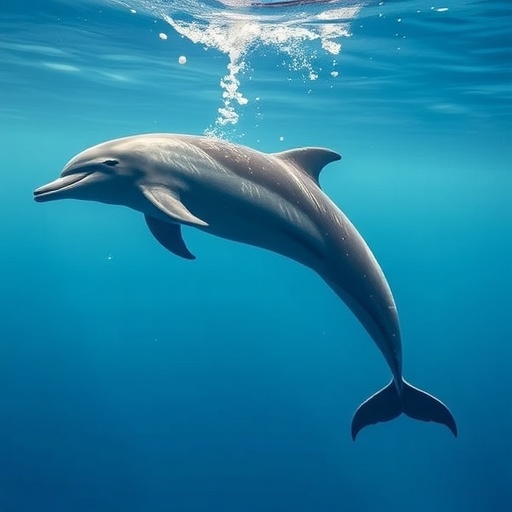
A new genomic study of South America’s Sotalia dolphins has revealed how two closely related species began diverging after one lineage moved from coastal waters into rivers—and why the same evolutionary history may now be putting both animals at risk. The research provides the first chromosome-level genome assembly for the Guiana dolphin, Sotalia guianensis, and the first genome sequence for the river-dwelling tucuxi, Sotalia fluviatilis. Together, these resources offer an unusually detailed view of an early-stage ecological split between marine and freshwater mammals. The findings suggest that the species diverged roughly 2 million years ago, during the dramatic sea-level fluctuations of the Plio-Pleistocene, when changing coastlines repeatedly connected and separated marine and riverine environments. Their genomes also carry a warning: contemporary and historical genetic diversity appears low, while large portions of the genome are homozygous, meaning that many individuals may possess limited genetic variation with which to respond to disease, habitat change or further population decline.
The genus Sotalia is a natural laboratory for studying one of evolution’s most challenging transitions. The ancient shift from land to water is well documented in the fossil record of whales and dolphins, but much less is known about what happens when aquatic mammals subsequently adapt to sharply different aquatic environments. The Guiana dolphin generally occupies coastal and estuarine habitats, while the tucuxi lives in major South American river systems. Although the animals remain close relatives, their environments impose different pressures. Rivers can be turbid, narrow and seasonally variable, with distinct prey communities, currents and chemical conditions compared with the open coast. Over evolutionary time, such ecological contrasts can reduce encounters between populations, alter natural selection and eventually promote speciation. Because Sotalia’s split is relatively recent in geological terms, the two dolphins preserve a snapshot of divergence before the genetic differences between them become too extensive to reconstruct.
To build that snapshot, Mariana F. Nery and colleagues combined several sequencing technologies and comparative-genomic approaches. The Guiana dolphin reference genome was assembled from PacBio HiFi reads, which are long DNA sequences generated with high accuracy, and organized into chromosomes using Hi-C scaffolding. Hi-C captures the physical proximity of DNA segments inside the nucleus; pieces that frequently contact one another are likely to belong to the same chromosome or nearby chromosomal regions. This strategy produces a chromosome-level assembly rather than a collection of disconnected fragments. The researchers also generated short-read assemblies for Guiana dolphins and an Illumina short-read assembly for the tucuxi, then compared the resulting genomes. Such comparisons can identify conserved synteny—the preservation of gene order across species—as well as inversions, rearrangements and other structural changes that may contribute to reproductive or ecological separation.
The resulting genomic resources extend beyond a simple catalogue of genes. The study examined protein-coding sequences, non-coding RNAs and repetitive DNA, including transposable elements. These mobile or once-mobile sequences can copy or move within genomes, sometimes influencing gene regulation, chromosome structure and the emergence of new genetic variation. The researchers mapped regions enriched in genes and regions enriched in transposable elements across the Guiana dolphin reference genome, finding a heterogeneous architecture in which gene-rich and repeat-rich compartments are interspersed. They also compared mitochondrial genomes, which are inherited separately from the nuclear genome and can provide an additional record of evolutionary relationships. Genome completeness was assessed using conserved single-copy genes and other annotation measures, allowing the assemblies to serve as foundations for future studies rather than merely as preliminary sequences.
Phylogenomic analyses—evolutionary reconstructions based on genome-wide data—place the separation of the two Sotalia species within a period of repeated sea-level change. During the Plio-Pleistocene, advancing and retreating seas reshaped coastal plains, river mouths and connections between aquatic systems. A rise in sea level could expand marine habitat and alter the routes available to coastal dolphins, while later declines could isolate populations in estuaries and river basins. The study’s results are consistent with a scenario in which these shifting landscapes repeatedly changed opportunities for dispersal and gene flow. Gene flow occurs when individuals from different populations reproduce, mixing their DNA; geographic isolation reduces that exchange and allows local adaptations to accumulate. The genomic evidence does not portray speciation as a sudden event. Instead, it supports a gradual process in which environmental change, physical separation and selection worked together while the two dolphin lineages were still evolutionarily young.
The most urgent discovery may be the dolphins’ limited genetic diversity. Genome-wide heterozygosity, a measure of the proportion of DNA sites carrying two different variants, was uniformly low across the assemblies analyzed. Low heterozygosity can indicate that a population has passed through bottlenecks, remained small for long periods or experienced restricted gene flow. The researchers also identified runs of homozygosity, or ROH: long stretches of the genome in which the two chromosome copies are identical or nearly identical. ROHs arise when individuals inherit matching DNA segments from parents who share ancestors, and their extent can reveal recent or historical inbreeding. High homozygosity does not automatically prove that every individual is unhealthy, but it can increase the chance that harmful recessive variants occur in two copies. In a changing environment, reduced variation may also narrow the evolutionary options available to a population.
The signal was particularly concerning in coastal populations, where demographic genomic analyses indicated both low present-day diversity and low historical diversity. That pattern suggests the problem is not solely a recent consequence of modern human activity; some populations may have been small or isolated for extended periods. Yet ancient vulnerability can amplify current pressures. Coastal Guiana dolphins face industrial development, pollution, fishing activity, vessel traffic and habitat degradation, while tucuxi populations are exposed to the rapidly changing conditions of river ecosystems. Freshwater dolphins are especially sensitive to barriers and disruptions because dams, altered flows and declining water quality can fragment the connected habitats on which they depend. The new genomes provide a baseline against which conservation scientists can measure future changes, identify populations with distinctive genetic variants and evaluate whether management actions preserve connectivity rather than allowing further loss of diversity.
The researchers also searched for molecular signs of natural selection. Using branch-site models, which test whether particular branches of an evolutionary tree show accelerated changes in protein-coding genes, they identified genes inferred to have experienced positive selection in the two species and in their shared ancestral lineage. The statistical framework compares models that permit a subset of sites to evolve faster than expected under neutral or purifying selection with models that constrain the ratio of nonsynonymous to synonymous substitutions. Nonsynonymous changes alter amino acids in proteins, whereas synonymous changes do not; an excess of the former can suggest adaptive evolution. The study cautions that very large estimates of the selection parameter can be numerical artifacts when synonymous substitutions are absent or nearly absent, a realistic issue for closely related species. The researchers therefore relied on likelihood-ratio tests and false-discovery-rate correction rather than treating an apparently infinite estimate as literal evidence of extraordinary adaptation.
By linking evolutionary history with conservation genomics, the study turns Sotalia into a powerful model for understanding how ecological speciation begins—and how it can leave species vulnerable. The Guiana dolphin and tucuxi genomes make it possible to investigate whether differences in sensory systems, metabolism, immunity, reproduction or other biological functions helped dolphins exploit coastal and river habitats. They can also support non-invasive monitoring through DNA recovered from environmental samples, although applying such methods will require additional validation. For conservationists, the immediate value lies in distinguishing populations, tracking genetic connectivity and detecting whether isolated groups are losing variation. The genome sequences cannot by themselves rescue dolphins from polluted waters, entanglement or disrupted rivers, but they reveal the biological costs of isolation with unprecedented clarity. In a genus shaped by ancient changes in sea level, the next evolutionary challenge may be whether modern landscapes leave these dolphins enough room—and enough genetic diversity—to adapt.
Subject of Research: Genomic divergence, ecological speciation and conservation genetics in Guiana dolphins and tucuxi dolphins
Subject of Research: Biology
Article Title: Genomic insights into the divergence and conservation of Sotalia dolphins
Article References: Nery, M. F., Albuquerque, L., Daros, B., de Panis, D., Brown, T., Nara, L., Pinilla, D., Selleghin-Veiga, G., Lopes, F., de O. Santos, M. C., Marmontel, M., Mazzoni, C. J., & Caballero, S. (2026). Genomic insights into the divergence and conservation of Sotalia dolphins. BMC Biology. https://doi.org/10.1186/s12915-026-02716-2
Image Credits: AI Generated
DOI: 10.1186/s12915-026-02716-2
Keywords: Sotalia dolphins, Guiana dolphin, tucuxi, comparative genomics, ecological speciation, freshwater adaptation, genetic diversity, conservation genetics
Cite Scienmag News
APA MLA Chicago
Audrey B. (August 28, 2026). Genomes reveal how Sotalia dolphins diverged while retaining key conserved traits. Scienmag. https://scienmag.com/genomes-reveal-how-sotalia-dolphins-diverged-while-retaining-key-conserved-traits/
Audrey B. “Genomes reveal how Sotalia dolphins diverged while retaining key conserved traits.” Scienmag, 28 August 2026, https://scienmag.com/genomes-reveal-how-sotalia-dolphins-diverged-while-retaining-key-conserved-traits/. Accessed 28 August 2026.
Audrey B. “Genomes reveal how Sotalia dolphins diverged while retaining key conserved traits.” Scienmag. August 28, 2026. https://scienmag.com/genomes-reveal-how-sotalia-dolphins-diverged-while-retaining-key-conserved-traits/
Copy citation Download RIS
Tags: chromosome-level genome assemblycoastal to riverine dolphin divergencecoastal versus riverine dolphin adaptationconservation genetics of Sotalia speciesDolphin genome analysisearly-stage ecological divergenceecological split between marine and river dolphinsevolutionary adaptations in aquatic mammalsevolutionary history of Sotalia dolphinsgenetic diversity and conservation risks in dolphinsGuiana dolphin geneticsGuiana dolphin genomeimpact of habitat change on genetic variationimpact of low genetic variation on dolphin populationslow genetic diversity in dolphinsmarine and freshwater mammal evolutionmarine and freshwater mammal speciationPlio-Pleistocene sea-level fluctuationsSotalia dolphin evolutionary divergenceSotalia dolphin genometucuxi genome sequencetucuxi genome sequencing