• HOME
  • NEWS
  • EXPLORE
    • CAREER
      • Companies
      • Jobs
    • EVENTS
    • iGEM
      • News
      • Team
    • PHOTOS
    • VIDEO
    • WIKI
  • BLOG
  • COMMUNITY
    • FACEBOOK
    • INSTAGRAM
    • TWITTER
Monday, November 23, 2026
BIOENGINEER.ORG
No Result
View All Result
  • Login
  • HOME
  • NEWS
  • EXPLORE
    • CAREER
      • Companies
      • Jobs
        • Lecturer
        • PhD Studentship
        • Postdoc
        • Research Assistant
    • EVENTS
    • iGEM
      • News
      • Team
    • PHOTOS
    • VIDEO
    • WIKI
  • BLOG
  • COMMUNITY
    • FACEBOOK
    • INSTAGRAM
    • TWITTER
No Result
View All Result
Bioengineer.org
No Result
View All Result
Home NEWS Science News Biology

Genetic variant linked to cucumber fruit length

Bioengineer by Bioengineer
April 12, 2019
in Biology
Reading Time: 2 mins read
0
IMAGE
Share on FacebookShare on TwitterShare on LinkedinShare on RedditShare on Telegram

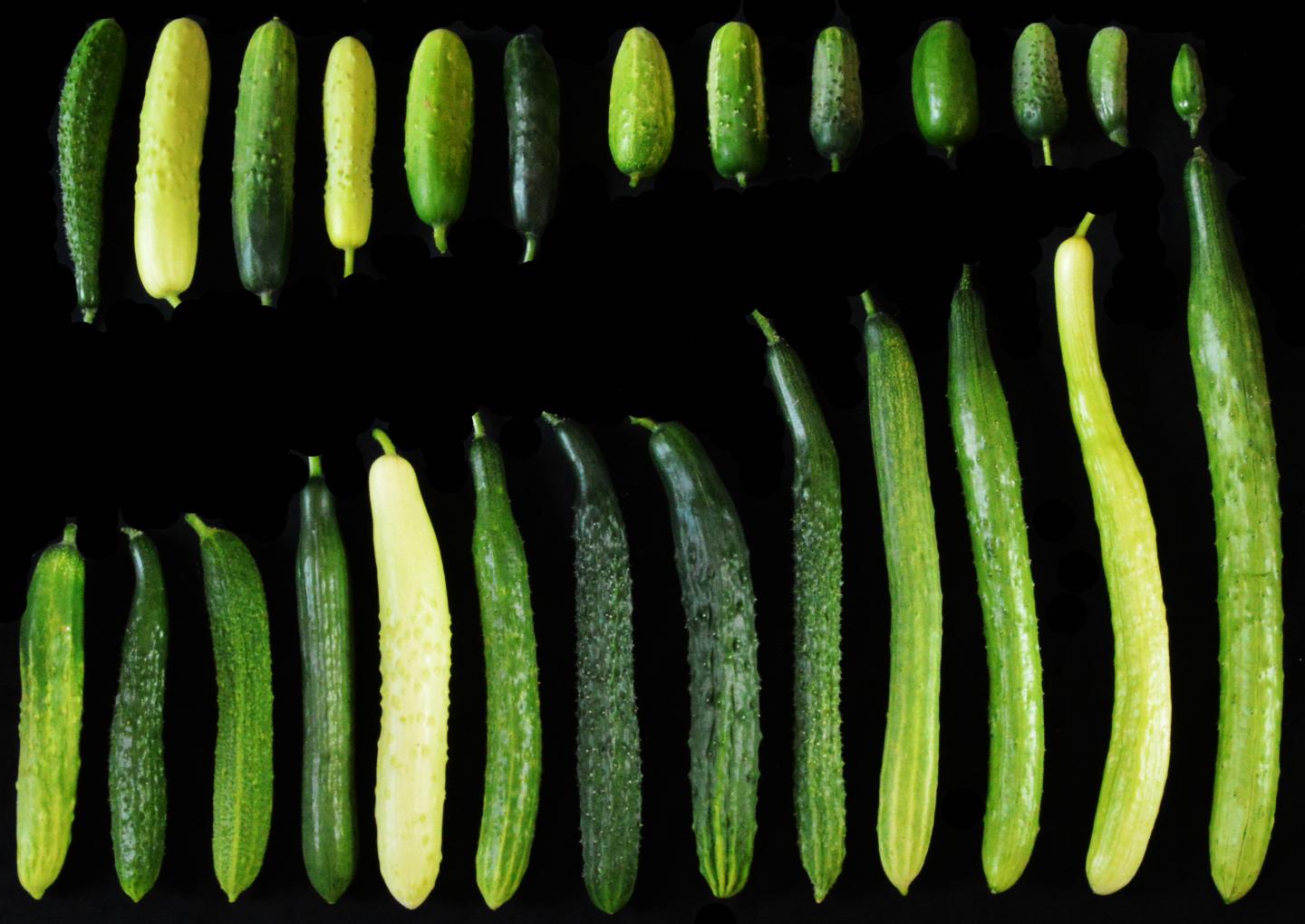
The discovery of a fruit length modulator has implications for cucumber breeding
IMAGE

Credit: Yiqun Weng

The cucumber is among the top five vegetable crops grown in the world. Cucumbers are most commonly eaten fresh or preserved as pickles. An important attribute of the cucumber is fruit length. Cucumbers range in size from 5 to 60 cm, depending on the cultivar.

In an effort to identify the genetic basis of fruit length variation in cucumber, a team of researchers led by Xiaolan Zhang at China Agricultural University analyzed 150 cucumber lines with different fruit lengths. They identified two variants of a gene named CsFUL1 that differed by a single base pair in the DNA code. The CsFUL1A variant appeared in long-fruited East Asian cucumbers, whereas the CsFUL1C variant was randomly distributed in wild and semi-wild cucumber populations.

The researchers demonstrated that decreased expression of CsFUL1A was responsible for longer fruit, whereas shorter fruit was caused by increased expression of the A variant, or by the C variant at this locus, which they showed is not fully functional. Therefore, the authors concluded that CsFUL1A functions as a repressor of fruit length that emerged during selection of Asian long cucumber. They further showed that CsFUL1A directly represses the expression of CsSUP, a known regulator of cell expansion and division. In addition, the expression of two auxin transporter genes, CsPIN1 and CsPIN7, was found to be directly inhibited by CsFUL1A, leading to reduced accumulation of the growth hormone auxin.

This research has singled out a key modulator of fruit length and sets the stage for developing strategies to manipulate fruit length in cucumber breeding.

As next steps, first author Jianyu Zhao said: “We aim to identify the upstream regulators of CsFUL1A in fruit length variation in cucumber and to dissect the relationship between CsFUL1A and other fruit length genes.”

###

Author:
Jennifer Regala

Managing Editor, The Plant Cell and Plant Physiology

ASPB

jregala@aspb.org

@JRegala_ASPB

Media Contact
Tyrone Spady
tspady@aspb.org

Related Journal Article

http://dx.doi.org/10.1105/tpc.18.00905

Tags: AgricultureBiologyCell BiologyFood/Food ScienceGeneticsMolecular BiologyPlant Sciences
Share12Tweet8Share2ShareShareShare2

Related Posts

Review Identifies Key Gaps in Automated Pipelines for Herbarium Label Digitization

Review Identifies Key Gaps in Automated Pipelines for Herbarium Label Digitization

November 23, 2026
Winter Hardening Enhances Chinese Fir Seedling Survival Through Flavonoid Reprogramming

Winter Hardening Enhances Chinese Fir Seedling Survival Through Flavonoid Reprogramming

November 23, 2026

Segment Anything Model 3 Adapts to Medical Lesion Delineation Across Imaging Modalities

November 23, 2026

Review Evaluates Graphene Oxide Nanomaterials for Biomedical Uses and Clinical Translation Barriers

November 23, 2026
Please login to join discussion

POPULAR NEWS

  • Exhaled Breath Acetone Predicts Urgent Transplant Listing or Death in Heart Failure

    Exhaled Breath Acetone Predicts Urgent Transplant Listing or Death in Heart Failure

    29 shares
    Share 12 Tweet 7
  • Pediatric Chikungunya Encephalitis Cases Documented in Northern Thailand With Complete Recoveries

    29 shares
    Share 12 Tweet 7
  • Immersive Virtual Reality Study Identifies Five Key Dimensions of Collaborative Learning

    29 shares
    Share 12 Tweet 7
  • Newly Identified Bacterial Membrane Protein VcmP Drives Macrophage Pyroptosis via NLRP3

    29 shares
    Share 12 Tweet 7

About

We bring you the latest biotechnology news from best research centers and universities around the world. Check our website.

Follow us

Recent News

Employed and Non-Family Contacts Were Frequently Missed in Portuguese Tuberculosis Tracing

UK Survey Finds Wide Variation in Water Sources for Gastrointestinal Endoscopy

Review Identifies Key Gaps in Automated Pipelines for Herbarium Label Digitization

Subscribe to Blog via Email

Enter your email address to subscribe to this blog and receive notifications of new posts by email.

Join 88 other subscribers
  • Contact Us

Bioengineer.org © Copyright 2023 All Rights Reserved.

Welcome Back!

Login to your account below

Forgotten Password?

Retrieve your password

Please enter your username or email address to reset your password.

Log In
No Result
View All Result
  • Homepages
    • Home Page 1
    • Home Page 2
  • News
  • National
  • Business
  • Health
  • Lifestyle
  • Science

Bioengineer.org © Copyright 2023 All Rights Reserved.