

• HOME
  • NEWS
  • EXPLORE
    • CAREER
      • Companies
      • Jobs
    • EVENTS
    • iGEM
      • News
      • Team
    • PHOTOS
    • VIDEO
    • WIKI
  • BLOG
  • COMMUNITY
    • FACEBOOK
    • INSTAGRAM
    • TWITTER
Monday, October 5, 2026
BIOENGINEER.ORG
No Result
View All Result
  • Login
  • HOME
  • NEWS
  • EXPLORE
    • CAREER
      • Companies
      • Jobs
        • Lecturer
        • PhD Studentship
        • Postdoc
        • Research Assistant
    • EVENTS
    • iGEM
      • News
      • Team
    • PHOTOS
    • VIDEO
    • WIKI
  • BLOG
  • COMMUNITY
    • FACEBOOK
    • INSTAGRAM
    • TWITTER
No Result
View All Result
Bioengineer.org
No Result
View All Result
Home NEWS Science News Health

Genetic study clarifies the causes of the most severe heart muscle diseases of children

Bioengineer by Bioengineer
November 7, 2018
in Health
Reading Time: 2 mins read
0
Share on FacebookShare on TwitterShare on LinkedinShare on RedditShare on Telegram
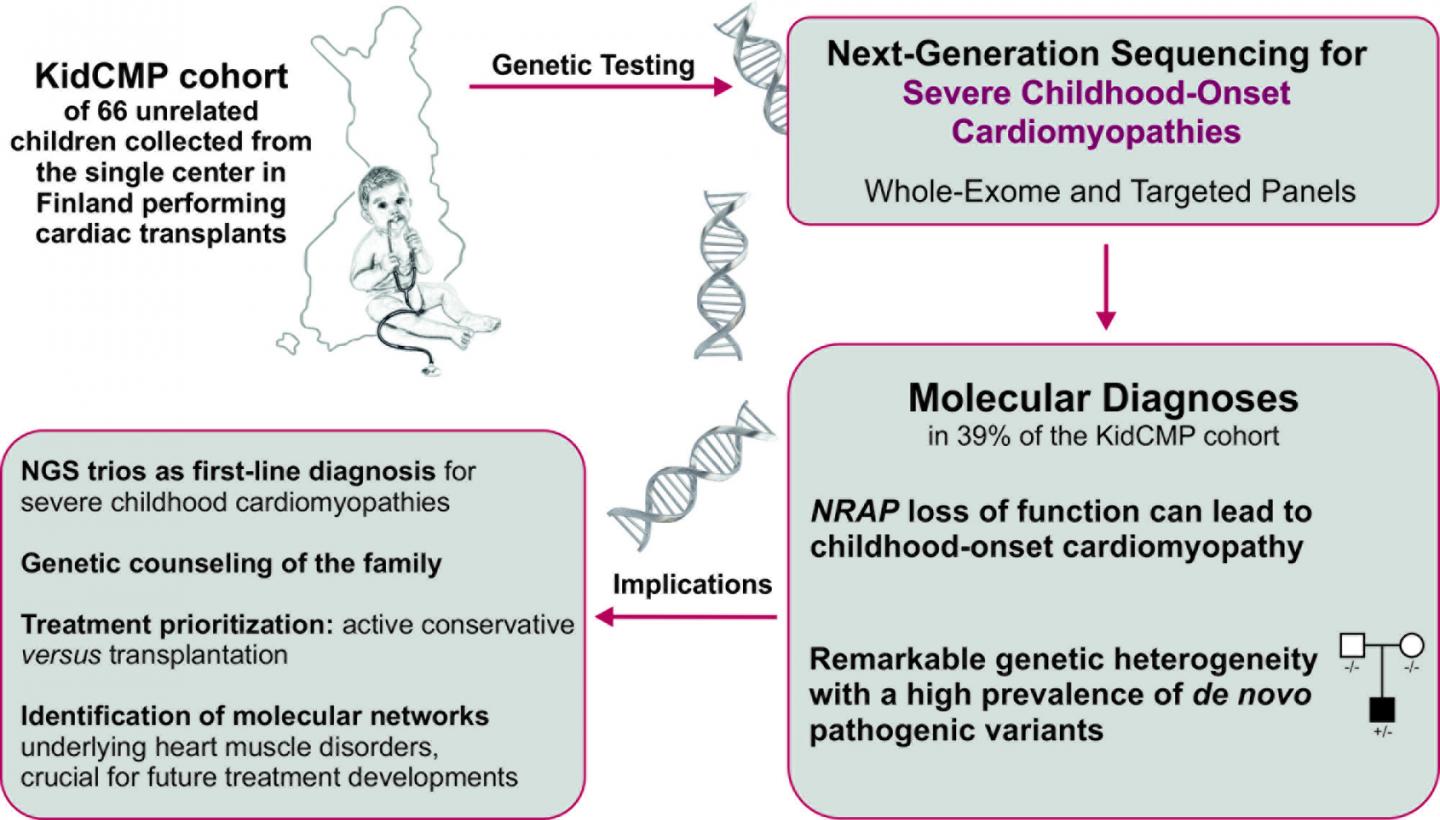
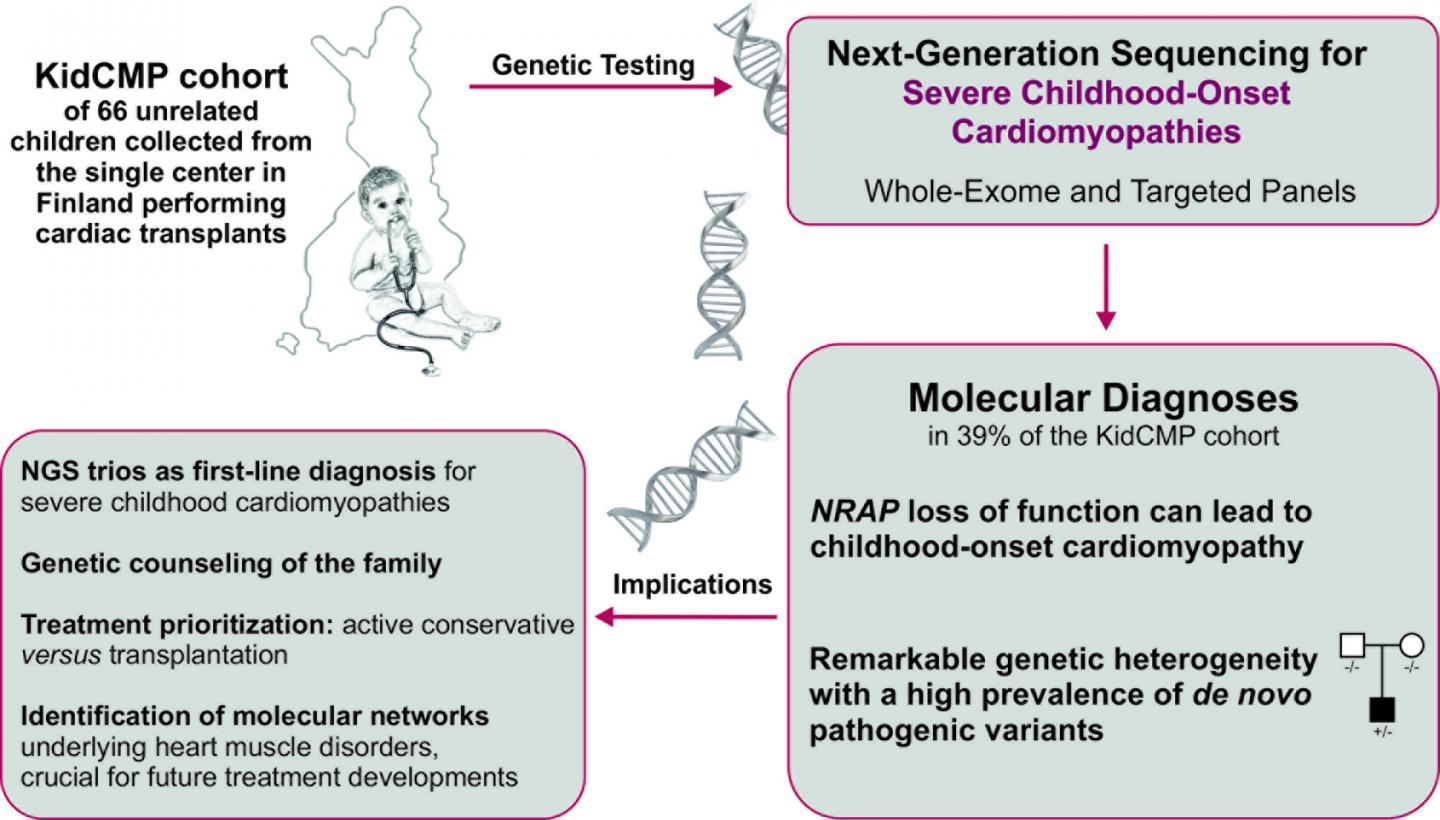
IMAGE

Credit: C Vasilescu/University of Helsinki

Cardiac muscle degeneration (cardiomyopathy) is the most common cause of severe cardiac dysfunction and life-threatening cardiac arrhythmias in children. These severe disorders often lead to consideration of heart transplant. However, their actual cause – the genetic basis – has been poorly characterized.

A collaborative effort of pediatric cardiologists of Helsinki University Hospital and University of Helsinki, led by Docent Tiina Ojala and Academy Professor Anu Suomalainen Wartiovaara, with Catalina Vasilescu, MSc, as the lead author, succeeded to collect a globally unique KidCMP cohort of children with severe cardiomyopathies from the past 21 years, and analyzed them genetically.

The unique patient collection was enabled by the local cardiology clinic being the only center of cardiac transplantations in Finland. The median age of diagnosis of our patients with severe disease was just four months.

Using Next-Generation DNA sequencing methodology with rigorous subsequent validation of findings, the investigators uncovered the genetic causes in 40% of the patients.

"The results highlighted an extremely variable genetic background, each family presenting a different pathogenic variant that often arose during the patient's own embryonal development", Professor Wartiovaara tells.

The authors discovered that the genetic knowledge had direct implications for predicting the disease course and treatment decisions.

"All children had life-threatening diseases early on, and some genetic defects predicted a primarily progressive disorder requiring cardiac transplant. However, if intensively treated, some gene defects predicted a recuperative course, without a transplant", Dr. Ojala says.

Personalized medicine is one of the goals of the current medical research, where the understanding of the genetic cause and disease mechanism in each individual will promote tailored forms of treatment. The study published by the University of Helsinki investigators makes an important step in this direction by deciphering genetic causes in children and their implications for treatment decisions.

###

The findings were reported in Journal of the American College of Cardiology.

Media Contact

Tiina Ojala
[email protected]
358-504-270-558
@helsinkiuni

http://www.helsinki.fi/university/

Original Source

https://www.helsinki.fi/en/news/health-news/genetic-study-clarifies-the-causes-of-the-most-severe-heart-muscle-diseases-of-children http://dx.doi.org/10.1016/j.jacc.2018.08.2171

Share12Tweet8Share2ShareShareShare2

Related Posts

Rebuilding the Nose from Bone: New 3D Method Aims to Sharpen Forensic Facial Reconstruction

Rebuilding the Nose from Bone: New 3D Method Aims to Sharpen Forensic Facial Reconstruction

October 5, 2026
AI Prostate MRI Tool Shows High Sensitivity but Hard Trade-Offs in Real-World Test

AI Prostate MRI Tool Shows High Sensitivity but Hard Trade-Offs in Real-World Test

October 5, 2026

Reports of Harm From Sleep Apnea Oral Appliances Are Rising, FDA Data Show

October 5, 2026

Blood Clones That Masquerade as Cancer: New Framework Draws Hard Lines in Precision Oncology

October 5, 2026
Please login to join discussion

POPULAR NEWS

  • Alloys That Shrink Their Own Grains: New PIX Mechanism Refines Metals With Heat Alone

    Alloys That Shrink Their Own Grains: New PIX Mechanism Refines Metals With Heat Alone

    29 shares
    Share 12 Tweet 7
  • Endurance Exercise Reshapes the Liver in Males and Females Through Distinct Molecular Routes

    29 shares
    Share 12 Tweet 7
  • Single Transcription Factor PU.1 Rapidly Converts Fibroblasts into Macrophage-Lineage Cells

    29 shares
    Share 12 Tweet 7
  • New Scale Measures How Ready Nurse Educators Really Are for the AI Era

    29 shares
    Share 12 Tweet 7

About

We bring you the latest biotechnology news from best research centers and universities around the world. Check our website.

Follow us

Recent News

Alloys That Shrink Their Own Grains: New PIX Mechanism Refines Metals With Heat Alone

Endurance Exercise Reshapes the Liver in Males and Females Through Distinct Molecular Routes

Single Transcription Factor PU.1 Rapidly Converts Fibroblasts into Macrophage-Lineage Cells

Subscribe to Blog via Email

Success! An email was just sent to confirm your subscription. Please find the email now and click 'Confirm' to start subscribing.

Join 85 other subscribers
  • Contact Us

Bioengineer.org © Copyright 2023 All Rights Reserved.

Welcome Back!

Login to your account below

Forgotten Password?

Retrieve your password

Please enter your username or email address to reset your password.

Log In
No Result
View All Result
  • Homepages
    • Home Page 1
    • Home Page 2
  • News
  • National
  • Business
  • Health
  • Lifestyle
  • Science

Bioengineer.org © Copyright 2023 All Rights Reserved.
