


NAIROBI, Kenya, 21 April 2022__ A serendipitous discovery has led researchers from the International Livestock Research Institute (ILRI) in Kenya and the Roslin Institute at the University of Edinburgh in Scotland to identify a genetic marker that accurately predicts whether an individual cow is likely to survive infection with East Coast fever—making possible breeding programs that could improve the livelihoods of millions of smallholder farmers.
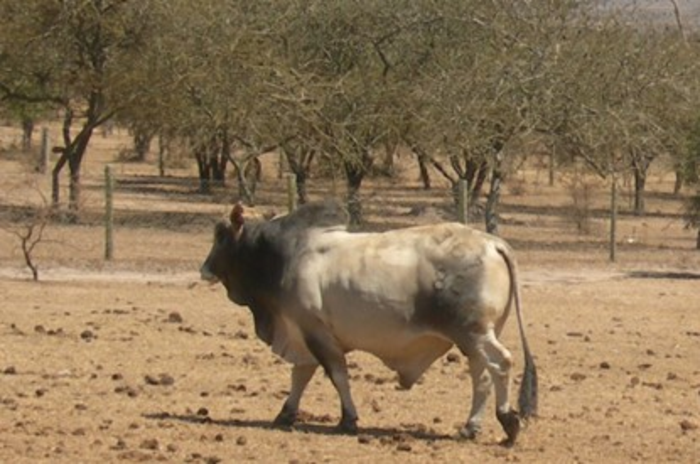
Credit: Photo Liam Morrison/Roslin Institute
NAIROBI, Kenya, 21 April 2022__ A serendipitous discovery has led researchers from the International Livestock Research Institute (ILRI) in Kenya and the Roslin Institute at the University of Edinburgh in Scotland to identify a genetic marker that accurately predicts whether an individual cow is likely to survive infection with East Coast fever—making possible breeding programs that could improve the livelihoods of millions of smallholder farmers.
The severe cattle disease East Coast fever is caused by the Theileria parva parasite and transmitted by ticks, causing a kind of leukemia. It kills a million animals a year in the 13 African countries where it is endemic—that’s one cow every 30 seconds. Those losses cost an estimated US$300 million annually, and can devastate the livelihoods of smallholder farmers.
“If the cattle are susceptible, without treatment you can lose 100% of your herd in two or three weeks,” says ILRI’s Phil Toye. Because it doesn’t affect wealthy countries, there has historically been limited funding for research into the disease.
A vaccine for East Coast fever exists and usually gives cattle lifelong immunity. However, making it is time-consuming, and it costs ten to twenty times more than other common livestock vaccines (it involves making a kind of ‘tick smoothie’ by crushing up hundreds of thousands of infected ticks in an industrial blender).
The other option is regularly dipping animals in acaricides—pesticides that kill ticks—but this is also labour-intensive, polluting, and in some places farmers have to dip their cows more than once a week. “We’re struggling to control this disease,” says Toye.
In 2013, an ILRI-Roslin team conducted an experiment at Ol Pejeta Conservancy in Kenya to test how well the vaccine worked when indigenous cattle grazed near buffalo, which also carry a form of East Coast fever. Out of twelve vaccinated animals, nine of them died from the disease.
Nine of the twelve unvaccinated control animals died too. Tatjana Sitt, a post-doctoral scientist working on the project, just happened to check their pedigree. “She saw that the three ones that survived all had the same sire,” says Toye. “We thought, is that just a fluke? Or is this something that’s really worth following up? It turned out to be a very serendipitous observation.”
The sire in question—a muscular and prolific specimen of a Boran Bos indicus bull dubbed 3167—died just after the discovery was made. But in a follow-up field trial, 12 out of 15 of Bull 3167’s offspring survived East Coast fever, while all 10 of the unrelated control animals died.
Now, in a new paper published today in PLOS Genetics, Roslin’s David Wragg, ILRI’s Annie Cook and other team members have analysed the DNA from this one hardy bovine family in the context of clinical data from the field studies and located a genetic marker that signals tolerance for East Coast fever.
The allele they have identified is not necessarily the specific gene that limits the growth of the animal’s cells when they’re infected by the parasite, protecting them from the illness. “For breeding, it doesn’t actually matter,” says Wragg. “You just need a way of saying, ‘This animal is a good one to breed from, because its offspring are likely to survive the disease.” Tests showed the marker does this very well—with only one out of 20 animals with two copies of the allele succumbing to the disease.
But further research to pin down the exact gene (or genes) responsible and their mechanism of action will potentially enable scientists to edit the DNA of cattle to make them disease tolerant. That raises the possibility of more easily farming highly productive European or cross-bred animals in parts of Africa where East Coast fever is endemic—which could dramatically increase the amount of milk and meat produced on the continent.
More research is also needed to ensure there are no unintended side-effects associated with tolerance to the disease—for example, in humans, tolerance to malaria is associated with sickle-cell anemia, which causes other health problems. In addition, finding out more about the genetic mechanism could also help to advance leukemia research in humans, Toye says.
“If this genetic trait really is as effective as we think it is, and we can get animals out there expressing it, and there’s no major downside to it— it will provide a sustainable and cost-effective way to combat this major disease,” he says.
Journal
PLoS Genetics
DOI
10.1371/journal.pgen.1010099
Method of Research
Observational study
Subject of Research
Animals
Article Title
A locus conferring tolerance to Theileria infection in African cattle
Article Publication Date
21-Apr-2022
COI Statement
The authors certify that they have NO affiliations with or involvement in any organization or entity with any financial interest (such as honoraria; educational grants; participation in speakers’ bureaus; membership, employment, consultancies, stock ownership, or other equity interest; and expert testimony or patent-licensing
arrangements), or non-financial interest (such as personal or professional relationships, affiliations, knowledge or beliefs) in the subject matter or materials discussed in this manuscript.

![Tuning Endergonic Triplet Photosensitization Enables Bicyclo[1.1.0]butane–Alkene Cycloadditions](https://bioengineer.org/wp-content/uploads/2026/08/Tuning-Endergonic-Triplet-Photosensitization-Enables-Bicyclo110butane–Alkene-Cycloadditions-120x86.jpg)
