• HOME
  • NEWS
  • EXPLORE
    • CAREER
      • Companies
      • Jobs
    • EVENTS
    • iGEM
      • News
      • Team
    • PHOTOS
    • VIDEO
    • WIKI
  • BLOG
  • COMMUNITY
    • FACEBOOK
    • INSTAGRAM
    • TWITTER
Friday, April 17, 2026
BIOENGINEER.ORG
No Result
View All Result
  • Login
  • HOME
  • NEWS
  • EXPLORE
    • CAREER
      • Companies
      • Jobs
        • Lecturer
        • PhD Studentship
        • Postdoc
        • Research Assistant
    • EVENTS
    • iGEM
      • News
      • Team
    • PHOTOS
    • VIDEO
    • WIKI
  • BLOG
  • COMMUNITY
    • FACEBOOK
    • INSTAGRAM
    • TWITTER
  • HOME
  • NEWS
  • EXPLORE
    • CAREER
      • Companies
      • Jobs
        • Lecturer
        • PhD Studentship
        • Postdoc
        • Research Assistant
    • EVENTS
    • iGEM
      • News
      • Team
    • PHOTOS
    • VIDEO
    • WIKI
  • BLOG
  • COMMUNITY
    • FACEBOOK
    • INSTAGRAM
    • TWITTER
No Result
View All Result
Bioengineer.org
No Result
View All Result
Home NEWS Science News Biology

Genetic breakthrough by CU Denver scientists will aid whitebark pine conservation efforts

Bioengineer by Bioengineer
October 18, 2018
in Biology
Reading Time: 2 mins read
0
Share on FacebookShare on TwitterShare on LinkedinShare on RedditShare on Telegram
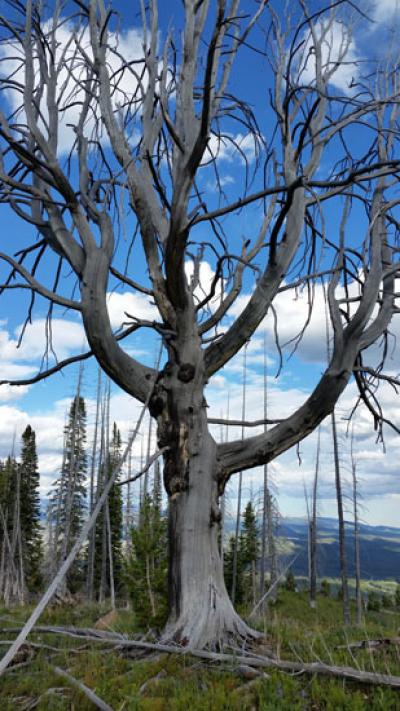
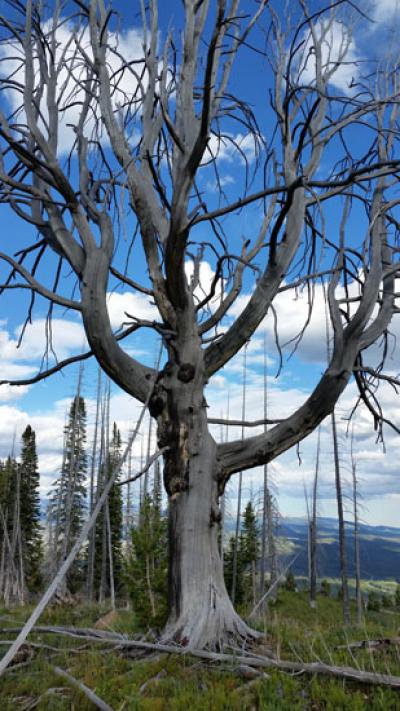
IMAGE

Credit: Diane Tomback, Ph.D.

A University of Colorado Denver-led research team for the first time developed reliable genetic markers known as nuclear microsatellites for the whitebark pine, a discovery that could improve the tree's prospects for survival. Whitebark pine, which is declining rapidly nearly range-wide, is currently being considered for listing under the Endangered Species Act.

According to an article published today in PLOS ONE, the new genetic markers represent a useful and low-cost method for screening whitebark pine for levels of genetic variation, providing a tool with multiple applications for protecting the rapidly disappearing tree from going extinct. Prior attempts to find these markers for the whitebark pine failed due to the complexity and size of its genome, which is nearly nine times larger than the human genome.

"With this breakthrough, scientists can begin screening whitebark pines for disease resistance traits, for strategic seed collection and other conservation and climate change mitigation efforts," said Dr. Diana Tomback, a professor in the Department of Integrative Biology at CU Denver.

"Genetic screening using microsatellites is a fast, affordable tool that can help with research and restoration efforts for this special tree, which plays a significant ecological role in high-mountain ecosystems."

The imperiled high-altitude conifer ranges throughout the Western U.S. and Canada and is important for watershed protection and as food for wildlife, including Grizzly Bears. Threats to the whitebark pine include a non-native disease, mountain pine beetles, severe fire, as well as climate change.

CU Denver graduate student Marian Lea and Tomback led the research team that succeeded in developing 23 microsatellite markers for whitebark pine, including 10 that are newly developed and 13 that were transferred from other pine species.

Research team members: Dr. John Syring (Professor, Linfield College, OR), and Dr. Richard Cronn and Tara Jennings (U.S. Forest Service Pacific Northwest Research Station) initiated this work by applying genome sequencing methods to the whitebark pine genome and identifying over 1,000 candidate gene regions for analysis. Dr. Leo Bruederle and Dr. Jennifer Neale (Denver Botanic Garden) provided lab techniques that converted these regions into simple genetic assays. Lea, Syring, and Jennings performed detailed screening of the novel and transferred markers, and Lea completed the population analysis of two Yellowstone whitebark populations, which provided evidence that the markers were successful.

###

###

Media Contact

Meme Moore
[email protected]
303-315-0009
@CUDenver

http://www.ucdenver.edu/pages/ucdwelcomepage.aspx

Related Journal Article

http://dx.doi.org/10.1371/journal.pone.0205423

Share12Tweet8Share2ShareShareShare2

Related Posts

MIT Study Uncovers Novel Function of Cell Membranes

MIT Study Uncovers Novel Function of Cell Membranes

April 16, 2026
Long-Term HIV Remission via CCR5Δ32 Stem Cell Transplant

Long-Term HIV Remission via CCR5Δ32 Stem Cell Transplant

April 16, 2026

Renowned Cell Biologist Dr. Peter Walter Joins Faculty at The Buck Institute

April 16, 2026

Freshwater Fish Found to Accumulate Opioids and Other Pharmaceuticals

April 16, 2026
Please login to join discussion

POPULAR NEWS

  • Scientists Investigate Possible Connection Between COVID-19 and Increased Lung Cancer Risk

    61 shares
    Share 24 Tweet 15
  • Boosting Breast Cancer Risk Prediction with Genetics

    47 shares
    Share 19 Tweet 12
  • NSF funds machine-learning research at UNO and UNL to study energy requirements of walking in older adults

    99 shares
    Share 40 Tweet 25
  • Popular Anti-Aging Compound Linked to Damage in Corpus Callosum, Study Finds

    46 shares
    Share 18 Tweet 12

About

We bring you the latest biotechnology news from best research centers and universities around the world. Check our website.

Follow us

Recent News

Sedentary Behavior Alters Balance Rehab in Parkinson’s

New Study Questions Four-Decade-Old Theory on Childhood Body Composition Changes Before the Adiposity Rebound at Age 6

Illinois Tech-Led BioCAT Secures NIH Renewal to Continue Operating Fiber Diffraction Beamline at Argonne’s Advanced Photon Source

Subscribe to Blog via Email

Enter your email address to subscribe to this blog and receive notifications of new posts by email.

Join 79 other subscribers
  • Contact Us

Bioengineer.org © Copyright 2023 All Rights Reserved.

Welcome Back!

Login to your account below

Forgotten Password?

Retrieve your password

Please enter your username or email address to reset your password.

Log In
No Result
View All Result
  • Homepages
    • Home Page 1
    • Home Page 2
  • News
  • National
  • Business
  • Health
  • Lifestyle
  • Science

Bioengineer.org © Copyright 2023 All Rights Reserved.