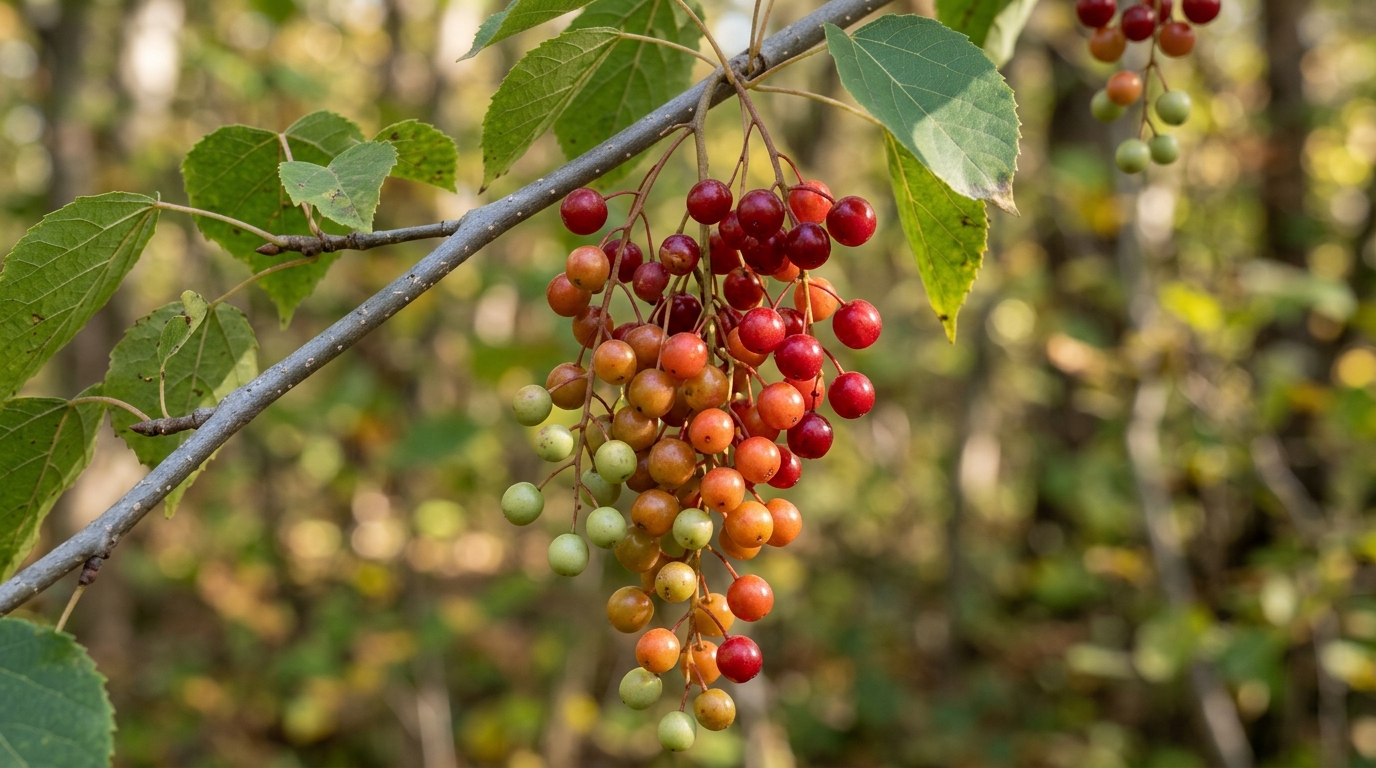
Researchers investigating fruit development in Idesia polycarpa have identified the primary metabolic pathways and structural genes associated with the color transition of the plant’s pericarp. The study characterized developmental stages at 30, 70, 110, 140, and 160 days after flowering, combining anatomical, physiological, transcriptomic, and metabolomic analyses to map how pigmentation shifts over time.
Idesia polycarpa represents an economically important woody oil tree species cultivated in China. In this species, fruit color functions as a key phenotypic marker during ripening and correlates with both nutritional quality and economic value, though the precise regulatory mechanisms governing pericarp coloration had previously remained poorly understood.
Anatomical and physiological assessments across the designated developmental timeline demonstrated that color changes occur across specific intervals. Integrated molecular profiling revealed that three core biochemical routes—porphyrin metabolism, carotenoid biosynthesis, and flavonoid biosynthesis—operate as the principal pathways that may contribute to pericarp color transformation.
The initial loss of green pigmentation corresponds with the active degradation of chlorophyll. Transcriptomic evaluations showed significant upregulation of degradation-related genes, specifically pheophorbide a oxygenase and red chlorophyll catabolite reductase, which the authors linked to the catabolic breakdown of green pigments during fruit maturation.
As the pericarp shifts from green to yellow, structural genes within the carotenoid biosynthesis pathway display predominant activity. These include 15-cis-phytoene synthase, zeta-carotene isomerase, prolycopene isomerase, 15-cis-phytoene desaturase, zeta-carotene desaturase, lycopene beta-cyclase, and beta-carotene 3-hydroxylase, all associated with intermediate yellow pigmentation.
Concurrently, the study detected expression of genes tied to hormonal regulation, including DWARF27, CCD7, and 9-cis-epoxycarotenoid dioxygenase. These elements contribute to the biosynthesis of phytohormones known to regulate the broader fruit ripening process alongside visual pigmentation shifts.
The transition toward orange-red coloration is driven primarily by the flavonoid biosynthesis pathway. The structural genes chalcone synthase and flavanone 4-reductase participate in synthesizing precursor compounds, namely leucodelphinidin, leucopelargonidin, and leucoanthocyanidins.
Subsequently, the sustained high expression of anthocyanidin synthase facilitates the conversion of leucoanthocyanidins into pigmented anthocyanins. This sustained enzymatic activity appears central to the phenotypic progression that produces the final orange-red pericarp observed in mature fruit.
The coordinated action of these genetic pathways establishes a defined progression across ripening stages. Early downregulation or degradation mechanisms initiate the loss of green coloration, while subsequent activation of carotenoid structural genes promotes yellow tones. As maturation proceeds toward full ripeness, the flavonoid pathway becomes central to directing pigment accumulation, completing the progression to orange-red fruit.
Beyond structural pigment enzymes, the researchers highlighted the roles of CHS, DFR, and ANS in governing the green-to-orange-red transition. They also observed that regulatory components including DWARF27, CCD7, and 9-cis-epoxycarotenoid dioxygenase function in synthesizing key phytohormones involved in ripening control, coordinating hormonal cues with anatomical and color changes across the pericarp.
These integrated findings provide a systematic theoretical foundation for elucidating the molecular mechanisms and regulatory networks that govern fruit color formation in Idesia polycarpa. By clarifying the specific metabolic pathways and genes responsible for pigmentation changes across developmental stages, the work offers theoretical guidance for the targeted improvement of color-related traits and the future breeding of high-quality woody oil varieties.
Subject of Research: Pericarp color transition mechanisms in Idesia polycarpa
Article Title: Integrated metabolomic and transcriptomic analysis of the color transition pattern in the pericarp of Idesia polycarpa
Article References: sun, D., Gao, C., Fan, F., Song, Q., Wan, X., Wang, Q., & Nie, Y. (2026). Integrated metabolomic and transcriptomic analysis of the color transition pattern in the pericarp of Idesia polycarpa. BMC Plant Biology. https://doi.org/10.1186/s12870-026-10242-0
Image Credits: AI Generated
DOI: 10.1186/s12870-026-10242-0
Keywords: Idesia polycarpa, fruit ripening, pericarp coloration, transcriptomics, metabolomics, porphyrin metabolism, carotenoid biosynthesis, flavonoid biosynthesis, chlorophyll degradation, anthocyanins, chalcone synthase, anthocyanidin synthase, woody oil tree, plant physiology, pigmentation genetics
News Source: Juliet Wilcox. (November 20, 2026). Gene Networks Drive Fruit Color Changes in Idesia polycarpa Pericarp. Scienmag.