• HOME
  • NEWS
  • EXPLORE
    • CAREER
      • Companies
      • Jobs
    • EVENTS
    • iGEM
      • News
      • Team
    • PHOTOS
    • VIDEO
    • WIKI
  • BLOG
  • COMMUNITY
    • FACEBOOK
    • INSTAGRAM
    • TWITTER
Tuesday, May 19, 2026
BIOENGINEER.ORG
No Result
View All Result
  • Login
  • HOME
  • NEWS
  • EXPLORE
    • CAREER
      • Companies
      • Jobs
        • Lecturer
        • PhD Studentship
        • Postdoc
        • Research Assistant
    • EVENTS
    • iGEM
      • News
      • Team
    • PHOTOS
    • VIDEO
    • WIKI
  • BLOG
  • COMMUNITY
    • FACEBOOK
    • INSTAGRAM
    • TWITTER
  • HOME
  • NEWS
  • EXPLORE
    • CAREER
      • Companies
      • Jobs
        • Lecturer
        • PhD Studentship
        • Postdoc
        • Research Assistant
    • EVENTS
    • iGEM
      • News
      • Team
    • PHOTOS
    • VIDEO
    • WIKI
  • BLOG
  • COMMUNITY
    • FACEBOOK
    • INSTAGRAM
    • TWITTER
No Result
View All Result
Bioengineer.org
No Result
View All Result
Home NEWS Science News Biology

Gene finding to eradicate severe blistering disorder of the skin found in dogs

Bioengineer by Bioengineer
June 1, 2017
in Biology
Reading Time: 2 mins read
0
Share on FacebookShare on TwitterShare on LinkedinShare on RedditShare on Telegram
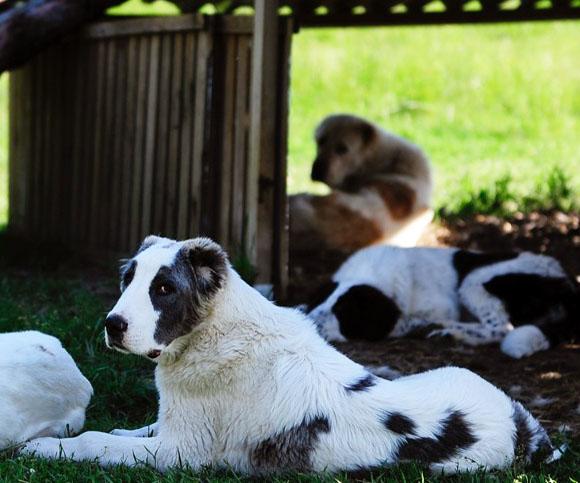
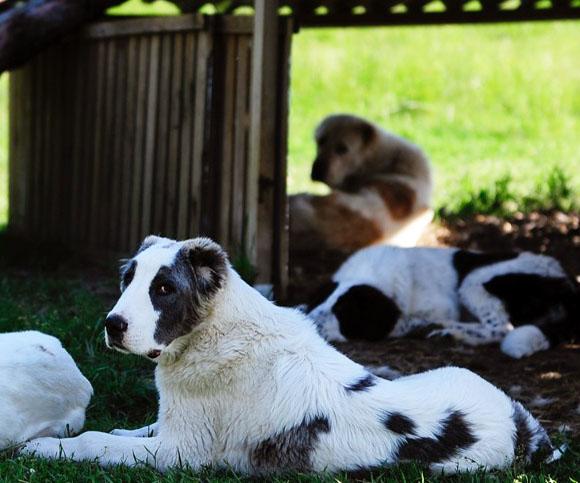
IMAGE

Credit: Hannes Lohi research group

Researchers at the University of Helsinki have identified a novel gene defect that causes a hereditary blistering disorder of the skin, epidermolysis bullosa, in dogs. Epidermolysis bullosa, found in the Central Asian Shepherd dog breed, occurs also in humans due to an identical gene found in both canines and humans.

Hereditary blistering disorders of the skin are found with varying severity in both humans and animals. A symptom typical of all disease types is fragile skin that is easily damaged, followed by blistering and abrasion of the skin. This is caused by a defect in or deficiency of the structural proteins of the skin.

"The project got its start when blistering in the skin and mucosal membranes was detected in different parts of the body in newborn littermates of Central Asian Shepherd dogs. This finding aroused suspicions of a hereditary blistering disorder of the skin," says researcher Marjo Hytönen, a member of the research group led by Professor Hannes Lohi.

Pathological tests conducted by the Finnish Food Safety Authority Evira confirmed the diagnosis as epidermolysis bullosa. In genetic studies conducted by gene researchers at the University of Helsinki, the gene defect causing the disease was found in the COL7A1 gene. The gene is responsible for producing collagen, an important component in preserving the elasticity of the skin. This finding helped specify the diagnosis as the dystrophic form of the recessive blistering disorder of the skin known as epidermolysis bullosa. Four different structural types of the disease are known: simplex, junctional, dystrophic and Kindler syndrome.

"Immunostaining conducted with skin samples collected from dogs with the disorder proved that the functional form of the protein, or collagen, was absent from the skin of these dogs," says Kati Dillard, a veterinarian at the Finnish Food Safety Authority Evira.

"Collagen has an important job in anchoring the two layers of the skin together. Due to the absence of the functioning protein, the skin layers are easily detached," clarifies Julia Niskanen, a researcher at the University of Helsinki.

Identifying the gene defect enables the identification of those dogs used for breeding that carry the defect, which, in turn, makes it possible to effectively eradicate the disorder from the entire breed.

###

Media Contact

Hannes Lohi
[email protected]
358-294-125-085
@helsinkiuni

http://www.helsinki.fi/university/

############

Story Source: Materials provided by Scienmag

Share12Tweet8Share2ShareShareShare2

Related Posts

Advanced Models Pave the Way for Improved Therapies Targeting Primary Sclerosing Cholangitis — Biology

Advanced Models Pave the Way for Improved Therapies Targeting Primary Sclerosing Cholangitis

May 19, 2026
How Bats Filter Out Background Noise to Sharpen Prey Detection — Biology

How Bats Filter Out Background Noise to Sharpen Prey Detection

May 19, 2026

Newly Discovered “Happy-Face” Spider Species Found in the Indian Himalayas

May 19, 2026

Fischer’s Blue Butterflies Less Attractive on Non-Native Diet, Study Finds

May 19, 2026
Please login to join discussion

POPULAR NEWS

  • Research Indicates Potential Connection Between Prenatal Medication Exposure and Elevated Autism Risk

    845 shares
    Share 338 Tweet 211
  • New Study Reveals Plants Can Detect the Sound of Rain

    731 shares
    Share 292 Tweet 182
  • Salmonella Haem Blocks Macrophages, Boosts Infection

    62 shares
    Share 25 Tweet 16
  • Breastmilk Balances E. coli and Beneficial Bacteria in Infant Gut Microbiomes

    58 shares
    Share 23 Tweet 15

About

We bring you the latest biotechnology news from best research centers and universities around the world. Check our website.

Follow us

Recent News

New Method Identifies High-Risk Diabetes Groups in Africa

Light-Driven Radical Emission in Flexible Organic Crystals

PLaTypus Strengthens Intel CET to Combat Advanced Code Reuse Attacks

Subscribe to Blog via Email

Enter your email address to subscribe to this blog and receive notifications of new posts by email.

Join 82 other subscribers
  • Contact Us

Bioengineer.org © Copyright 2023 All Rights Reserved.

Welcome Back!

Login to your account below

Forgotten Password?

Retrieve your password

Please enter your username or email address to reset your password.

Log In
No Result
View All Result
  • Homepages
    • Home Page 1
    • Home Page 2
  • News
  • National
  • Business
  • Health
  • Lifestyle
  • Science

Bioengineer.org © Copyright 2023 All Rights Reserved.