Fresh-cut apples could stay brighter, firmer and less vulnerable to spoilage with help from an unlikely ingredient: the common white button mushroom, Agaricus bisporus. In a new study, researchers report that exposing mushroom powder to a carefully chosen dose of gamma radiation before extracting its bioactive compounds substantially strengthened the extract’s antioxidant and antifungal activity. When the resulting preparation was applied to apple slices, it reduced browning, slowed softening and lowered bacterial and fungal populations during 10 days of refrigerated storage. The work points toward a potential “clean-label” preservation strategy that uses an edible food organism and a processing step already employed in some areas of food technology, rather than relying solely on synthetic preservatives or fungicides.
Fresh-cut fruit is unusually difficult to preserve because cutting breaks the protective skin and exposes cells to oxygen, enzymes and microorganisms. In apples, tissue disruption allows polyphenol oxidase and peroxidase to contact phenolic compounds. These enzymes convert phenolics into quinones, which then react and polymerize into the brown pigments familiar on cut apple surfaces. At the same time, water loss accelerates, cell walls weaken and fungi can colonize the damaged tissue. Species including Penicillium expansum, Penicillium chrysogenum, Botrytis cinerea, Fusarium oxysporum, Aspergillus flavus and Aspergillus niger are associated with postharvest spoilage. Some fungi can also produce mycotoxins, making deterioration more than a cosmetic problem. The authors note that global apple losses can reach roughly one-quarter of production, underscoring the need for preservation methods that control several forms of deterioration at once.
The team first tested extracts made with solvents of different polarity to determine which one recovered the most active compounds from dried A. bisporus. Ethanol performed best, producing the broadest antifungal effects and an inhibition zone of 14 millimeters against P. chrysogenum in a disc-diffusion assay. The researchers then dried mushrooms at 45 degrees Celsius, ground them into a fine powder and exposed separate batches to gamma-radiation doses of 0, 2, 4, 6 or 8 kilograys. Gamma radiation is high-energy electromagnetic radiation capable of breaking chemical bonds and altering biological materials. In a food matrix, moderate exposure can disrupt cellular structures and release compounds that were previously bound within the tissue. It can also chemically transform existing molecules. But the same chemistry can become destructive at excessive doses, oxidizing or fragmenting sensitive compounds. The study therefore treated radiation dose as a variable to optimize, not simply as a higher-is-better intervention.
The strongest overall response occurred at 6 kilograys. At that dose, the extract contained 3.25 milligrams of gallic acid equivalents per gram, compared with 2.12 milligrams per gram in the non-irradiated control. The Folin–Ciocalteu measurement used by the researchers is an estimate of total phenolic content, expressed relative to gallic acid as a standard. Phenolic molecules are important because their hydroxyl groups can donate electrons or hydrogen atoms to reactive radicals, helping terminate oxidative chain reactions. Consistent with the chemical measurement, the irradiated extract neutralized 46.3 percent of the DPPH radical at a concentration of 100 micrograms per milliliter, compared with 40.9 percent for the untreated extract. The synthetic antioxidant TBHQ produced 96.8 percent inhibition under the same test conditions, showing that the mushroom preparation was not equivalent to a highly active purified antioxidant but nevertheless gained measurable activity through irradiation. At 8 kilograys, both phenolic content and antioxidant performance declined, supporting the idea that overexposure degraded sensitive compounds.
The antifungal experiments produced the same dose-dependent pattern. Extracts from irradiated mushrooms inhibited all six tested apple-spoiling fungi, with activity increasing through 6 kilograys and then falling at 8 kilograys. Against P. expansum, the inhibition zone expanded from 11.3 millimeters in the control extract to 16.3 millimeters after 6-kilograys treatment, an increase of about 44 percent. P. chrysogenum showed the largest response, with its inhibition zone reaching 20.3 millimeters, compared with 13.7 millimeters for the non-irradiated extract. The 6-kilograys preparation also produced zones of 17.3 millimeters against F. oxysporum, 16.3 millimeters against B. cinerea, 14.7 millimeters against A. flavus and 18.3 millimeters against A. niger. In each case, the response weakened at 8 kilograys. Statistical analysis indicated that radiation dose significantly affected inhibition-zone diameters, although the tests were conducted in triplicate and remain laboratory assays rather than evidence of commercial-scale performance.
Additional experiments provided clues about how the extract damages fungi. In a sorbitol-protection assay, the minimum inhibitory concentration of the irradiated extract increased when the growth medium contained 0.8 molar sorbitol. Sorbitol acts as an osmotic stabilizer: it can partially compensate for damage to a fungal cell wall, allowing a weakened cell to survive exposure that would otherwise stop growth. A shift in the minimum inhibitory concentration therefore suggests that the extract interferes with wall integrity. The researchers also found that the 6-kilograys extract reduced the activity of fungal extracellular enzymes, cutting protease activity by about 40 percent, cellulase by 35 percent and lipase by 45 percent. These enzymes help pathogens digest host tissues. Electron microscopy reinforced the biochemical results. Untreated hyphae appeared smooth, turgid and regularly branched, whereas treated fungi displayed collapsed hyphae, shrunken surfaces and deformed spores, with particularly pronounced effects in B. cinerea and P. expansum. Together, the results suggest a multifactorial mechanism involving cell-envelope damage and suppression of tissue-degrading metabolism.
Chemical profiling offered a possible explanation for the enhanced bioactivity. Using gas chromatography–mass spectrometry, the researchers detected changes in fatty acids and sterols after irradiation. The extract contained linoleic acid and related compounds, along with ergosterol and neoergosterol derivatives. At 6 kilograys, the relative abundance of sterols and medium-chain fatty acids increased compared with the non-irradiated material. Ergosterol rose from 1.03 percent to 3.09 percent, while some compounds, including neoergosterol and estra-1,3,5(10)-trien-17β-ol, appeared only after irradiation. These measurements describe relative abundance in the analyzed extract, not necessarily an increase in the total amount of each compound. Still, the altered chemical profile is consistent with radiation-induced breakdown, rearrangement and release of mushroom metabolites. Sterols and phenolics can affect fungal membranes and cell walls, while changes in the availability of bound compounds may help explain why moderate radiation strengthened activity. At higher doses, however, oxidation and polymerization may destroy the same molecules that contribute to antimicrobial effects.
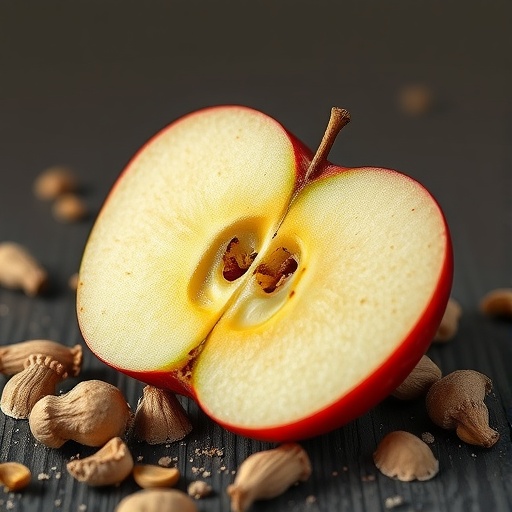
The researchers next tested whether the optimized preparation worked on real fruit rather than only in culture plates. They cut apples into two-centimeter-thick slices and dipped them for three minutes in either water, a 10 percent weight-to-volume solution of non-irradiated mushroom extract or the same concentration of extract made from mushrooms treated at 6 kilograys. The slices were stored at approximately 4 degrees Celsius for 10 days. By the end of storage, untreated apples had lost 6.2 percent of their initial mass, while slices treated with non-irradiated and irradiated extracts lost 4.2 and 3.0 percent, respectively. Firmness also declined in all groups, but the irradiated-extract treatment slowed the loss: control slices fell from 15.5 newtons initially to 10.0 newtons after 10 days, whereas treated slices retained 12.5 newtons. The extract may have formed a thin protective layer that limited water transfer, while its antioxidant and enzyme-inhibitory effects may have helped stabilize cell-wall structures.
The most visible benefit was reduced discoloration. Apple slices coated with the irradiated extract maintained lower color change and browning-index values than both untreated slices and those given the non-irradiated preparation. By limiting oxidative reactions, phenolic compounds could reduce the accumulation of quinones that generate brown pigments; antioxidant molecules may also interfere with the reactive oxygen chemistry that sustains browning. After 10 days, the treated apples had about 1.3-log fewer fungi and yeasts and 1.6-log fewer bacteria than the control, reductions that correspond to roughly 20-fold and 40-fold decreases, respectively, on a base-10 scale. The authors report no visible off-odors or obvious tissue damage, but the study did not include a formal sensory panel or flavor analysis. Nor did the storage experiment deliberately inoculate apples with individual pathogens. The microbial results therefore reflect natural contamination conditions, while the pathogen-specific evidence comes primarily from laboratory assays.
The findings do not yet establish that irradiated mushroom extract is ready to replace commercial apple preservatives. The study used a limited number of independent batches and a relatively short storage period, and larger trials will be needed to determine consistency across apple varieties, harvest conditions and industrial handling systems. Researchers must also assess taste, aroma, consumer acceptance, extract stability, production cost and regulatory requirements. Controlled challenge tests could reveal how effectively the coating works against P. expansum and B. cinerea directly on fruit, while further experiments are needed to determine whether it affects mycotoxin production. The authors describe such investigations as ongoing. Even with these caveats, the work demonstrates an intriguing form of chemical tuning: moderate gamma irradiation did not simply sterilize the mushroom material, but altered its extractable chemistry and biological performance. If those effects can be reproduced safely and economically, an ordinary edible mushroom could become the source of a multifunctional coating designed to keep cut fruit fresher for longer.
Subject of Research: Gamma-irradiated Agaricus bisporus extract for antifungal, antioxidant and fresh-cut apple preservation applications
Subject of Research: Biology
Article Title: Enhancing the antifungal and antioxidant activity of Agaricus bisporus extract using gamma radiation: implications for shelf-life extension of fresh-cut apples
Article References: Abd El-Al, M. S., Emam, D. A., Araby, E., & Khattab, A. A. (2026). Enhancing the antifungal and antioxidant activity of Agaricus bisporus extract using gamma radiation: implications for shelf-life extension of fresh-cut apples. International Microbiology. https://doi.org/10.1007/s10123-026-00806-3
Image Credits: AI Generated
DOI: 10.1007/s10123-026-00806-3
Keywords: Agaricus bisporus, gamma radiation, antifungal activity, antioxidant activity, fresh-cut apples, enzymatic browning, microbial quality, food preservation
Cite this news
APA MLA Chicago
SCIENMAG. (August 27, 2026). Gamma radiation enhances Agaricus bisporus extract against fungi, oxidation in cut apples. https://scienmag.com/gamma-radiation-enhances-agaricus-bisporus-extract-against-fungi-oxidation-in-cut-apples/
SCIENMAG. “Gamma radiation enhances Agaricus bisporus extract against fungi, oxidation in cut apples.” Scienmag, 27 August 2026, https://scienmag.com/gamma-radiation-enhances-agaricus-bisporus-extract-against-fungi-oxidation-in-cut-apples/. Accessed 27 August 2026.
SCIENMAG. “Gamma radiation enhances Agaricus bisporus extract against fungi, oxidation in cut apples.” Scienmag. August 27, 2026. https://scienmag.com/gamma-radiation-enhances-agaricus-bisporus-extract-against-fungi-oxidation-in-cut-apples/
Copy citation Download RIS
Tags: Agaricus bisporus extractantifungal propertiesantifungal properties of mushroom extractsantioxidant activityantioxidant activity in food preservationclean-label food preservation strategiesclean-label food technologyedible food organismedible fungi for spoilage preventionenzyme inhibition in fruit browningenzyme inhibition to prevent apple browningfresh-cut apple preservationgamma irradiation in food processingGamma Radiationgamma-irradiated mushroom powdermicrobial control in post-harvest fruitsmicrobiological control in foodmushroom-based food preservativesnatural food preservation methodsnatural food preservativespost-harvest fruit spoilage preventionreduction of browning in fresh-cut apples