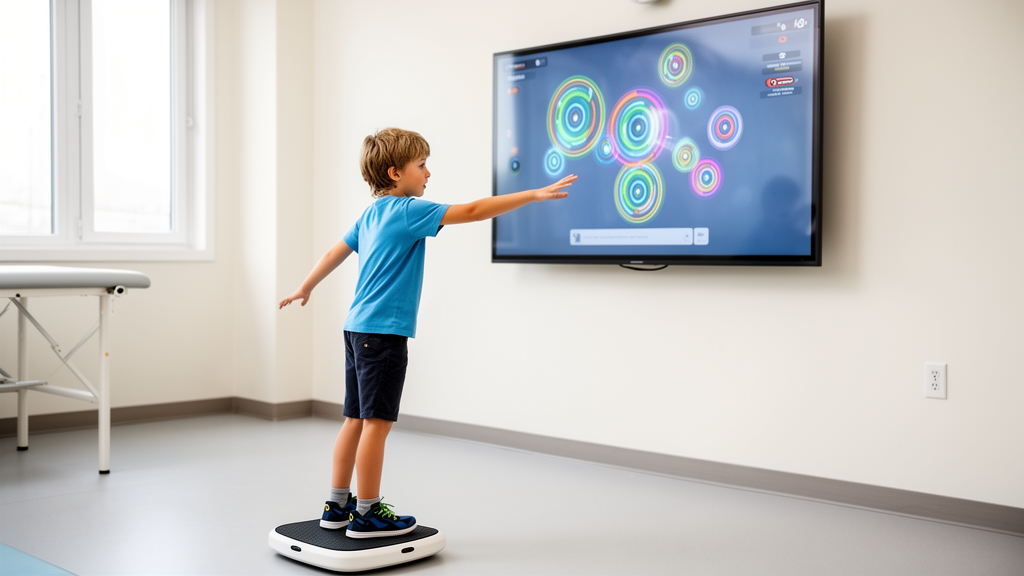
An eight-week gamified intervention significantly improved functional motor performance and reduced sedentary time among young boys diagnosed with developmental coordination disorder compared to a control group receiving usual care, according to a randomized controlled trial published in the Journal of Autism and Developmental Disorders. Conducted by researchers including Ayoub Hashemi, Elahe Siavashi, Rezvan Khairandish, and Seyed Ehsan Amirhosseini, the investigation also documented exploratory improvements in children’s dietary behaviors alongside favorable feasibility ratings.
The single-blind randomized controlled trial evaluated 40 male children aged 7 to 10 years who met the diagnostic criteria for developmental coordination disorder. The participating boys were randomized into two equal groups of 20 individuals, with one cohort allocated to receive the specialized gamified physical program and the second cohort assigned to a control condition.
Participants in the active intervention group engaged in an eight-week gamified exercise regimen comprising three 45-minute sessions each week. The research team structured the trial to examine whether this structured play-based physical routine could enhance everyday functional motor skills, decrease daily sedentary behavior, and encourage positive dietary changes in children experiencing motor coordination challenges.
To evaluate participant outcomes, the investigators utilized a series of standardized tracking measures and feedback instruments. Functional motor performance was measured using the DCD Daily-Q instrument, while sedentary time was objectively monitored through ActiGraph accelerometry recordings. Nutrition and eating habits were assessed via the Dietary Behaviors Index, and participant experiences were evaluated through dedicated social validity questionnaires completed by parents, children, and program facilitators.
The statistical analysis, conducted using mixed-design analysis of variance (ANOVA), demonstrated significant functional motor improvements in the gamified intervention cohort compared with the control cohort, producing a DCD Daily-Q result of F(1,38) = 26.20, P < 0.001, an effect size of η² = 0.423, and a 95% confidence interval of [0.18, 0.62]. Furthermore, the intervention group achieved significant reductions in sedentary time compared to controls, with accelerometry data showing F(1,38) = 14.53, P < 0.001, an effect size of η² = 0.286, and a 95% confidence interval of [0.08, 0.48].
Exploratory assessments of eating patterns similarly favored the intervention group over the control group, with Dietary Behaviors Index scores showing F(1,38) = 11.22, P = 0.002, an effect size of η² = 0.219, and a 95% confidence interval of [0.04, 0.41]. The authors classified the observed effect sizes across these outcome domains as medium to large with acceptable statistical precision. Participant feedback indicated high social validity for the protocol: 90 percent of parents recommended the intervention, 95 percent of the participating boys reported enjoying the sessions, and facilitators rated the program’s feasibility at 4.7 out of 5 and its appropriateness at 4.8 out of 5.
Despite these positive outcomes, the authors highlighted important methodological boundaries in interpreting the findings. Because the trial lacked a non-therapeutic control condition, the design could not isolate the specific effects of gamification mechanics from non-specific therapeutic elements; therefore, the results demonstrate effectiveness relative to usual care rather than establishing gamification as the sole driving mechanism. The authors concluded that while high social validity confirms the program’s feasibility within school environments, these preliminary findings warrant replication in larger, more diverse populations incorporating active control conditions and rigorous trial designs. The study was retrospectively registered in the Iranian Registry of Clinical Trials under identification code IRCT20240718062460N1.
Subject of Research: Gamified physical intervention for children with developmental coordination disorder
Article Title: Effectiveness of a Gamified Intervention to Improve Functional Motor Performance, Reduce Sedentary Behavior, and Explore Dietary Changes in Children With Developmental Coordination Disorder: A Randomized Controlled Trial
Article References: Hashemi, A., Siavashi, E., Khairandish, R., & Amirhosseini, S. E. (2026). Effectiveness of a Gamified Intervention to Improve Functional Motor Performance, Reduce Sedentary Behavior, and Explore Dietary Changes in Children With Developmental Coordination Disorder: A Randomized Controlled Trial. Journal of Autism and Developmental Disorders. https://doi.org/10.1007/s10803-026-07630-8
Image Credits: AI Generated
DOI: 10.1007/s10803-026-07630-8
Keywords: developmental coordination disorder, gamified intervention, functional motor performance, sedentary behavior, dietary behaviors index, DCD Daily-Q, ActiGraph accelerometry, randomized controlled trial, single-blind trial, mixed-design ANOVA, pediatric motor skills, social validity, school-based interventions, sedentary time reduction, Iranian Registry of Clinical Trials, eating behavior, physical activity intervention
News Source: Scienmag.