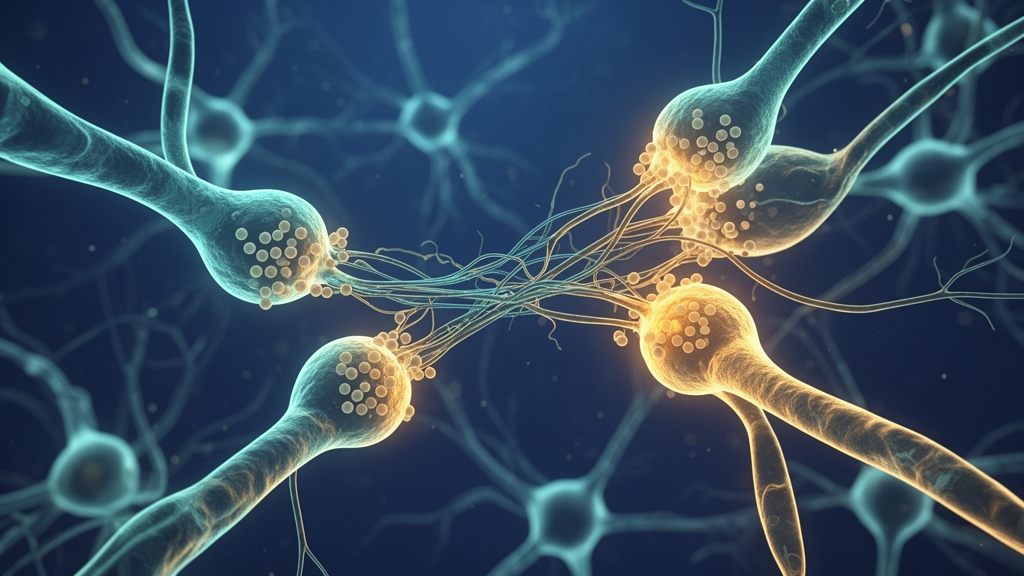
A recent comprehensive review has mapped the role of GABAergic inhibitory neurons in the pathophysiology of four major psychiatric conditions: autism spectrum disorder (ASD), major depressive disorder (MDD), schizophrenia (SCZ), and bipolar disorder (BD). By synthesizing genetic, transcriptomic, and cellular evidence, the research highlights that GABAergic dysfunction acts as a critical, convergent neurobiological mechanism across these disorders. Rather than resulting from a global inhibitory deficit, these conditions are characterized by localized, cell-type-specific dysregulations that target distinct interneuron subpopulations in a region- and disorder-dependent manner. This findings-based framework provides a clearer understanding of how disruptions in neural circuit dynamics, which are fundamental to physiological, cognitive, and emotional processing, can increase vulnerability to diverse clinical phenotypes.
The study, which incorporates findings from high-resolution single-cell and spatial transcriptomic approaches, emphasizes that psychiatric disorders are increasingly understood as spectrums of network dysregulation. The E/I balance—a highly coordinated system of excitatory glutamatergic and inhibitory GABAergic signaling—is critical for optimizing the signal-to-noise ratio in neural circuits. Abnormalities in this balance can destabilize sensory processing and generate mood and cognitive dysregulation. The research notes that genetic convergence, identified through large-scale genome-wide association studies (GWAS), supports the hypothesis that disruptions in E/I signaling are a shared substrate across diagnostic boundaries, as risk genes for these conditions are significantly enriched in pathways regulating excitatory and inhibitory synapses.
A central component of the review is the classification of inhibitory neurons, which comprise approximately 20%–25% of the total cortical neuronal population. Major cortical GABAergic subtypes—Parvalbumin (PVALB), Somatostatin (SST), Vasoactive Intestinal Peptide neurons (VIP), and LAMP5/PAX6+ neurons—exhibit distinct biophysical properties and connectivity patterns that refine cortical circuit motifs. These subtypes form specific spatial partnerships with excitatory neurons, ensuring specialized local E/I balance. The study notes that while early development is characterized by the “GABA switch,” where GABAergic signals transition from depolarizing to hyperpolarizing, later neurodevelopmental stages refine inhibitory circuits through activity-dependent synaptogenesis, creating windows of vulnerability that span from prenatal life through early adulthood.
Across the four examined disorders, the researchers observed distinct molecular profiles of GABAergic dysfunction. In ASD, transcriptomic studies have identified cell-type-specific dysregulation in VIP+, SST+, and PVALB+ interneurons, with associations linked to rare and common genetic variants involved in synaptic signaling and interneuron development. Similarly, in MDD, the “GABAergic Deficit Hypothesis” has evolved to reflect the complexity of GABAergic cell types, with studies pointing to downregulated synaptic and metabolic pathways in specific interneuron subclusters in the prefrontal cortex, alongside sex-dependent patterns of dysregulation. In SCZ, large-scale genomic data and snRNA-seq studies consistently point to synaptic gene dysfunction and metabolic energy pathways, particularly oxidative phosphorylation, which are disrupted in cortical inhibitory neurons.
The research also highlights that in BD, while direct snRNA-seq profiling has shown more localized changes compared to other disorders, genomic integration studies implicate inhibitory neurons in shared polygenic risk architectures. Importantly, the study notes that the shared biological signal does not suggest a single, unifying etiology. Instead, the evidence indicates that while interneuron identity represents a common point of vulnerability, the disorder-specific phenotypes arise from distinct upstream causes, such as unique genetic networks, environmental interactions, and developmental trajectories. The researchers caution that many cited findings represent molecular associations rather than direct causal evidence, and functional validation through experimental models remains essential.
Methodological challenges remain a significant hurdle in the field, as current psychiatric classifications such as the DSM-5 may not fully capture the neurobiological realities of these disorders. High-resolution omics techniques, while providing unprecedented detail, are subject to technical trade-offs, including biases in sequencing depth, sparse coverage of rare interneuron subtypes, and the confounding effects of postmortem tissue quality, disease duration, and medication exposure. Furthermore, the reliance on adult cortical tissue samples in most datasets limits the ability to draw conclusions about circuit-level dynamics in other brain regions or during earlier developmental windows.
The study also examined the role of non-neuronal cells in these pathologies, noting that astrocytes and microglia interact bidirectionally with GABAergic neurons to regulate synaptic signaling, metabolism, and neuroinflammation. The consistent dysregulation of the AKT/mTOR and WNT signaling pathways across these disorders suggests that nutrient sensing and energy metabolism, which are particularly demanding for fast-spiking PVALB+ interneurons, may play a broader role in circuit-level instability. These findings reinforce the complexity of the inhibitory system and suggest that targeting global GABAergic signaling may be insufficient for future therapeutic strategies.
Current therapeutic approaches for these disorders remain limited in their ability to address the observed biological complexity. While anticonvulsants and benzodiazepines are established clinical tools, their utility for treating core psychiatric symptoms is often restricted by limited efficacy, side effects, or lack of diagnostic specificity. The review suggests that the next frontier in neuropharmacology lies in prospective interneuron-subtype-specific interventions, which aim to target the precise inhibitory cell populations involved in each disorder. Moving beyond broad network modulation to precision medicine will require integrative frameworks that combine multi-omics methodologies with functional techniques in human and animal models to better map the cellular topography of psychiatric pathophysiology.
In the human central nervous system, GABA synthesis relies on glutamate decarboxylase isoforms GAD67 and GAD65, encoded by GAD1 and GAD2. GABA acts through ionotropic GABAA receptors, which conduct chloride and bicarbonate ions to mediate fast hyperpolarization, and metabotropic GABAB receptors, which activate G proteins for prolonged signaling. During early development, high expression of the chloride importer NKCC1 and low expression of the exporter KCC2 maintain elevated intracellular chloride, causing chloride efflux and membrane depolarization upon GABAA receptor activation. This depolarizing phase provides trophic drive and primitive network oscillations necessary for circuit assembly. As KCC2 levels increase during maturation, intracellular chloride drops, establishing mature hyperpolarizing inhibition. Postsynaptic inhibitory sites are stabilized by scaffolding complexes including gephyrin, neuroligin-2, and ankyrin-G, which links GABAA receptor-associated protein to the cytoskeleton through late adolescence.
Cortical interneurons originate in the ventral telencephalon from distinct embryonic progenitor zones before migrating into the cortex. The medial ganglionic eminence produces parvalbumin-positive and somatostatin-positive interneurons, whereas the caudal ganglionic eminence yields vasoactive intestinal peptide and LAMP5-positive subtypes. This lineage divergence is directed by regulatory transcription factors including the distal-less homeobox family and MEF2C. Migrating interneurons transiently cluster in the primitive cortical zone before integrating into laminar circuits instructed by excitatory projection neurons. Beyond local cortical interneurons, the brain contains specialized GABAergic projection populations, notably striatal medium spiny neurons. Originating in the lateral ganglionic eminence, these projection neurons form the primary output of striatal circuits that are consistently implicated across neuropsychiatric conditions.
Animal models show how targeted disruptions in interneuron subclasses alter specific behavioral dimensions in autism spectrum disorder. In the anterior cingulate cortex, optogenetic activation of parvalbumin interneurons decreases sociability, whereas activating somatostatin interneurons selectively impairs social preference. Genetic knockout models of autism risk genes, such as Cntnap2, Syngap1, Kdm5a, Shank3, and Chd8, similarly disrupt GABAergic maturation. Expressing wild-type human CNTNAP2 in medial ganglionic eminence cells rescues parvalbumin cell loss in Cntnap2-null mice, while autism-associated missense alleles fail to do so. In humans, genetic mapping implicates chromosome 15q11–q13, which contains the GABAA receptor subunit genes GABRB3, GABRA5, and GABRG3, while single-nucleus DNA methylation analyses reveal an accelerated age-related decline in caudal ganglionic eminence-derived interneurons.
Preclinical stress models demonstrate that impaired inhibition contributes causally to depressive behaviors. Chronic unpredictable stress reduces prefrontal GABA synthesis and release, while prenatal stress triggers hippocampal GAD1 promoter hypermethylation that is reversible through DNA methyltransferase inhibition. In female mice subjected to chronic defeat, single-cell analysis detected inflammatory and synaptic pathway activation in prefrontal interneurons expressing SOX6, with Sox6 knockdown mitigating depressive behaviors. In humans, depression GWAS signals enrich in inhibitory neurons, prioritizing genes such as GABRB1, the neuregulin receptor ERBB4, and the epigenetic regulator SETDB1. Postmortem studies of the dorsolateral prefrontal cortex confirm reduced expression of metabolic and oxidative phosphorylation pathways in interneurons, alongside female-specific reductions in somatostatin and neuropeptide Y.
In schizophrenia and bipolar disorder, high-resolution profiling reveals nuanced cellular alterations across disease stages. Although initial single-nucleus sequencing reported decreased parvalbumin, somatostatin, and VIP interneuron abundance in schizophrenia prefrontal cortex, larger follow-up studies found preserved cell proportions with prominent synaptic dysregulation in upper cortical layers. A recent population-scale atlas of the dorsolateral prefrontal cortex identified an increased proportion of parvalbumin chandelier cells in both schizophrenia and bipolar disorder, highlighting a cell type with strong concordance between genetic risk and gene expression. Across disorders, shared transcriptional regulators show recurrent suppression: ZNF385D is downregulated in somatostatin, VIP, and parvalbumin cells and associated with schizophrenia negative symptoms; DLX6-AS1 regulates DLX5, DLX6, and GAD1 expression; and AHI1 is suppressed in somatostatin and VIP interneurons.
Clinical evaluations of GABAergic pharmacological agents reflect the challenge of translating circuit findings into effective treatments. Neuroactive steroids that act as positive allosteric modulators at distinct GABAA receptor sites have shown rapid efficacy, highlighted by the regulatory approval of brexanolone for postpartum depression and clinical trials of zuranolone and pregnenolone for depressive and negative symptoms. However, other targeted interventions have demonstrated limited success. The selective GABAB receptor agonist arbaclofen showed benefits confined to specific patient subgroups in autism, while bumetanide, an NKCC1 chloride importer antagonist intended to restore hyperpolarizing inhibition, produced inconsistent clinical outcomes and poor brain penetration. Furthermore, although mood stabilizers such as valproate enhance GABA levels in bipolar disorder, maternal exposure elevates autism risk in offspring, and trials combining anticonvulsants with antipsychotics or antidepressants have yielded inconclusive results.
Subject of Research: Neurobiology of psychiatric disorders and GABAergic inhibitory circuit dysfunction
Article Title: The role of GABAergic inhibitory neurons in psychiatric disorders: insights from cellular and genomic studies
Article References: de Luca Refundini, J. V., Rosa, J. S., Duque, V. J., Almodobar, L., Gomes Bugiga, A. V., Nani, J. V., Torres-Loureiro, S., Carvalho, C. M., Ota, V. K., Mecawi, A. S., Belangero, S. I., & Kajitani, G. S. (2026). The role of GABAergic inhibitory neurons in psychiatric disorders: insights from cellular and genomic studies. Frontiers in Cell and Developmental Biology, 14, Article 1952784. https://doi.org/10.3389/fcell.2026.1952784
Image Credits: AI Generated
DOI: 10.3389/fcell.2026.1952784
Keywords: GABAergic interneurons, excitatory/inhibitory balance, neuropsychiatric disorders, autism spectrum disorder, major depressive disorder, schizophrenia, bipolar disorder, transcriptomics, genomics, neurodevelopment, synaptic plasticity, cell-type specificity, precision medicine, GWAS, PVALB, SST, VIP, multi-omics
News Source: Cassandra Pierce. (November 17, 2026). GABAergic Neuron Dysfunction Emerges as Shared Mechanism Across Four Psychiatric Disorders. Scienmag.