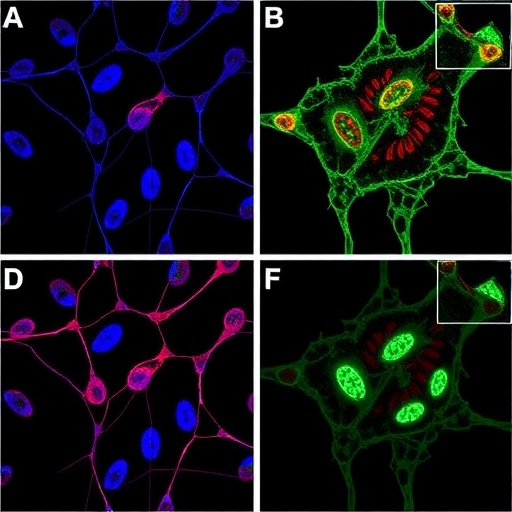
In recent groundbreaking research, a team of scientists has uncovered significant insights into the roles played by a protein known as G3BP1 in maintaining the integrity of the endothelial barrier. These findings are crucial given the endothelial barrier’s vital role in various physiological and pathological processes, including vascular permeability and inflammation. The study reveals that G3BP1 employs two distinct mechanisms to exert its protective effects—direct stabilization of junction protein mRNAs and the suppression of a specific inflammatory pathway involving MYD88, ARNO, and ARF6.
Endothelial cells line the blood vessels and are fundamental to the functioning of the cardiovascular system. They regulate the movement of substances and fluid between the bloodstream and surrounding tissues. Disruption of the endothelial barrier can lead to severe consequences, including increased vascular permeability, allowing harmful substances to enter tissues, which may result in various diseases including cardiovascular conditions, diabetes, and cancer. Understanding how G3BP1 contributes to endothelial barrier integrity may offer new avenues for therapeutic intervention.
The first mechanism by which G3BP1 supports the endothelial barrier is through the stabilization of mRNAs that encode junctional proteins. These proteins are vital for maintaining tight junctions between endothelial cells, which are the key structures that control permeability. The researchers demonstrated that G3BP1 binds to mRNA transcripts of these junction proteins, thus preventing their degradation and ensuring a healthy supply of these critical components. This stabilization is essential for the proper assembly and maintenance of the endothelial barrier, suggesting that G3BP1 is a key player in orchestrating a protective response against environmental stressors.
Moreover, the second mechanism highlights G3BP1’s ability to suppress an inflammatory signaling pathway that can compromise endothelial barrier integrity. The MYD88-ARNO-ARF6 pathway is known to promote inflammation within endothelial cells, thereby disrupting the careful regulation of permeability. The study provides compelling evidence that G3BP1 inhibits this pathway, thereby preventing inflammatory signals from triggering increased permeability. This dual action of stabilization of protective proteins along with suppression of destructive signaling presents a comprehensive strategy that cells may employ to safeguard themselves against threats.
The implications of these findings are immense, especially considering that inflammation is a common underlying factor in a plethora of diseases. By targeting the G3BP1 pathway, researchers may develop novel therapeutic strategies to strengthen the endothelial barrier during inflammation, potentially reducing the risk of diseases that stem from barrier dysfunction. This research positions G3BP1 as a promising candidate for future drug development aimed at enhancing vascular health.
Breaking down the intricacies of the G3BP1’s function reveals a tightly regulated system wherein the stability of junctional proteins balances the inflammatory responses that endothelial cells face in pathological conditions. Chronic inflammation often leads to endothelial dysfunction, where the normal barrier functions are compromised, promoting vascular diseases. The researchers suggest that enhancing the activity of G3BP1 or mimicking its functions could be a therapeutic avenue worth exploring.
Clinical studies will be necessary to validate the potential of G3BP1 as a therapeutic target. Researchers are especially interested in examining the effects of modulating G3BP1 levels in both animal models and human patients. If G3BP1 can be shown to not only maintain but also restore endothelial barrier integrity during inflammatory states, it may lead to significant advancements in the treatment of inflammatory diseases and conditions characterized by vascular permeability.
The study also raises intriguing questions about the regulation of G3BP1 itself. Understanding what triggers its expression and activity could provide insight into how the body naturally responds to inflammatory stimuli. There is much to learn about the upstream regulators of G3BP1 and how environmental factors influence its function. Deciphering these regulatory mechanisms could unveil targets for pharmacological intervention.
This research signifies a crucial step towards a more nuanced understanding of the endothelial barrier’s biological processes. The dual role of G3BP1 underscores a more sophisticated level of control within the cellular environment, where protection against inflammation is just as crucial as maintaining structural integrity. Developing a deeper understanding of such proteins can highlight not only their relevance in health but also in the mechanisms of diseases such as atherosclerosis, where endothelial barrier dysfunction plays a significant role.
As further studies unfold, the scientific community is eager to witness the full scope of G3BP1’s capabilities within the vascular system. Clarifying its roles in different cellular contexts could help bridge the gap between laboratory research and clinical application. Future findings may promote the exploration of this protein beyond endothelial cells, potentially influencing research in other tissue types that encounter similar issues of permeability and inflammation.
Overall, the findings presented in this study lay a critical foundation for future research into endothelial biology. The potential for targeting G3BP1 seeks to reshape our approach to treating diseases characterized by inflammation and vascular dysfunction. By tapping into the natural mechanisms of cellular integrity already present within our bodies, scientists hope to turn the tide against diseases that result from barriers that are too easily compromised.
The ongoing exploration of G3BP1 and its pathways provides a source of optimism within the scientific community, emphasizing the importance of understanding fundamental biological mechanisms to innovate therapeutic strategies. As our knowledge expands, it is anticipated that these insights will lead to novel treatment strategies that can profoundly impact patient care in vascular-related diseases.
The commitment to uncovering the intricate roles of proteins like G3BP1 underlines the evolving landscape of biomedical research, where the focus is increasingly on molecular players that may hold the keys to understanding and treating complex health challenges. The future of endothelial barrier research looks bright as scientists continue to explore the depths of molecular interactions and the effects they have on human health.
Subject of Research: G3BP1 and Endothelial Barrier Integrity
Article Title: G3BP1 maintains endothelial barrier integrity through dual mechanisms: direct stabilization of junction protein mRNAs and suppression of the inflammatory MYD88-ARNO-ARF6 pathway.
Article References:
Sun, W., Wu, H., He, Y. et al. G3BP1 maintains endothelial barrier integrity through dual mechanisms: direct stabilization of junction protein mRNAs and suppression of the inflammatory MYD88-ARNO-ARF6 pathway.
Angiogenesis 28, 46 (2025). https://doi.org/10.1007/s10456-025-09993-5
Image Credits: AI Generated
DOI: https://doi.org/10.1007/s10456-025-09993-5
Keywords: G3BP1, Endothelial Barrier, Junction Proteins, Inflammation, MYD88-ARNO-ARF6 Pathway, Vascular Health, Therapeutic Target.
Tags: cardiovascular disease mechanismsdual mechanisms of protein actionendothelial barrier integrityendothelial cell junction proteinsendothelial cell protectionG3BP1 protein functionimpact of endothelial dysfunction on healthinflammatory pathway suppressionmRNA stabilization in endothelial cellstherapeutic interventions for inflammationtight junction stabilizationvascular permeability regulation