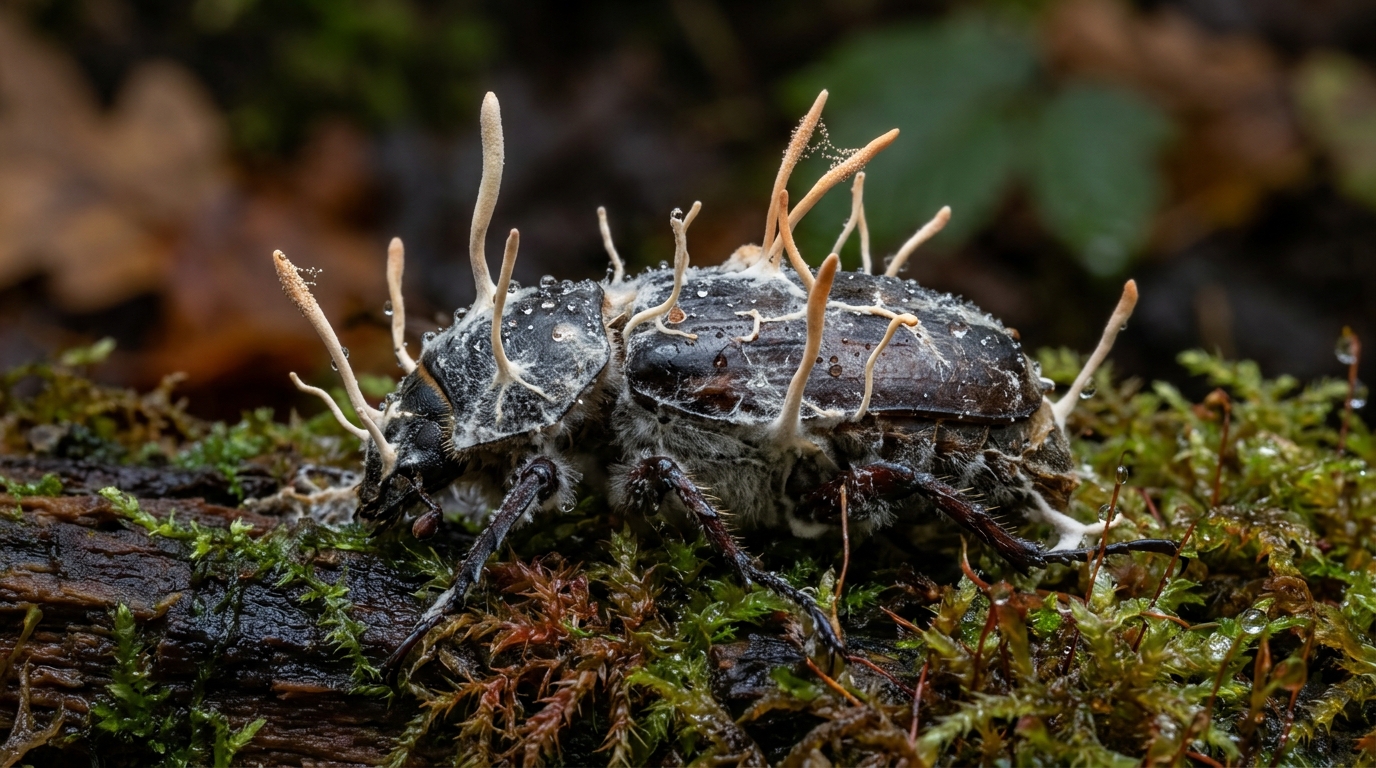
A comprehensive scientific review published in Food Science and Biotechnology evaluates the biochemical transformations, nutritional value, and multidimensional safety profiles of entomopathogenic fungus-infected insect cadavers as emerging food and feed resources. With global population projections indicating 9.7 billion inhabitants by 2050, worldwide agricultural production requires an estimated 70 percent increase in total protein output to sustain current consumption patterns. Conventional livestock farming currently utilizes 77 percent of global agricultural land while delivering merely 18 percent of dietary calories and 37 percent of protein, contributing 14.5 percent of anthropogenic greenhouse gas emissions, driving 80 percent of Amazon deforestation, and consuming 8 percent of freshwater supplies. Historically regarded as biological pest control waste or limited to folk medicine, these fungus-colonized insect matrices function as natural biorefineries that enzymatically restructure insect biomass into enriched protein-polysaccharide substrates.
The infection cycle, known as entomopathogenesis, progresses through defined developmental stages that dictate fungal colonization success. The primary fungi examined belong to the orders Hypocreales within Ascomycota and Entomophthorales within Zoopagomycota, with Hypocreales serving as the principal group for food applications and biological pest management. Infection commences when fungal conidia adhere to the insect epicuticle through hydrophobic interactions between spore wall proteins and cuticular lipids, supplemented by adhesin-mediated carbohydrate recognition and surface interlocking. Specialized appressoria subsequently breach the multilayered cuticle through mechanical pressure combined with secreted hydrolytic enzymes, including subtilisin-type serine proteases, lipases, and chitinases. Entering the hemolymph, the fungus encounters host defenses such as hemocyte encapsulation, melanization cascades, and antimicrobial peptide synthesis. Virulent pathogens evade these defenses via immunosuppressive metabolites and molecular mimicry, proliferating as hyphae that deplete host nutrients and secrete entomotoxins, resulting in host mortality. Following death, the fungus shifts from endoparasitism to saprophytic growth, digesting internal organs before emerging externally to sporulate. Key species include Beauveria bassiana, Metarhizium anisopliae, Ophiocordyceps sinensis, Cordyceps militaris, Samsoniella hepiali, and Isaria fumosorosea.
To establish clear scientific parameters, the review authors define rigorous operational inclusion boundaries, focusing on indoor-cultivated insect larvae, pupae, and adults produced under controlled rearing conditions and harvested at pre-sporulation or early-sporulation stages where fungal biomass remains predominantly internal. Intentional consumption of fungus-infected insects represents a centuries-old tradition in Asian cultures. Ophiocordyceps sinensis, known vernacularly as Yartsa Gunbu or DongChongXiaCao, has been utilized in Tibetan and traditional Chinese medicine for over 1,500 years to enhance vitality, respiratory health, and stamina, with wild-harvested specimens commanding premium market valuations exceeding 20,000 United States dollars per kilogram. Parallel historical practices include Samsoniella-infected Antheraea pernyi pupae in China and fungus-infected cicadas across Southeast Asia, establishing an empirical foundation for modern commercialization.
The nutritional restructuring of insect tissues during fungal pathogenesis follows a characteristic biphasic trajectory in protein dynamics. In the primary phase, host proteases released during cellular autolysis collaborate with secreted fungal proteases to hydrolyze insect structural proteins, systematically breaking down chitin-binding complexes, muscle myosin, hemocyanin, and cuticular matrices. However, this catabolic degradation does not deplete total protein availability; instead, it is counterbalanced and frequently exceeded by rapid fungal protein synthesis during post-mortem saprotrophic mycelial growth. Beauveria bassiana and Metarhizium anisopliae produce expansive mycelial biomass within the hemocoel, yielding a total crude protein concentration comparable to or substantially higher than that observed in healthy insects of equivalent mass. More importantly, fungal proliferation fundamentally reshapes the amino acid profile. Fungal biomass introduces superior proportions of essential amino acids that are classically limiting in edible insects, specifically elevating levels of methionine, lysine, and tryptophan. Consequently, the Essential Amino Acid Index, measured against standard reference patterns established by the Food and Agriculture Organization, consistently improves, transforming infected cadavers into higher-quality protein resources for mammalian and avian nutrition.
Equally pronounced transformations occur across lipid and carbohydrate fractions during fungal colonization. Total lipid concentrations systematically decrease by 30 to 70 percent across infected insects, depending on host species, fungal strain, temperature, humidity, and infection duration. This lipid depletion is driven by constitutive fungal lipases and phospholipases that hydrolyze insect triglycerides into fatty acids, which undergo beta-oxidation to support the heavy ATP requirements of fungal oxidative phosphorylation. Reduced fat content provides practical advantages in aquafeed and poultry formulations, where excessive dietary lipid levels trigger hepatic lipidosis and product degradation. Concurrently, total carbohydrate concentrations rise; while uninfected insects store minimal glycogen below 2 percent dry mass, colonizing fungi synthesize substantial reserves of trehalose and glycogen alongside structural cell wall polysaccharides. Crude fiber content increases two- to five-fold, with immunologically active beta-glucans accumulating to 10 to 30 percent of total fungal dry matter. In parallel, fungal chitinases partially digest the insect exoskeleton, reducing chitin crystallinity and structural polymer cross-linking, which elevates in vitro and in vivo protein digestibility coefficients by 15 to 35 percent in Beauveria-infected specimens.
Micronutrient and secondary metabolite enrichment further augments the nutritional profile of colonized insects. Fungal biosynthesis enriches B-complex vitamins, notably thiamine (B1), riboflavin (B2), niacin (B3), pantothenic acid (B5), and cobalamin (B12), which serve as crucial enzymatic cofactors across higher Ascomycetes and Basidiomycetes. Fungal acid phosphatases and phytases alter mineral bioavailability by mobilizing phosphorus, though fungal beta-glucans and chitin may concurrently chelate specific cations. Laboratory assays demonstrate that fungal colonization generates a two- to ten-fold elevation in overall antioxidant capacity compared to uninfected controls. Moreover, Cordyceps and Ophiocordyceps species synthesize bioactive nucleoside analogues, including adenosine and cordycepin (3-prime-deoxyadenosine), which possess documented anti-inflammatory, antitumor, and immunomodulatory properties in mammalian models. Fungal cell wall beta-1,3- and beta-1,6-glucans provide potent immunomodulatory activity by engaging pattern recognition receptors, specifically Dectin-1 on macrophages and natural killer cells, stimulating systemic immune defense cascades and positioning these complexes as promising functional food substrates.
Despite significant nutritional advancements, the authors stress that commercialization requires rigorous evaluation of fungal secondary metabolites and entomotoxins. Entomopathogenic species within the genera Beauveria and Metarhizium synthesize diverse insecticidal molecules that may present toxicological risks to non-target mammals. Metarhizium species produce destruxins, cyclic depsipeptides that disrupt calcium channel function to induce host flaccid paralysis; although mammalian in vivo data remain sparse, in vitro cell assays demonstrate distinct cytotoxicity. Rare acute clinical poisonings emphasize these risks, such as documented cases in Thailand where wild fungus-infected cicadas caused acute ibotenic acid poisoning marked by tremors, altered consciousness, and gastrointestinal symptoms. Crucially, entomotoxin production exhibits immense strain-level variability, governed by fungal genotype, colonization duration, insect substrate, and environmental parameters, with temperatures between 20 and 25 degrees Celsius, moisture levels, and oxygen availability exerting profound regulatory control. Consequently, commercial deployment demands exhaustive strain safety characterization and continuous batch-level toxicological screening.
Additional safety challenges involve microbial contamination, allergenicity, and environmental toxins. Insect hosts harbor diverse enteric bacteria, including opportunistic and spore-forming pathogens such as Bacillus cereus, Clostridium perfringens, Staphylococcus aureus, and Cronobacter sakazakii, alongside risks from toxigenic Aspergillus and Penicillium co-contaminants or antibiotic-resistant bacteria selected during mass-rearing. Concurrently, allergenic risks arise from fungal surface hydrophobins and heat-shock proteins (Hsp60, Hsp90) that trigger cross-reactive IgE reactions in individuals allergic to Alternaria or Aspergillus, while fungal proteolysis modifies core insect allergens like tropomyosin and arginine kinase. Furthermore, insects bioaccumulate heavy metals (cadmium, lead, mercury), persistent organic pollutants (DDT, PCBs, dioxins), and pesticide residues, requiring strict substrate quality control and ecological containment.
Transforming infected cadavers into safe ingredients requires standardized manufacturing controls and sensitive consumer marketing. Harvests must occur pre-sporulation to minimize spore loads before undergoing thermal treatment at or above 90 degrees Celsius to achieve a 5-log reduction in target pathogens. Dehydration via freeze-drying or spray-drying must reduce moisture below 10 percent and water activity below 0.6, followed by fine milling, desiccant packaging, and batch testing for microbial contaminants, mycotoxins, and heavy metals. Concurrently, addressing consumer neophobia requires transparent framing, utilizing descriptors like fungus-fermented insect biomass and incorporating milled powders into familiar baked formats rather than whole insects.
Commercial development is expanding across animal feeds, functional foods, and biopharmaceutical peptide discovery. In animal nutrition, meta-analyses demonstrate that incorporating fungus-parasitized pest larvae into livestock and aquaculture diets sustains normal feed conversion, enhances antioxidant markers, and supports immune function without negative health outcomes. Ultimately, the review concludes that fungus-infected insect cadavers represent a highly nutritious, sustainable resource, provided that commercialization adheres to case-by-case regulatory frameworks, rigorous toxicological screening, and validated production standards.
Subject of Research: Nutritional value and safety assessment of fungus-infected insect cadavers as food resources
Article Title: Entomopathogenic fungus-infected insect cadavers as potential food resources: a comprehensive review of nutritional value, safety risks, and emerging applications
Article References: Lin, Y., Ma, K., & Lan, Z. (2026). Entomopathogenic fungus-infected insect cadavers as potential food resources: a comprehensive review of nutritional value, safety risks, and emerging applications. Food Science and Biotechnology. https://doi.org/10.1007/s10068-026-02349-9
Image Credits: AI Generated
DOI: 10.1007/s10068-026-02349-9
Keywords: edible insects, entomopathogenic fungi, alternative protein, food safety, bioconversion, nutritional biochemistry, mycotoxins, bioactive peptides, Entomopathogenic, fungus-infected, insect, cadavers
News Source: Gavin Prescott. (November 7, 2026). Fungus-Infected Insect Cadavers Offer High Nutritional Value but Pose Key Risks. Scienmag.