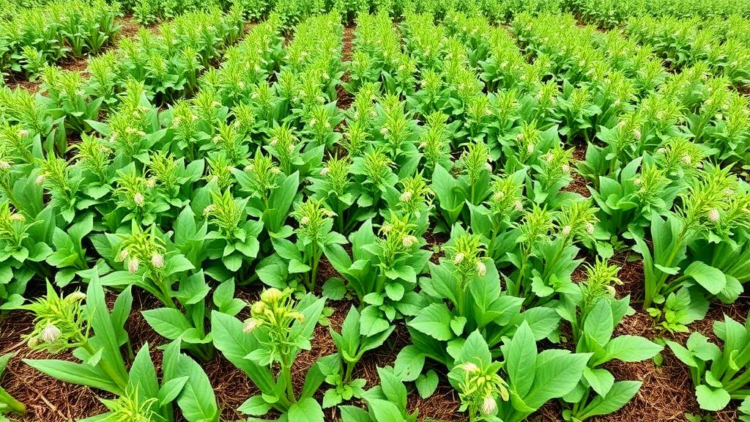
Hidden beneath every productive pasture lies a bustling underground economy, and a new field experiment suggests farmers can tip the balance in their favor by recruiting the right microbial partners. Researchers at Yasouj University in Iran report that combining arbuscular mycorrhizal fungi with a modest dose of phosphorus fertilizer dramatically improves both forage output and soil health when chicory and berseem clover are grown together rather than alone. The study, published in BMC Plant Biology, offers a rare causal map of how these underground alliances translate into leaves, stems, and livestock feed.
The research team, led by Masoud Andideh and corresponding author Alireza Yadavi, set out to tackle two pressing challenges at once: the need for sustainable forage production in a changing climate and the degradation of soil biological function that often accompanies intensive agriculture. Their approach was to test whether intercropping chicory (Cichorium intybus L.), a deep-rooted perennial herb valued for its mineral-rich forage, with berseem clover (Trifolium alexandrinum L.), an annual legume that fixes atmospheric nitrogen, could be enhanced further by manipulating the soil’s fungal and chemical environment.
The experimental design was deliberately comprehensive. The researchers compared pure stands of each species against three intercropping arrangements: alternating single rows of chicory and clover, two rows of chicory with one row of clover, and one row of chicory with two rows of clover. Each planting configuration was crossed with five fertilization treatments: no fertilizer, mycorrhizal inoculation alone, 75 kilograms per hectare of triple superphosphate, 150 kilograms per hectare of the same fertilizer, and a combined treatment pairing mycorrhiza with the lower 75-kilogram phosphorus rate. This factorial structure allowed the team to separate the effects of cropping pattern, biology, and chemistry.
The results were striking. Intercropping systems consistently outperformed monocultures, and the treatments that included mycorrhizal inoculation produced the highest levels of soil biological activity, including greater bacterial populations, elevated microbial respiration, and enhanced enzyme activities. These indicators matter because they reflect the living engine of the soil: microbes that decompose organic matter, cycle nutrients, and make minerals available to plant roots. Perhaps counterintuitively, the chemical superphosphate applications on their own reduced soil biological activity, suggesting that heavy-handed fertilization can suppress the very organisms that sustain long-term fertility.
To move beyond simple correlations, the team employed Bayesian Structural Equation Modeling, a statistical framework that can test hypothesized chains of cause and effect among many variables simultaneously. The modeling revealed that for chicory, the leaf area index and chlorophyll content were the key physiological drivers of forage yield, while soil microbial respiration and gram-positive bacteria influenced the degree of root colonization by mycorrhizal fungi, which in turn shaped leaf development. In other words, a biologically active soil appeared to set the stage for fungal partnership, and that partnership fed directly into the plant’s photosynthetic capacity.
Berseem clover told a more nuanced story. For the legume, both leaf area index and mycorrhizal root colonization positively affected forage yield, but the modeling also exposed a trade-off: the clover’s famous rhizobium symbiosis, in which root nodules house nitrogen-fixing bacteria, appeared to compete with aboveground development. This finding has practical implications, because it suggests that the energetic cost of hosting nitrogen-fixing bacteria is not trivial, and that maximizing clover biomass requires balancing the benefits of biological nitrogen fixation against the carbon the plant must spend to maintain its nodules.
The bottom line for farmers came down to two efficiency metrics. The highest land equivalent ratio, a measure of how much more productive intercropping is compared with growing each crop separately, reached 1.107 in the two-row clover to one-row chicory arrangement. A land equivalent ratio above 1.0 means the intercrop uses the land more efficiently than monocultures, and a value of 1.107 indicates roughly a 10 percent advantage. Meanwhile, the combined treatment of mycorrhiza plus 75 kilograms per hectare of triple superphosphate achieved the highest K value of 1.628, indicating a substantial synergistic gain when biological and chemical inputs were paired at moderate levels.
Why would mycorrhizal fungi and phosphorus fertilizer work better together than either alone? The answer lies in the biology of the symbiosis. Arbuscular mycorrhizal fungi colonize plant roots and extend networks of hyphae far into the soil, accessing phosphorus that is beyond the reach of root hairs and delivering it to the plant in exchange for photosynthetic carbon. When soil phosphorus is extremely low, the fungi have little to mine; when it is very high, plants have less incentive to support the fungal partnership. A moderate fertilizer dose appears to hit the sweet spot, providing enough phosphorus to fuel early growth while keeping the symbiosis active and the soil microbial community engaged.
The suppression of soil biological activity under higher superphosphate rates adds to a growing body of evidence that fertilizer intensity shapes microbial communities in ways that can undermine their contributions. Enzyme activities and microbial respiration are sensitive indicators of soil function, and their decline under heavy chemical inputs suggests a simplification of the belowground community. For forage systems, where soil health directly underpins multi-year productivity, this is a warning worth heeding: more fertilizer is not always better, and the cheapest inputs may be the living ones already present in the soil.
The study also carries broader significance for climate-resilient agriculture. Intercropping legumes with grasses or herbs is a time-honored strategy that reduces the need for synthetic nitrogen, improves diet diversity for grazing animals, and buffers against weather extremes. By demonstrating that mycorrhizal inoculation can amplify these benefits while a reduced phosphorus dose preserves soil life, the Iranian team provides a template for low-input forage systems that could be adapted across semi-arid regions. As the authors frame it, the work addresses the twin demands of climate change adaptation and sustainable food production, showing that the path to higher yields may run not through the fertilizer bag but through the fungal threads threading quietly through the soil.
Subject of Research: Effects of arbuscular mycorrhizal fungi and phosphorus fertilization on chicory–berseem clover intercropping systems
Article Title: Synergistic effects of arbuscular mycorrhizal inoculation and phosphorus fertilization on soil microbial properties, plant physiological characteristics, in chicory–berseem clover intercropping
Article References: Andideh, M., Yadavi, A., Balouchi, H., & Farajee, H. (2026). Synergistic effects of arbuscular mycorrhizal inoculation and phosphorus fertilization on soil microbial properties, plant physiological characteristics, in chicory–berseem clover intercropping. BMC Plant Biology. https://doi.org/10.1186/s12870-026-09989-3
Image Credits: AI Generated
DOI: 10.1186/s12870-026-09989-3
Keywords: arbuscular mycorrhiza, intercropping, chicory, berseem clover, phosphorus fertilization, soil microbiology, forage yield, microbial respiration, Bayesian structural equation modeling, land equivalent ratio, rhizobial symbiosis, sustainable agriculture
Cite Scienmag News
APA MLA Chicago
Alan Morgan. (October 2, 2026). Fungi and Fertilizer Team Up to Boost Forage Yields in Chicory–Clover Intercropping. Scienmag. https://scienmag.com/fungi-and-fertilizer-team-up-to-boost-forage-yields-in-chicory-clover-intercropping/
Alan Morgan. “Fungi and Fertilizer Team Up to Boost Forage Yields in Chicory–Clover Intercropping.” Scienmag, 2 October 2026, https://scienmag.com/fungi-and-fertilizer-team-up-to-boost-forage-yields-in-chicory-clover-intercropping/. Accessed 2 October 2026.
Alan Morgan. “Fungi and Fertilizer Team Up to Boost Forage Yields in Chicory–Clover Intercropping.” Scienmag. October 2, 2026. https://scienmag.com/fungi-and-fertilizer-team-up-to-boost-forage-yields-in-chicory-clover-intercropping/
Copy citation Download RIS
Tags: arbuscular mycorrhizaarbuscular mycorrhizal fungiBayesian structural equation modelingberseem cloverchicorychicory and clover intercroppingclimate-resilient forage systemsforage crop productionforage yieldintercroppingland equivalent ratiolegume and herb intercropping benefitsmicrobial respirationpasture yield enhancementphosphorus fertilizationphosphorus fertilizer optimizationrhizobial symbiosissoil biological function degradationsoil healthsoil microbial partnershipssoil microbiologysustainable agricultureunderground plant-microbe interactions